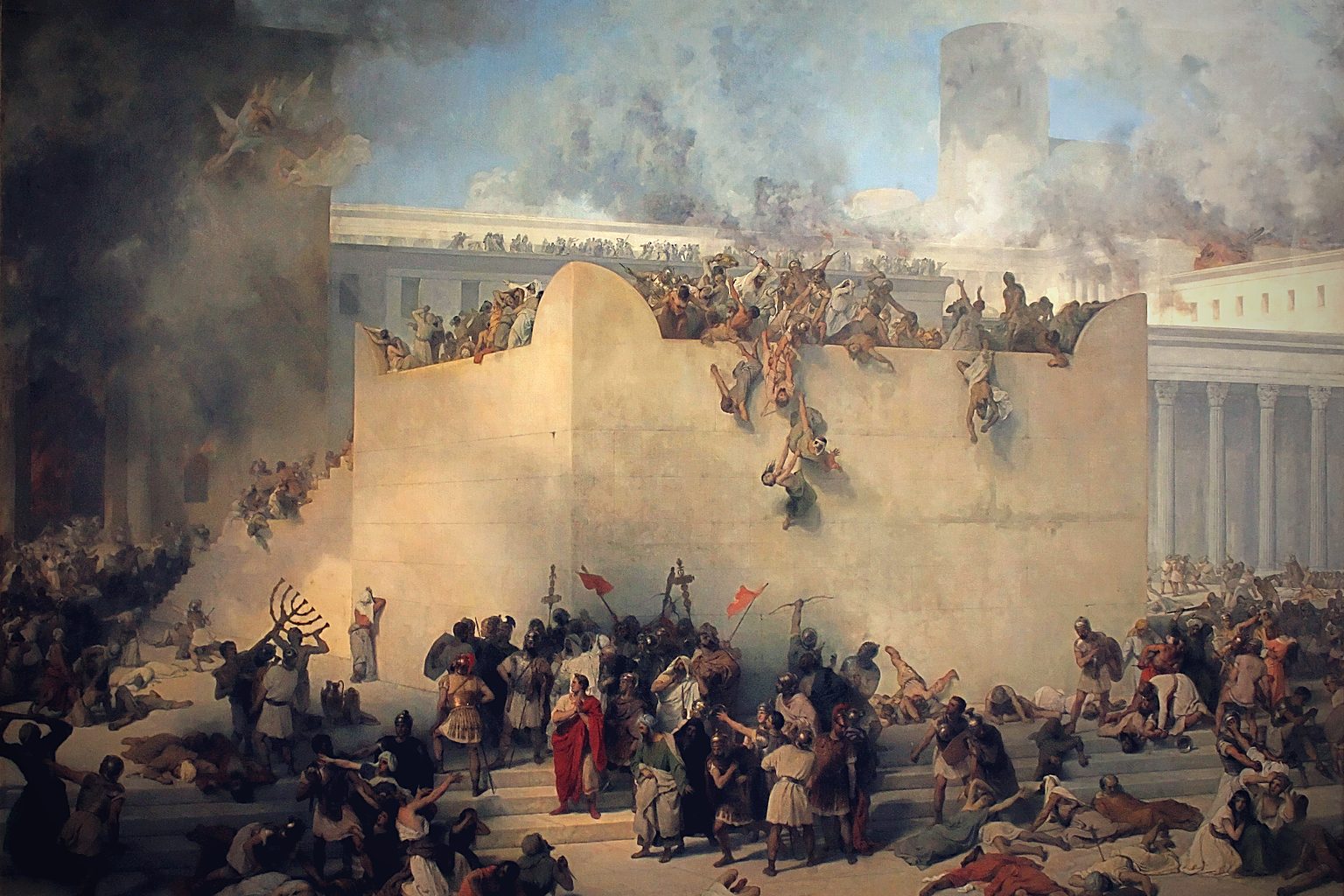
On 1 July 2025, in the hills of Samaria, a red heifer was burned. Within days the clip was everywhere: the ashes had been produced, the last obstacle to the third temple was cleared, construction could begin.
Then the organisation that ran the ceremony issued a correction. The animal had been, in its own words, the most invalid of the heifers in its possession. The priestly garments worn were not consecrated. The whole thing was a training exercise. “Anyone who claims that the heifer was kosher and the ashes produced from it are kosher for the purpose of purification,” the Temple Institute wrote, “is mistaken and misleading.” On 10 November 2025 the modern Sanhedrin endorsed that statement completely and added a warning of its own against people selling the ashes to Gentiles.
The third temple is one of the most searched subjects in biblical prophecy and one of the worst reported. This is what the texts actually specify, what has actually been built, and what stands between the plans and the ground.
Is the Third Temple in the Bible?
The phrase “third temple” appears nowhere in the Bible. It is a counting convention, not a quotation: Solomon’s temple is the first, the post-exilic building that Herod rebuilt is the second, so any future one is the third.
What the Bible does contain is stranger and more specific. Ezekiel devotes nine chapters to a temple that has never been built, measured to the cubit. And several New Testament passages speak of a temple standing at a time when, by the ordinary chronology, no temple stands. Those two facts are the whole textual case, and they point in different directions.
So the honest answer has three parts. A future temple is not named in scripture. A detailed unbuilt temple is described in scripture. And the book that ends the Christian canon says that in the end there is no temple at all.
What Stood There, and What Happened to It
The counting only makes sense with the history attached.
| Built | Destroyed | By | |
|---|---|---|---|
| First temple | Solomon, 10th century BC | 586 BC | Nebuchadnezzar II |
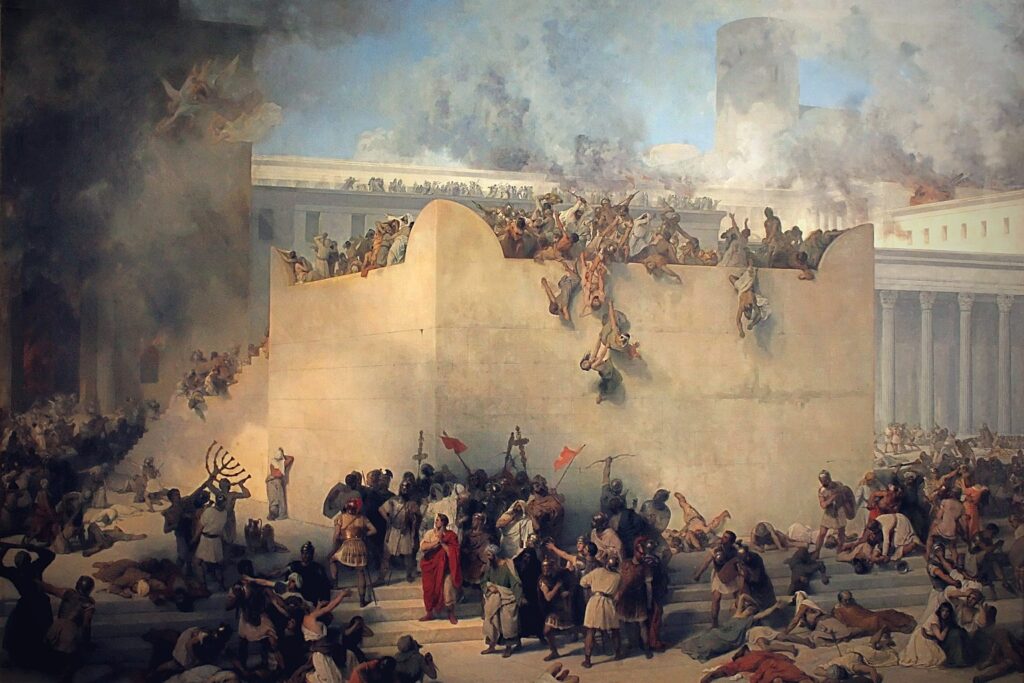
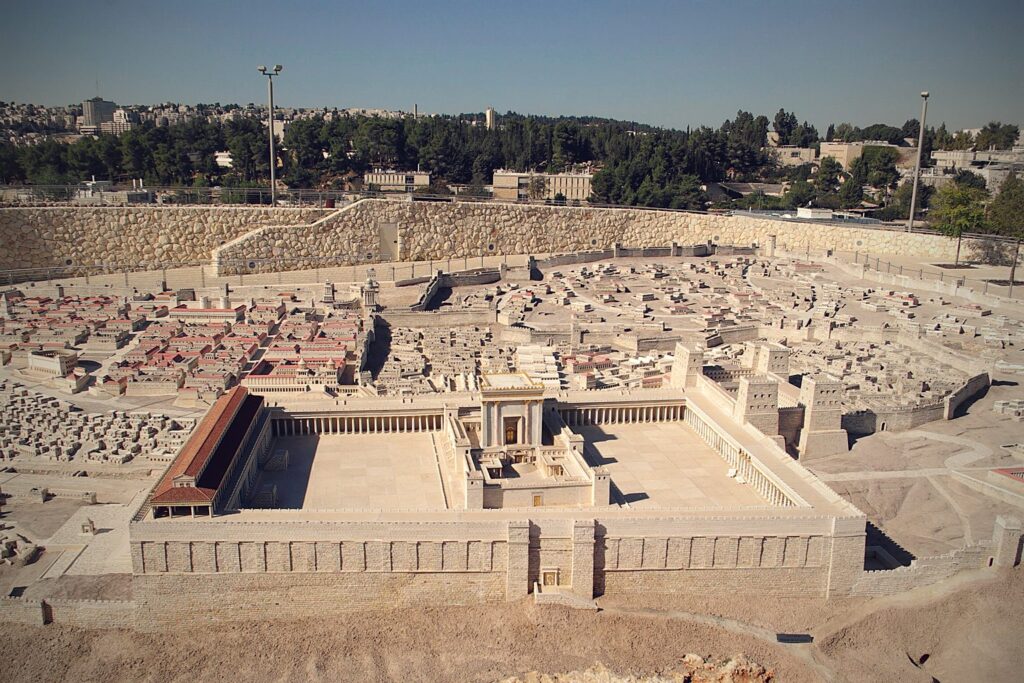
| Second temple | Returnees, dedicated 516 BC; rebuilt on a vast scale by Herod from 20 BC | AD 70 | Titus, in the First Jewish–Roman War |
The second destruction is the one that matters here, because it is the one nothing has replaced. The Arch of Titus still stands in the Roman Forum with the temple’s own furniture carved into it — the menorah, the trumpets, the table — carried through Rome in a triumph.
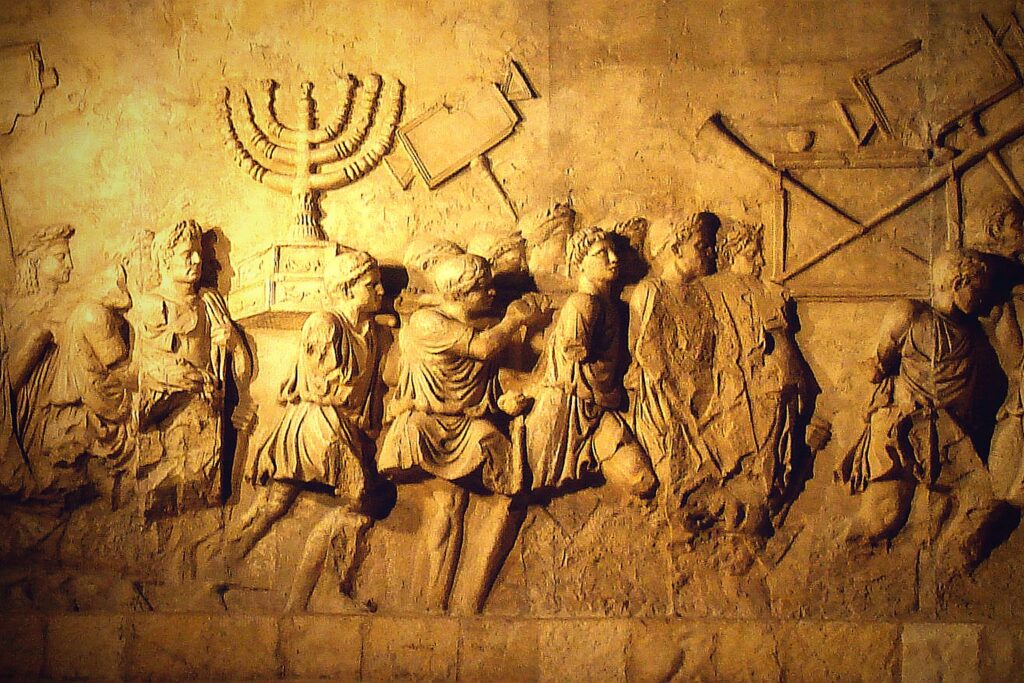
That relief is a useful corrective to a great deal of prophecy writing. The vessels are not hidden or waiting. They were catalogued, paraded and dispersed. A third temple would not be a restoration of the second. It would be a new building furnished with new objects, which is exactly what the people preparing for it understand and what most coverage of them does not.
Ezekiel’s Temple: A Blueprint Nobody Used
The longest architectural passage in the Bible is Ezekiel 40–48, and it describes a building that has never existed. A man with a measuring reed walks the prophet through gates, courts, chambers and thresholds, giving dimensions throughout. A river runs out from under the threshold and deepens as it goes.
“Son of man, the place of my throne, and the place of the soles of my feet, where I will dwell in the midst of the children of Israel for ever.” (Ezekiel 43:7)
Three readings compete, and each has real support.
- A literal future temple. The measurements are too specific to be decorative. This is the reading that produces most third-temple expectation.
- A symbolic vision. The river that becomes an uncrossable flood a mile from its source is not plumbing. The passage may be describing restored presence, not a construction project.
- A programme for the returnees that was not followed. Ezekiel wrote in exile. The people who came back built something considerably smaller and did not use his plan.
The site’s reading of Ezekiel’s other famous vision applies here too: the text is precise about what the prophet saw and silent about what it was made of. Precision is not the same as blueprint.
What the New Testament Assumes
Several passages speak of a temple in a way that assumes one is standing.
“Who opposeth and exalteth himself above all that is called God… so that he as God sitteth in the temple of God, shewing himself that he is God.” (2 Thessalonians 2:4)
“Rise, and measure the temple of God, and the altar, and them that worship therein.” (Revelation 11:1)
Matthew 24:15 sends the reader to Daniel for the abomination of desolation standing in the holy place. Together these are the engine of the futurist reading: if a coming figure sits in the temple, a temple must exist for him to sit in. That is the logic behind most modern expectation, and it is also the logic behind what Revelation 13 actually specifies about the mark.
State the counter-case at its strongest, because it is strong. Paul wrote 2 Thessalonians around AD 50 and Matthew 24 is set before AD 70 — when the second temple was standing and visible from where the words were spoken. On the preterist reading these passages describe the crisis of that generation, and the temple in them is the one Titus burned. Revelation’s date is contested, but a pre-70 date would make its “measure the temple” the same building. The four ways of reading Revelation are not a modern invention and the choice between them decides this question before any archaeology is consulted.
The Verse That Cuts the Other Way
The book most used to argue for a rebuilt temple disposes of the idea in its final vision.
“And I saw no temple therein: for the Lord God Almighty and the Lamb are the temple of it.” (Revelation 21:22)
This is not an obscure verse. It is the description of the endpoint. Whatever happens in the middle of Revelation, the city it arrives at has no temple in it, and the stated reason is that the building was always a stand-in for a presence that no longer needs one. A future temple, on this reading, is a stage and not a destination — which is why the city that replaces it is described with no sanctuary at its centre.
Is the Third Temple Being Built? What Is Actually Ready
This is the most searched form of the question, and it has a precise answer: no construction has begun, and none is possible, but a great deal of furniture exists.
The Temple Institute was founded in Jerusalem in 1987 by Rabbi Yisrael Ariel. It has reconstructed more than seventy sacred vessels — the menorah, the incense altar, the table of the showbread — in gold, silver and copper, to what it holds are exact biblical specifications, along with priestly garments. They are displayed in its museum in the Jewish Quarter. Between 2008 and 2011 the institute received Israeli state subsidies averaging around 412,000 shekels a year.
Two things are true at once. The preparation is real, expensive and decades old. And the institute represents a small minority of Orthodox Jews, which is the part that almost never survives into a headline.
The Red Heifer: What the 2025 Ceremony Actually Was
Numbers 19 requires the ashes of an unblemished red heifer to purify anyone who has been in contact with a corpse. Without that purification nobody can serve in a temple. This is why the red heifer became the symbolic bottleneck, and why every candidate animal is treated as news.
Here is the sequence, which is more interesting than the viral version.
- Around 2023 five red calves were brought to Israel from the United States, checked and certified there as perfectly red.
- Within months several began growing white hairs. Whether the hairs disqualify them depends on how close together they sit, and that has been under discussion ever since. Rabbi Ariel put it plainly: at this moment it is not clear whether there is a heifer suited for the ceremony.
- The 1 July 2025 burning in Samaria was a simulation — one of a decade-long series of practical exercises. The animal used was chosen precisely because it was the least valid of those available, and the officiating kohen’s garments were not consecrated.
- On 10 November 2025 the modern Sanhedrin endorsed the Temple Institute’s clarification and publicly warned that anyone claiming those ashes purify Gentiles is a fraud.
- Four candidate heifers remain under observation at Shiloh. In June 2026 a red calf named Tamima was born on a dairy farm in the Galilee. Its status depends on whether it reaches maturity without a disqualifying hair or defect, which is the step that has failed every time so far.
No valid ashes exist. That is the position as it stands, stated by the organisation that most wants the opposite to be true.
The Obstacle Nobody Can Engineer Around
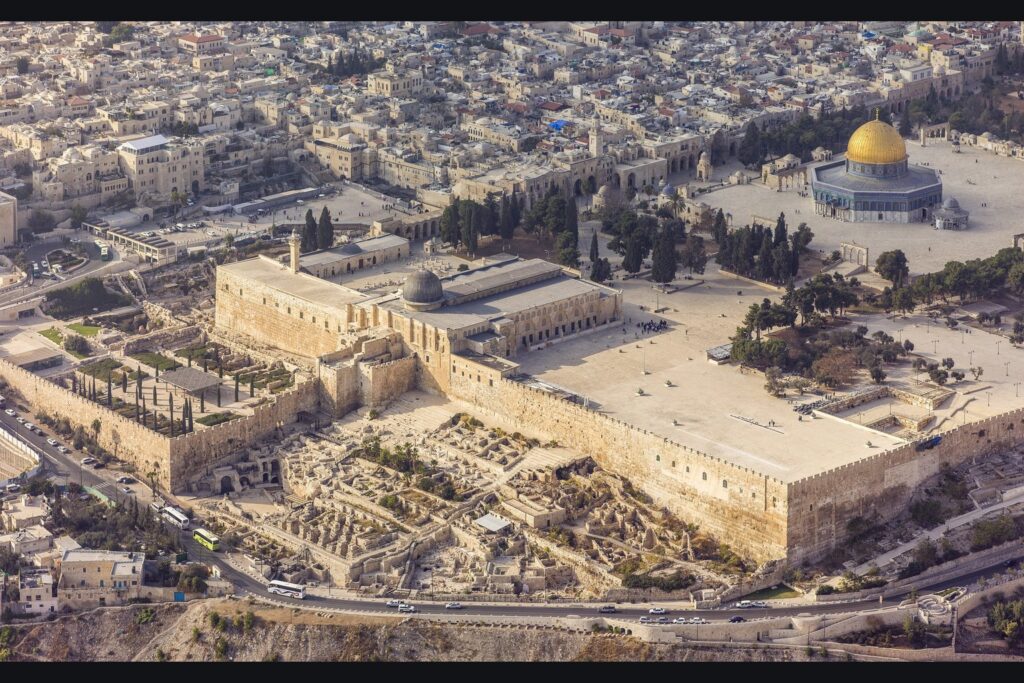
The site is thirty-five acres, and it is occupied. The Dome of the Rock has stood on it since 691. The Al-Aqsa Mosque is the third-holiest site in Islam. The compound is administered by the Islamic Waqf while Israeli police handle security, and it sits on UNESCO’s list of World Heritage in Danger.
Visits by Israeli politicians and organised Jewish activist groups increased markedly through the 2010s and 2020s, and police practice shifted over that period from removing Jewish worshippers to protecting organised Jewish prayer. That shift is the actual live story, and it is a political one about access rather than a construction one about foundations.
No engineering problem here is hard. Every hard problem is that other people are standing on the answer.
Nobody Is Certain Where It Stood
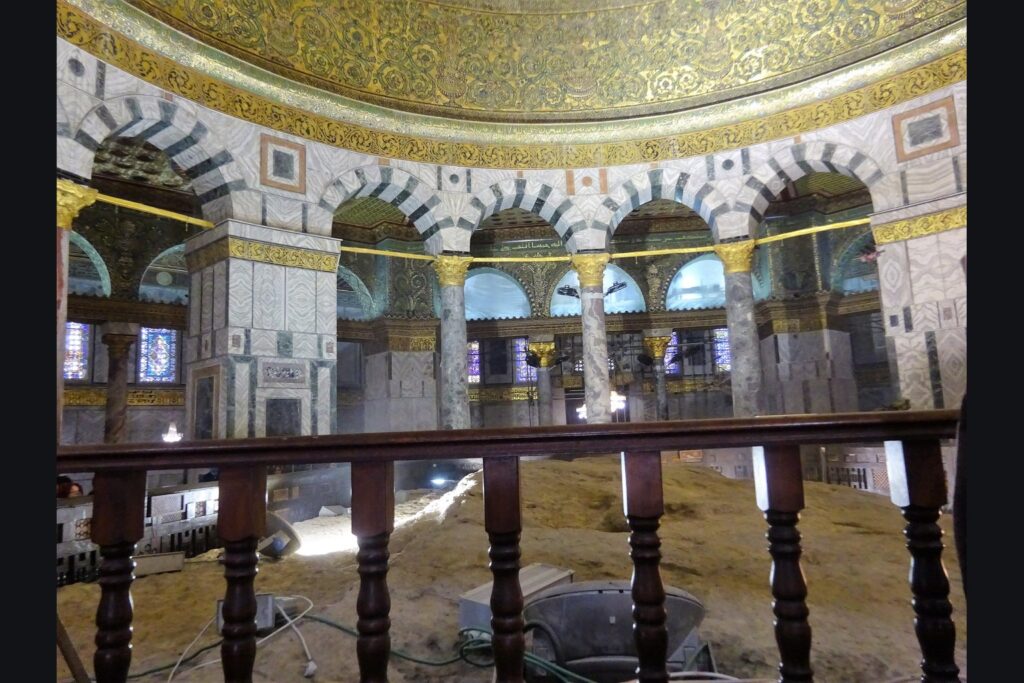
Even the location is contested, which is rarely mentioned by either side.
The archaeologist Leen Ritmeyer argues that the Foundation Stone — the exposed bedrock inside the Dome of the Rock, the summit of Mount Moriah — is the floor of the Holy of Holies, and identifies a rectangular cutting in it as the emplacement for the Ark of the Covenant described in 1 Kings 8. Other scholars place the temple north or east of the present dome, reading the same classical sources differently.
The consequence is concrete. On Ritmeyer’s reconstruction a rebuilt temple would have to occupy the exact footprint of the Dome of the Rock. On a northern reconstruction it might not. The difference between a demolition and a coexistence is a few dozen metres nobody can survey, and the Holy of Holies at the centre of it would in any case be empty, because the object it was built around has been missing since the first destruction.
The Rabbinic Position Most Coverage Skips
Mainstream Orthodox authorities do not support building a temple now. The position is that it belongs to the messianic era and to divine rather than human initiative.
More pointedly, the Chief Rabbinate of Israel ruled in 1967 — immediately after the Six-Day War put the site within reach — that Jews may not ascend the Temple Mount at all, on grounds of ritual impurity, and reconfirmed that ruling in January 2005. A minority following Maimonides holds that rebuilding should be attempted when circumstances allow, and that minority is the constituency the Temple Institute speaks to.
So the picture inverted: the religious authority with the most obvious motive to want a third temple is the one telling people to stay off the hill.
It Has Been Tried Once
In 363 the emperor Julian, restoring the old religions across the empire and no friend of the church, gave permission for the temple to be rebuilt. Work began.
It stopped almost immediately. Ammianus Marcellinus — a pagan historian, not a Christian apologist, which is what makes the passage worth citing — records fearful balls of fire breaking out near the foundations and driving the workmen off. The likely cause is the Galilee earthquake of the same year; fire, sabotage and ambivalence among the intended builders have all been proposed. Christian historians of the period attributed it to divine intervention, which is exactly what one would expect them to say and is not evidence.
Julian died that year on campaign in Persia and the permission died with him. It remains the only occasion in nineteen centuries on which rebuilding actually started.
The Case Against It
Three honest problems.
“No valid ashes” is a status, not a verdict. The red heifer requirement is a real bottleneck today, but it is a breeding problem, and breeding problems get solved. Treating the current disqualifications as permanent would be the mirror image of the error this article is correcting.
The preterist reading is not proven either. Pointing out that 2 Thessalonians was written while the second temple stood does not settle what Paul meant. Dating Revelation before or after AD 70 is genuinely contested and a great deal rides on it. Anyone who tells you the question is closed, in either direction, is overselling.
Ezekiel 40–48 remains unexplained on every reading. If it is symbolic, the measurements are strange. If it is literal, nobody built it. If it was a programme for the returnees, they ignored it and the text never says why. The passage is a genuine loose end, and the confident readings on both sides are confident about something the text does not resolve.
Frequently Asked Questions
Is the third temple being built?
No. No construction has started and none is under way. What exists is furniture: the Temple Institute has prepared more than seventy vessels and a set of priestly garments since 1987. The site itself is occupied by the Dome of the Rock and the Al-Aqsa Mosque, and no building permit for a temple exists.
Is the third temple in the Bible?
The phrase is not. Ezekiel 40–48 describes an unbuilt temple in detail, and 2 Thessalonians 2:4, Revelation 11:1 and Matthew 24:15 speak of a temple standing at a future crisis. Whether those passages describe a building still to come or the one destroyed in AD 70 depends on which reading of prophecy you hold.
Was a red heifer sacrificed for the third temple?
Not validly. The ceremony of 1 July 2025 was a training simulation: the Temple Institute stated afterwards that the animal used was the least valid in its possession and that the officiating priest’s garments were not consecrated. The modern Sanhedrin endorsed that clarification on 10 November 2025. No valid ashes exist.
Where would the third temple be built?
On the Temple Mount, but the exact spot is disputed. Leen Ritmeyer places the Holy of Holies on the Foundation Stone inside the Dome of the Rock; others put the temple north or east of it. The difference decides whether a rebuilt temple would require demolishing the dome.
Do Jews want to rebuild the temple?
Mainstream Orthodox authorities hold that it awaits the messianic era and divine initiative, and the Chief Rabbinate ruled in 1967, reconfirmed in 2005, that Jews may not ascend the Temple Mount at all because of ritual impurity. The groups actively preparing represent a small minority.
Has anyone ever tried to rebuild the temple?
Once. The emperor Julian authorised it in 363 and work began. Ammianus Marcellinus records balls of fire near the foundations stopping the work; the Galilee earthquake of that year is the likely cause. Julian died the same year and the project died with him.
What happened to the temple vessels?
They were taken to Rome. The Arch of Titus, finished in AD 81, carves the menorah, the trumpets and the table being carried in triumph. The vessels were not hidden for a future temple — which is why the Temple Institute has spent decades making new ones.
Will the third temple be destroyed?
Revelation 21:22 says the final city has no temple in it at all, “for the Lord God Almighty and the Lamb are the temple of it”. On that reading a third temple would not be destroyed so much as made unnecessary — a stage rather than an endpoint.
What Would Actually Have to Happen
The third temple is usually reported as though one requirement is holding it back, and as though that requirement is nearly met. The list is longer than that.
The vessels are finished. The garments are woven. The plans exist. What does not exist is a valid set of ashes, an agreed location, a permit, a rabbinate that will let anyone onto the hill, or thirty-five acres that are not already the third-holiest site in another religion. Remove the red heifer from the list entirely and nothing moves.
And there is an argument that has nothing to do with archaeology or politics, made by readers inside the tradition rather than outside it: the last chapter of the book the expectation is built on describes the end of the story and puts no temple in it. Those who expect the building read that chapter differently. It is, in the end, an argument about how to read a text, which is where this subject started.
Continue Reading
- Biblical Prophecies That Came True — and the Test That Sorts Them — Four questions decide whether a prophecy can be checked at all. Tyre, Cyrus, the temple and one that failed outright…
- The New Jerusalem: Is the City of God a Divine Mothership? — Revelation gives the New Jerusalem a size, a shape and a materials list. Twelve thousand furlongs a side, walls of only…
- The End of the World According to Revelation — Seals take a quarter, trumpets a third, bowls take everything. The fractions are the tell. Revelation is not a…