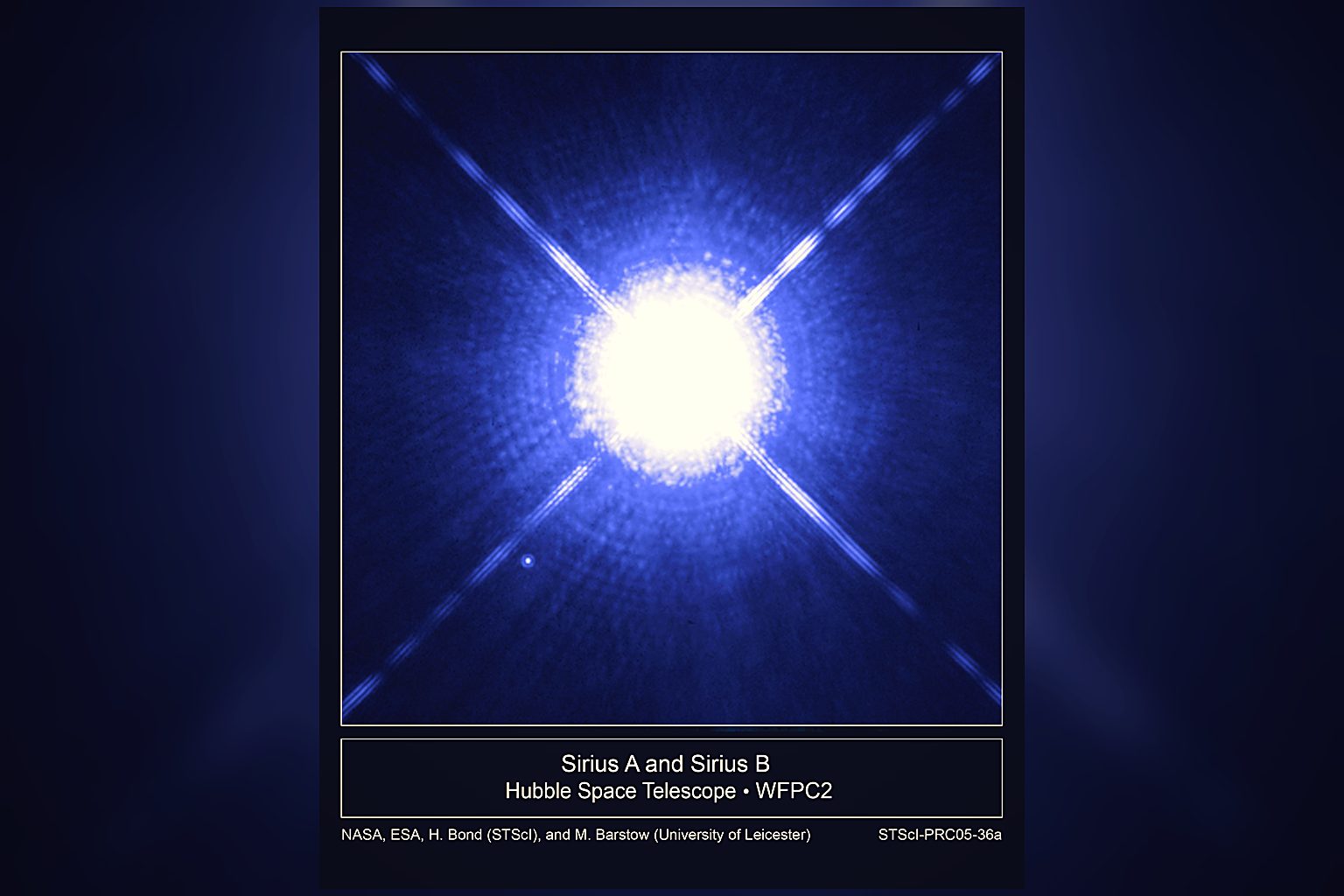
The Dogon, a farming people in Mali, with no telescopes and no written astronomy, are recorded describing a star that cannot be seen with the naked eye. They say it circles Sirius. They say it takes about fifty years to go round. They say it is made of matter so heavy that all the people on earth together could not lift a piece of it.
Every one of those statements is true of Sirius B, a white dwarf first glimpsed through an 18.5-inch refractor in 1862.
The recording was made by a French anthropologist in the 1940s. What you make of it has been argued about for seventy years, in journals rather than on television, and the argument is still open in a way most ancient-astronaut claims are not.
What Was Actually Claimed
Marcel Griaule began fieldwork among the Dogon in 1931 and worked with them for two decades, latterly with Germaine Dieterlen. In 1950 they published “Un système soudanais de Sirius” in the Journal de la Société des Africanistes.
They reported that Dogon religious knowledge, revealed to Griaule by initiated elders, included:
- Sigi tolo — Sirius, the visible star
- Po tolo — a companion star, invisible, orbiting Sirius
- That po tolo completes its orbit in about 50 years
- That it is made of sagala, a substance so heavy that “all earthly beings combined cannot lift it”
- That its orbit is elliptical, with Sirius not at the centre
- A third star, emme ya, with a planet
The astronomy: Sirius B was first observed in 1862 by Alvan Graham Clark. Its orbital period is about 50.1 years. It is a white dwarf with a density around a tonne per cubic centimetre. Its orbit is elliptical, with Sirius A at a focus.
The correspondence is close. That is why the case has lasted.
The Case as Its Advocates Make It
Robert Temple built The Sirius Mystery (1976) on the Griaule material, arguing that the knowledge reached West Africa in remote antiquity from amphibious beings associated with the Sirius system, and connecting the Dogon material to Egyptian and Babylonian traditions about Sirius and about fish-bodied teachers.
Strip away the amphibians and the structure of the argument is unusually solid for this genre:
- The source is academic, not tabloid. Griaule was a professional anthropologist holding a chair at the Sorbonne. The material was published in a peer-reviewed journal by two named researchers with decades in the field.
- The claims are specific and checkable. Not a resemblance in a carving or a mistranslated tablet — a period in years, a description of density, the shape of an orbit. Things that are either right or wrong.
- They are right. Fifty years against 50.1. “Cannot be lifted” against a tonne per cubic centimetre. Elliptical, off-centre.
- The knowledge is embedded, not incidental. The Sirius material sits inside the Sigui, a ceremony held roughly every sixty years and staged over several years, with carved masks kept across cycles. Advocates point out that the associated objects and ceremonial rhythm are old, and argue that a modern rumour does not embed itself that deep.
This is why the Dogon case is cited when vaguer ones are dropped. It has a paper trail.
What Happened When Someone Went Back
The Dutch anthropologist Walter van Beek spent extended periods with the Dogon through the late 1970s and 1980s, in the same villages Griaule had worked in, including with descendants of his informants. He set out to build on Griaule’s work.
He published the result in Current Anthropology in 1991, as “Dogon Restudied: A Field Evaluation of the Work of Marcel Griaule”. His findings:
The Sirius knowledge was not present. His informants did not describe a companion star. Some knew the name po tolo, but not consistently as a star, and none produced the system Griaule reported.
Nobody had heard of the detailed system — including elders who should have been initiates, and men who had worked with Griaule directly.
Dogon religion did not work the way Griaule described it. Van Beek found religious knowledge to be variable, locally differentiated and open to individual interpretation, rather than a single esoteric system held uniformly by initiates.
He proposed that Griaule’s interviewing style — intensive, over two decades, through interpreters, by a man personally enthusiastic about astronomy — had produced answers rather than collected them, in a culture where giving a questioner a satisfying answer is a courtesy.
The Reply From Griaule’s Side
Van Beek’s paper did not end the matter, and it is worth knowing why.
Current Anthropology publishes major papers with commentary attached, and this one ran with responses from a row of Africanists and anthropologists including Mary Douglas, Claude Meillassoux, Rogier Bedaux and Suzanne Preston Blier. The debate was real, not a formality.
Geneviève Calame-Griaule — Marcel Griaule’s daughter, and an Africanist in her own right — rejected van Beek’s account and defended her father’s work.
The central defence is structural rather than personal: Dogon deep knowledge, sigi so, is restricted by design. It is given to initiates, in stages, over years, and not to visiting researchers on demand. Griaule spent twenty years earning it. On this reading, van Beek’s failure to find the system is evidence about van Beek’s access, not about whether the system exists.
That defence has an obvious problem and an obvious strength at the same time. It is unfalsifiable in practice — any failure to replicate can be attributed to insufficient initiation. But it is also a real description of how restricted knowledge works in many societies, and dismissing it out of hand is its own kind of error.
How the Information Could Have Travelled
The competing explanation does not require anyone to have lied.
Griaule was an amateur astronomy enthusiast and is known to have discussed astronomical matters with his informants. And the relevant facts were in circulation long before 1931:
- Sirius B was discovered in 1862 and widely reported. Its extraordinary density was established in the 1910s and 1920s — Eddington’s work on white dwarfs was a celebrated story, covered in the popular press.
- The roughly 50-year orbital period was standard published astronomy by the early twentieth century.
- European astronomers came to the region. A French expedition under Henri-Alexandre Deslandres spent five weeks in Dogon country observing the 1893 solar eclipse, and another eclipse drew expeditions in 1900.
- French colonial schools, missionaries and administrators had been present for decades.
On this reading the Sirius system is a co-creation: a striking astronomical anecdote entering a culture, being woven into an existing and genuinely rich cosmology, and being reflected back to an enthusiastic interviewer over twenty years.
The Third Star
One element of Griaule’s account is doing more work in this argument than any other.
He reported a third star, emme ya, orbiting Sirius — larger than Sirius B but lighter, with a planet of its own.
No such star has been found. Searches for a Sirius C have been run repeatedly with modern instruments. A 1995 analysis suggested a possible small perturbation in the system, but direct imaging and astrometry since have not confirmed any third body.
Both sides read this differently, and both readings are coherent.
For critics, it is the tell. If the information came from early twentieth-century astronomy, it would carry that era’s mistakes — and a further companion to Sirius was being speculated about then, on the basis of irregularities in the observed orbit. A system that matches human astronomy including its errors, at exactly the date the interviewer was present, looks like transmission.
For advocates, it is an outstanding prediction rather than an error. Sirius C has not been found, but the system has not been exhaustively searched either, and a faint low-mass companion is a hard object to rule out. They would say the case is open until it is closed properly.
What the Dogon Actually Have
Whatever you conclude about the star, one thing gets lost in the argument.
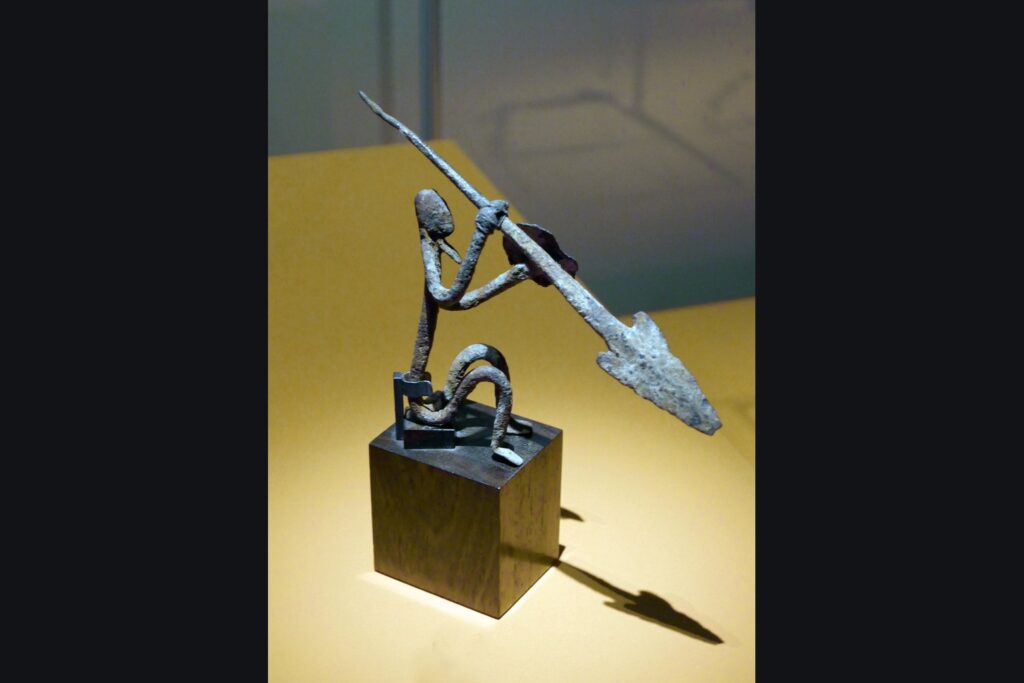
The Dogon built an architecture into the Bandiagara Escarpment that is now a UNESCO World Heritage Site. They maintain an elaborate mask tradition and the Sigui, a ceremony on a roughly sixty-year cycle, run over several years, with objects kept between cycles. Their agricultural knowledge of a hard environment is detailed and hard-won.
That is a culture with a great deal to say for itself before anyone mentions white dwarfs — much as the water engineering at Nazca and the stone-fitting at Puma Punku are impressive on any reading of who did them.
Frequently Asked Questions
What is the Dogon Sirius mystery?
The claim that the Dogon people of Mali possessed knowledge of Sirius B — an invisible companion star with a 50-year orbit and extreme density — before European contact. It originates with Marcel Griaule and Germaine Dieterlen’s 1950 paper.
Did the Dogon really know about Sirius B?
That is exactly what is disputed. Griaule recorded the knowledge in detail across two decades of fieldwork. Walter van Beek, working later in the same villages, could not find it and published that conclusion in 1991. Griaule’s defenders reply that the deepest Dogon knowledge is restricted to initiates and not available to a visiting researcher.
Who wrote The Sirius Mystery?
Robert Temple, in 1976. He argued the Dogon knowledge descended from amphibious beings associated with the Sirius system in remote antiquity, and linked the material to Egyptian and Babylonian traditions.
What is emme ya?
A third star Griaule reported the Dogon knew of, orbiting Sirius, larger than Sirius B but lighter. No such star has been confirmed. Critics read that as an error inherited from early twentieth-century speculation; advocates read it as a prediction not yet tested to the limit.
How could the information have reached the Dogon another way?
Sirius B’s discovery in 1862 and its extraordinary density were widely publicised by the 1920s. French eclipse expeditions visited Dogon country in 1893 and 1900, and Griaule himself was an amateur astronomy enthusiast who interviewed intensively through interpreters for twenty years.
Is Sirius B visible without a telescope?
No. Sirius B is about ten thousand times fainter than Sirius A and sits very close to it in the sky. It was first observed in 1862 by Alvan Graham Clark using an 18.5-inch refractor.
What is the Sigui ceremony?
A Dogon ceremony held roughly every sixty years and conducted over several years, associated with their calendar and with Sirius. It is a genuine and well-documented element of Dogon culture, independent of the Sirius B argument.
What did Walter van Beek conclude?
That the Sirius system Griaule reported was substantially a co-creation between an enthusiastic interviewer and courteous informants over two decades — not deliberate fraud by anyone, and not independent astronomical knowledge either.
What Would Settle It
Two things would move this, and neither is out of reach.
Find Sirius C, or rule it out. If a third body turns up around Sirius with anything like the properties Griaule recorded, the transmission account has a serious problem: nobody in the 1930s could have supplied a fact that was not yet known. If a thorough search excludes it, the strongest remaining piece of the original account is an error — and errors travel with conversations, not with starlight.
Get at the initiation question. The whole Griaule-versus-van Beek dispute turns on whether sigi so knowledge is restricted in a way that would hide it from a later researcher. That is an ethnographic question, answerable by ethnography, and it is the one the Dogon themselves are best placed to speak to.
Until then, what is on the table is this. A published academic record from twenty years of fieldwork, describing a star nobody in that village could have seen. A careful restudy that could not find it. A defence that the knowledge was never for outsiders. And a third star that is either a mistake or a prediction, depending on which of those you find more convincing.
Sirius will be over the Bandiagara Escarpment again this winter, as it has been through every round of the argument.
Continue Reading
- Aliens and the Bible: Every Passage People Cite — Scripture is full of non-human intelligences – that is not in dispute. The real question is whether ‘extraterrestrial’…
- The Anunnaki: What the Sumerian Tablets Actually Say — The Anunnaki are real and the tablets are real. Whether they are the gold-mining aliens from Nibiru is the argument…
- The Nazca Lines: Two Readings of the Same Desert — A 370-metre hummingbird you cannot take in from the ground, cut into a desert that gets twenty minutes of rain a year…