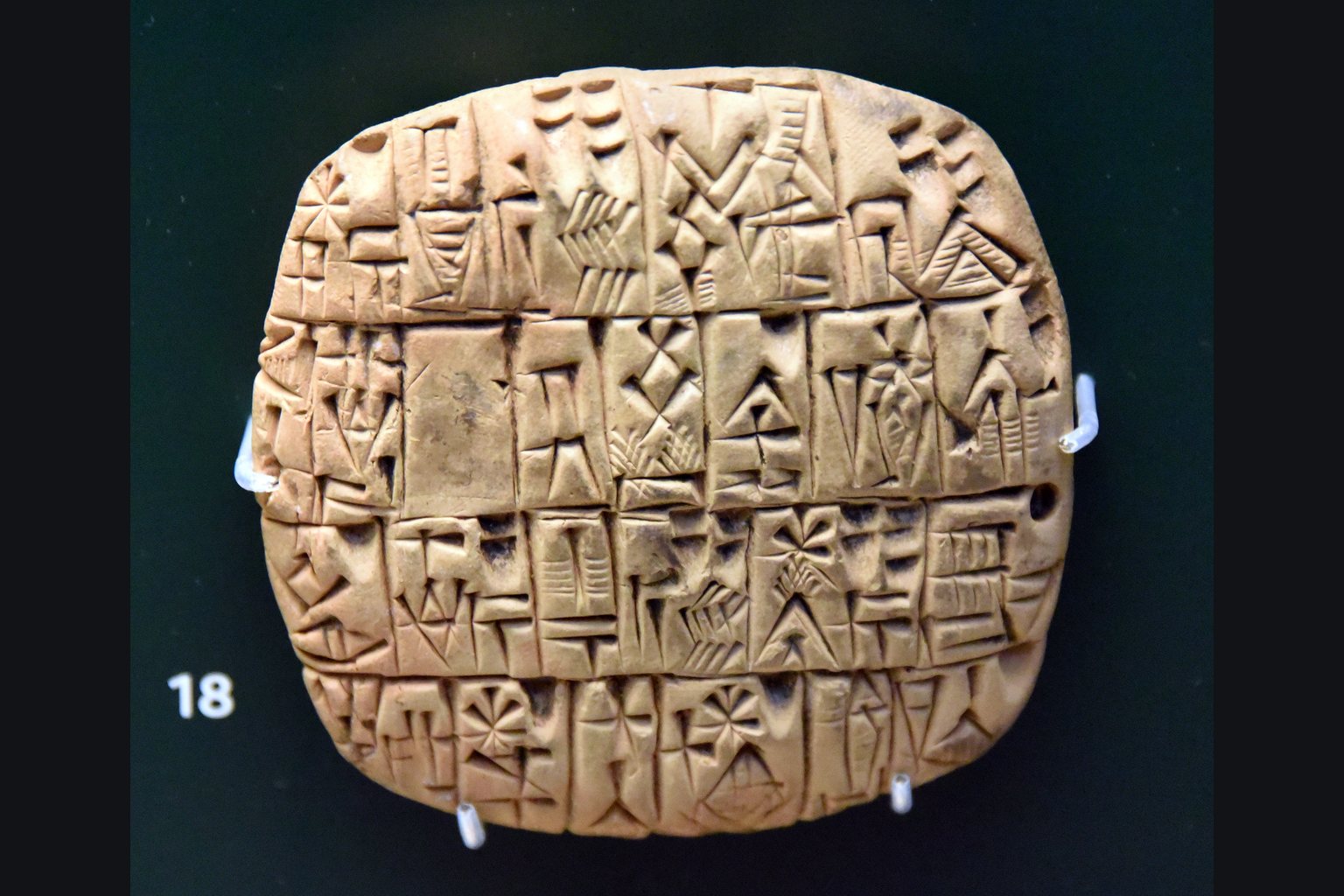
The Anunnaki are real. They appear throughout Sumerian and Akkadian literature, in texts that have been excavated, catalogued and translated by professional Assyriologists for over a century.
Almost everything most people believe about them is not in those texts.
The gold-mining aliens from a planet called Nibiru, who genetically engineered humanity as a slave species and return every 3,600 years — none of that comes from Mesopotamia. It comes from a single author, writing in the 1970s, whose translations specialists in the language have examined in detail and rejected.
The strange part is that the actual Sumerian material is arguably more interesting than the invention, and almost nobody reads it.
Who Were the Anunnaki?
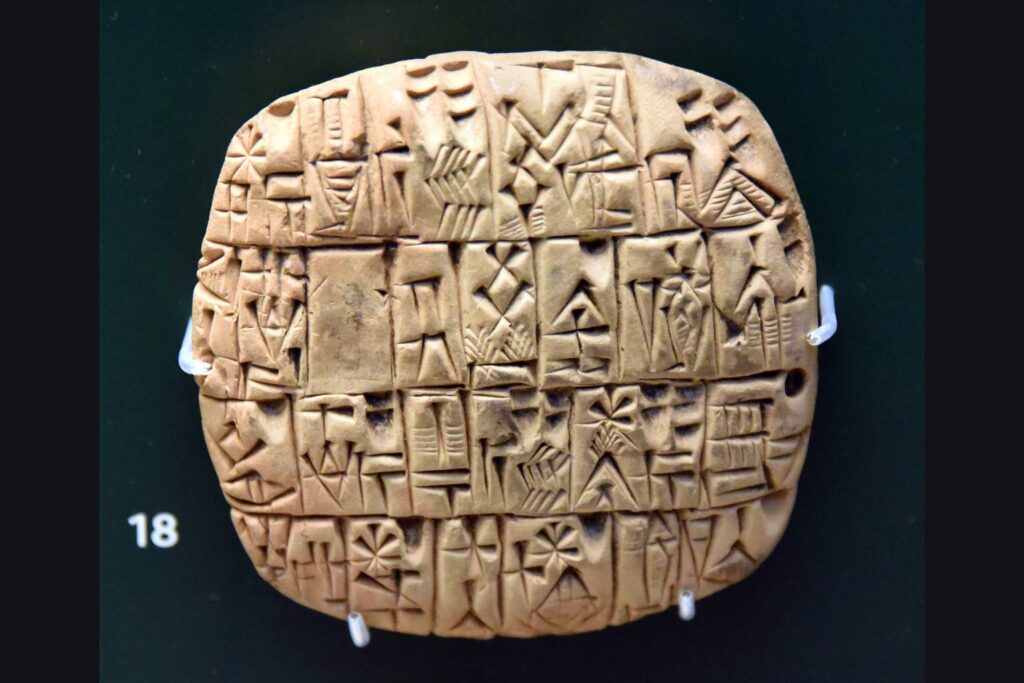
The Anunnaki (Sumerian a-nun-na) are a group of deities in Sumerian, Akkadian, Assyrian and Babylonian religion. The name is generally understood as something like “offspring of An” — An being the sky god — or “princely offspring.”
In the texts they are the high gods of the pantheon: a divine assembly, associated with determining destinies and, in later material, with judging the dead in the underworld. Their number is not fixed. Their role shifts across two thousand years of religious literature, as you would expect.
They are gods. The texts treat them as gods, address them as gods, and build temples to them as gods.
What Sitchin Actually Claimed
Zecharia Sitchin (1920-2010) published The 12th Planet in 1976, the first of a series. His claims, briefly:
- A planet called Nibiru orbits the sun every 3,600 years on a long elliptical path.
- Its inhabitants, the Anunnaki, came to Earth around 450,000 years ago to mine gold, needed to repair their atmosphere.
- Tiring of the labour, they genetically engineered humans by combining their own genes with those of Homo erectus, creating a worker species.
- The Sumerian texts are a literal historical record of this, mistranslated by scholars as mythology.
It is a coherent story, told confidently, and it has been enormously influential — it is the foundation of most modern “ancient astronaut” material.
Why Assyriologists Reject It
The objections are linguistic and specific, not a matter of academic taste. The most thorough critique comes from Michael S. Heiser, who held a PhD in Hebrew Bible and Ancient Semitic Languages and worked through Sitchin’s claims term by term against the cuneiform corpus.
The main points:
Nibiru is not a twelfth planet. In the Mesopotamian astronomical texts, nibiru is a term used for a celestial crossing point or transit position, and is applied most often to Jupiter — occasionally to Mercury, and to other identified bodies. It is never a distant planet beyond the known ones.
Nibiru was seen every year. The astronomical texts describe it as a regularly observed phenomenon. That is incompatible with a 3,600-year orbit by definition.
The Sumerians did not know of twelve planets. Their own records account for five visible planets, plus the sun and moon treated as comparable bodies. There is no twelfth-planet system to be the source of a twelfth-planet claim.
Nibiru is never connected to the Anunnaki. The two are not associated in the texts. Nibiru is never described as inhabited.
The “3,600 years” comes from a number sign. The Sumerian numeral šar denotes 3,600 — because Sumerian arithmetic was sexagesimal, base 60, and 3,600 is 60². It is a unit in a counting system, like our “thousand.” Sitchin treated it as an orbital period.
The genetic engineering is not in the text. The creation accounts — Enūma Eliš, Atra-Hasis, the Enki and Ninmah material — describe humans being made from clay mixed with the blood of a slain god, shaped by a birth goddess. It is a theological creation narrative in the same genre as many others. Nothing describes hybridisation, laboratories, or manipulation of heredity.
Sitchin’s translations were not peer-reviewed and he did not publish in the field’s literature. Assyriologists who have checked them describe systematic errors: words rendered with meanings they do not carry, passages assembled from fragments of different texts, and determinatives — the cuneiform markers that tell you what category a word belongs to — disregarded when inconvenient.
What the Real Texts Say — Which Is Stranger
Here is what gets lost. The genuine Mesopotamian material contains things that are startling on their own terms, and they do not need embellishment.
Humans were created to do the gods’ work. This much is accurate, and it is remarkable. In Atra-Hasis, the lesser gods — the Igigi — go on strike. They have been digging the irrigation canals for forty years and they refuse to continue. They burn their tools and surround the house of Enlil at night. The solution proposed is to create a substitute worker: humanity.
That is a labour dispute, in a religious text, from around 1700 BC, resolved by the invention of a new species. Sitchin did not need to add aliens.
There is a flood narrative that predates Genesis. Atra-Hasis and Gilgamesh Tablet XI both contain it: the gods resolve to destroy humanity, one god warns a single man, he builds a vessel to specified dimensions, loads it with his family and animals, survives, and releases birds to test for dry land. The parallels to the Noah account are close enough that the relationship between the texts is one of the oldest live questions in biblical scholarship.
The reason given for the flood is noise. In Atra-Hasis, humanity multiplies until the racket prevents Enlil from sleeping. It is a strikingly petty motive, and its very awkwardness is part of why scholars take the text seriously as an old and independent tradition rather than a tidy invention.
The king list has the same shape as Genesis 5. The Sumerian King List gives antediluvian rulers reigns of tens of thousands of years, then a flood, then a collapse to ordinary human spans — the same structure as the biblical lifespan curve, at a far larger scale.
Why the Invented Version Spread Instead
It is worth asking why the fabricated account travelled so much further than the real one, because the mechanism is instructive.
It answers everything. The genuine texts are fragmentary, contradictory and strange. They contain gaps, variant versions and passages nobody fully understands. Sitchin’s account has no loose ends — every detail slots into a single narrative. That is emotionally satisfying and epistemically suspicious, in that order.
It cannot be checked by its audience. Almost nobody reads cuneiform. A confident translation is effectively unfalsifiable to a general reader, which means the author’s certainty becomes the only available evidence.
It flatters the reader. The story positions you as someone who sees through an academic cover-up. That is a much better feeling than “specialists have studied this for a century and the answer is complicated.”
This is the same structure as the retracted Sodom airburst paper still circulating years after its withdrawal, and the Paluxy footprints still cited decades after the people who promoted them withdrew them. A clean story outruns a messy correction, every time.
Where the Genuine Open Questions Are
Rejecting Sitchin does not mean the Mesopotamian material is settled. Real disputes exist:
- The relationship between the Mesopotamian and biblical flood accounts — direct dependence, shared source, or common regional memory — is unresolved and actively argued.
- Why these creation accounts describe humanity as made for labour, a theme far less prominent in later traditions, is a genuine question about early Mesopotamian society.
- How much of the Sumerian King List reflects real dynasties versus later construction is debated.
- Large portions of the corpus remain untranslated. Hundreds of thousands of cuneiform tablets sit in museum collections unread, for lack of specialists.
That last point deserves emphasis. The honest headline is not that the tablets have been decoded and contain aliens. It is that most of them have not been read at all — and the bottleneck is funding and trained readers, not suppression.
Frequently Asked Questions
Who were the Anunnaki?
A group of deities in Sumerian, Akkadian and Babylonian religion, understood as the high gods of the pantheon and associated with determining destinies and judging the dead. The name means roughly “offspring of An,” the sky god.
Are the Anunnaki aliens?
Not in any Mesopotamian text. They are consistently described and worshipped as gods. The extraterrestrial interpretation originates with Zecharia Sitchin’s books from 1976 onward, not with the cuneiform sources.
Is Nibiru a real planet?
In Mesopotamian astronomical texts, nibiru refers to a celestial crossing or transit point and is applied most often to Jupiter. It is not a distant twelfth planet, is never described as inhabited, and is recorded as being observed annually.
Where does the 3,600-year orbit come from?
From the Sumerian numeral šar, which denotes 3,600 because Sumerian arithmetic was base 60 and 3,600 is 60 squared. It is a unit in a counting system, not an orbital period.
Did the Sumerians write about genetic engineering?
No. The creation accounts in Atra-Hasis and related texts describe humans being formed from clay mixed with the blood of a slain god and shaped by a birth goddess. There is no description of hybridisation or manipulation of heredity.
Why do scholars reject Zecharia Sitchin?
His translations were never peer-reviewed and specialists who have checked them, notably Michael S. Heiser, document systematic errors: words given meanings they do not carry, passages assembled from unrelated fragments, and cuneiform determinatives ignored.
Is there a Sumerian flood story?
Yes. Atra-Hasis and Tablet XI of the Epic of Gilgamesh both describe a divinely sent flood, a warned survivor, a built vessel, animals aboard, and birds released to test for dry land — predating the Genesis account in written form.
What did the Anunnaki create humans for?
In Atra-Hasis, to take over the labour of the lesser gods, the Igigi, who went on strike after forty years of digging irrigation canals. Humanity is created explicitly as a replacement workforce.
Conclusion: The Tablets Nobody Reads
The most telling fact in this whole subject is a logistical one.
Museums hold somewhere in the region of half a million cuneiform tablets. A large proportion have never been fully translated, and the number of people qualified to read them is measured in the hundreds worldwide. Tablets are still being published for the first time every year, and every so often one of them changes something.
That is the actual state of play: a vast, under-read archive of the oldest literature on earth, bottlenecked by a shortage of trained readers.
Against that, the story of gold-mining aliens from Nibiru is a closed loop — no gaps, no untranslated remainder, nothing left to check. It is the version of Mesopotamia that requires no Mesopotamia.
The gods in the real tablets do not build spacecraft. They go on strike, lose their tempers over noise, drown the world, and then regret it. It is a much stranger record than the one invented to replace it, and it is sitting in museum drawers waiting for someone to read it.
Continue Reading
- The Sumerian King List: 241,200 Years Before the Flood — Eight kings, 241,200 years, then a flood. Almost every retelling adds the numbers up — and what that shape means is the…
- Why Every Culture Remembers a Flood — Over 200 flood traditions worldwide. The word carrying the weight is ‘independently’ — and a 120-metre post-glacial sea…
- The Garden of Eden: Two of the Four Rivers Are Missing — Genesis gives the garden an address. Two rivers are on every map, two match nothing. The drowned Persian Gulf valley…