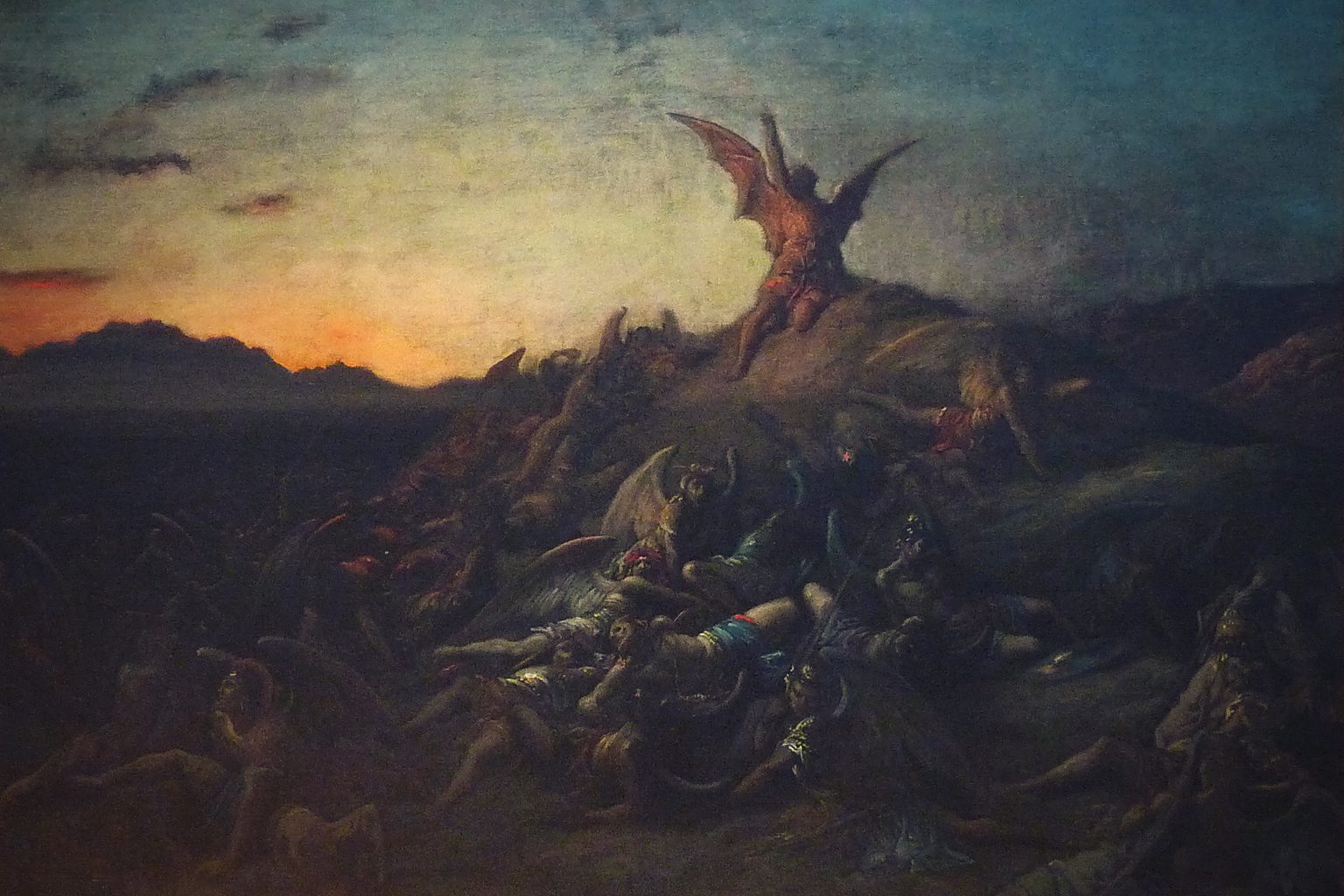
Before the first sunrise over Eden, before matter itself had settled into its final shape, something broke. The ancient texts do not describe it as a myth or a metaphor. They describe it as an event: a cosmic civil war that split the created order in two and permanently changed the address of evil in this universe.
This was not a war over territory or resources. It was a war over the throne of existence itself.
What Was the War in Heaven?
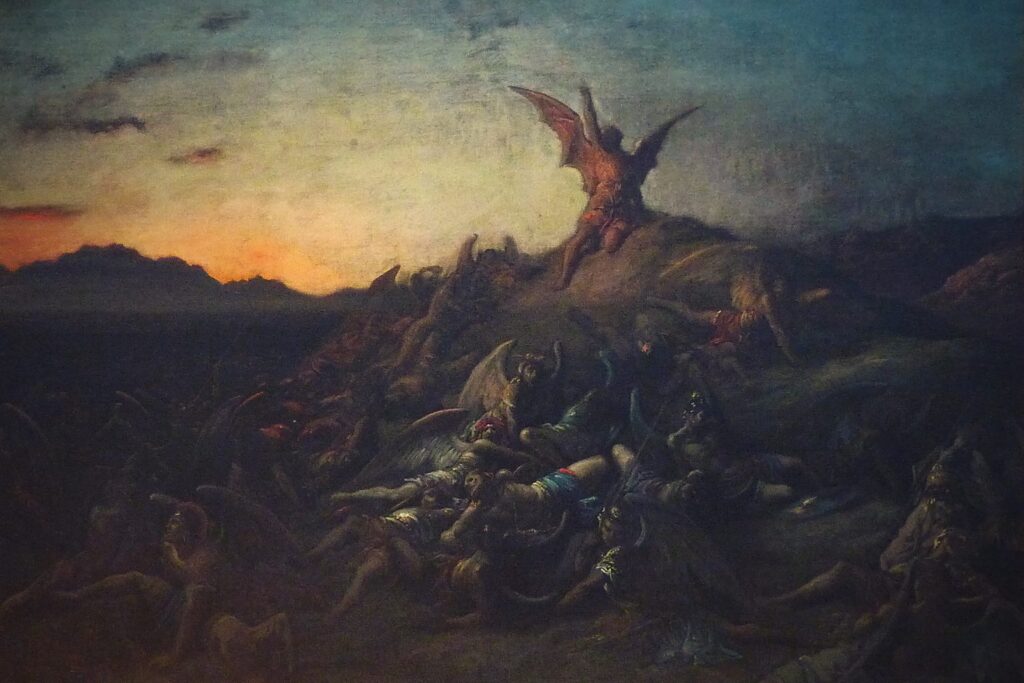
The war in heaven was a rebellion led by the highest-ranking angel in creation, who attempted to seize the throne of God. Revelation 12:7-9 records that Michael and his angels fought against the dragon, that the dragon and his angels lost, and that the defeated were expelled from heaven and confined to the earth. Revelation 12:4 indicates the rebellion drew away a third of the angelic host.
Three details make this account unusual. The rebellion had a named leader. It had a measurable scale. And it ended not in annihilation but in relocation — the losing side was moved, not erased. That last detail is the one that still touches your life today.
The Golden Being: Who Started the Angelic Rebellion?
To understand the war, you have to understand the one who began it — and he was not a monster.
Ezekiel 28:12-15 describes him as the “seal of perfection,” full of wisdom and perfect in beauty. He is called the “anointed cherub that covereth,” a title placing him at the summit of the angelic hierarchy, standing nearest to the throne itself. He was not created flawed. The text is emphatic:
“Thou wast perfect in thy ways from the day that thou wast created, till iniquity was found in thee.” (Ezekiel 28:15)
Then something shifted.
“Thine heart was lifted up because of thy beauty, thou hast corrupted thy wisdom by reason of thy brightness.” (Ezekiel 28:17)
This is the critical point, and it is almost always missed. The corruption did not enter from outside. There was no external tempter, no rival power, no pre-existing evil to catch him. He looked at his own brightness — which was real, and which had been given to him — and drew the wrong conclusion from it. He mistook the gift for the source.
The Five “I Wills” of Isaiah 14
Isaiah 14:13-14 preserves what reads like a formal declaration of intent. Five statements, escalating in ambition:
- “I will ascend into heaven” — leave my assigned station.
- “I will exalt my throne above the stars of God” — rule over the other angels.
- “I will sit also upon the mount of the congregation” — seize the seat of divine government.
- “I will ascend above the heights of the clouds” — take the visible glory.
- “I will be like the most High” — replace God entirely.
Read them in order and you see an appetite that grows by feeding. Each step is a small promotion; the fifth is the end of the universe as a coherent system. Note also what is absent: any accusation that God had wronged him. He had no grievance. He had an appetite.
Why Did a Third of the Angels Follow Him?
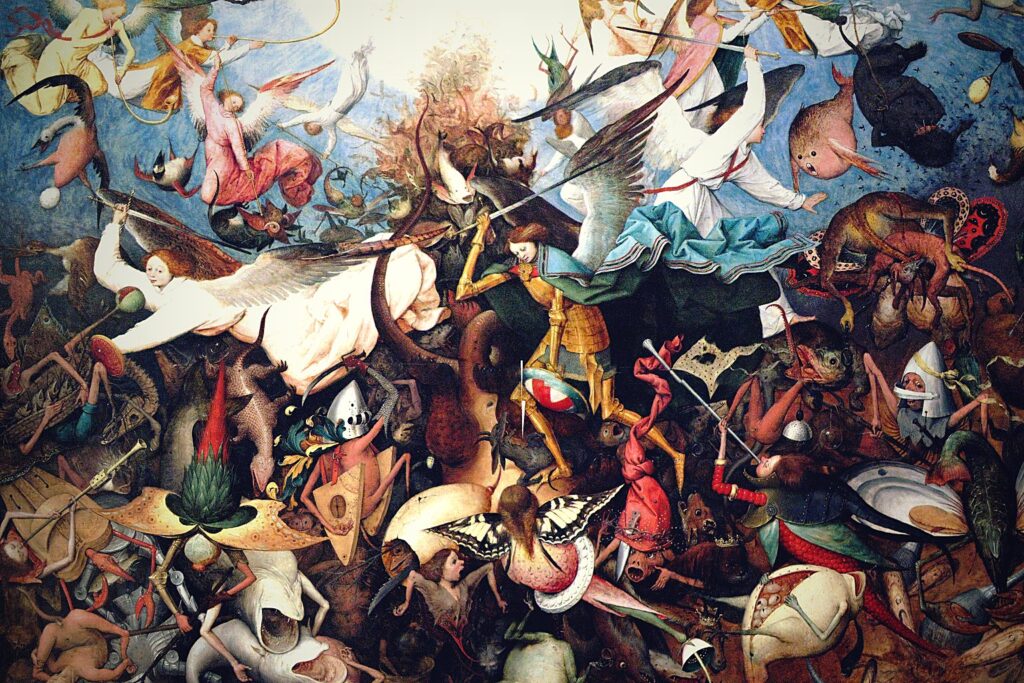
A rebellion of this size does not happen by force. Angels cannot be conscripted. It happened by persuasion — which means for some period of time, an argument was circulating in heaven and finding an audience.
“And his tail drew the third part of the stars of heaven, and did cast them to the earth.” (Revelation 12:4)
In the symbolic vocabulary of Revelation, “stars” repeatedly stand for angelic beings — Revelation 1:20 makes the equivalence explicit. So the figure is not decorative. Roughly one in three of the entire angelic host defected.
That ratio tells you something precise. It is far too large to be a fringe movement and far too small to be a majority. Whatever he was offering was persuasive enough to convince a third of beings who had direct, unmediated access to the truth — and unpersuasive enough that two-thirds, with exactly the same access, rejected it.
The most likely reading is that the offer was not a lie about God. It was a lie about them: a promise of promotion, of autonomy, of a rank they had not been given. The oldest recruiting pitch in existence is not “your master is evil.” It is “you deserve more than this.”
What the Book of Enoch Adds
The Book of Enoch, an ancient text outside the canon but widely read in the Second Temple period, preserves a second and later defection — the descent of the Watchers, two hundred angels who abandoned their stations and bound themselves by mutual oath on Mount Hermon. That episode is distinct from the original rebellion, and it produced the Nephilim. Enoch himself, the man who walked with God and never died, was sent to deliver their sentence.
The pattern is the same in both cases: a station abandoned, a boundary crossed, an irreversible consequence.
Michael and the Dragon: The Battle Itself
Revelation 12:7 states the moment with almost administrative brevity:
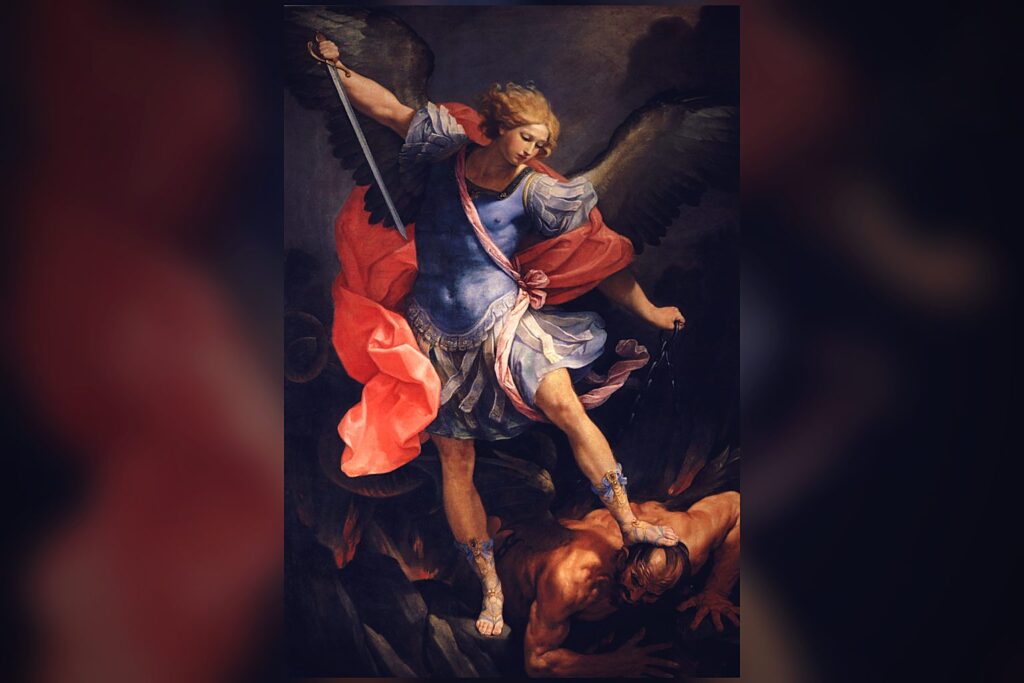
“And there was war in heaven: Michael and his angels fought against the dragon; and the dragon fought against his angels, and prevailed not.”
Everything hinges on who is sent to answer the rebellion. Not God. Michael.
The name is the argument. “Michael” is Hebrew for Mi ka-el — literally, “Who is like God?” The rebel’s entire program was compressed into a single sentence: I will be like the most High. And the being dispatched to meet him carries the refutation as his name. Every time the rebel heard himself challenged, he heard the question his ambition could not survive.
The text says the rebel “prevailed not.” It does not say he was weak. It says he lost — and the reason given is structural rather than military:
“…neither was their place found any more in heaven.” (Revelation 12:8)
Their place was no longer found. Not their army — their position. Heaven did not so much defeat them as cease to have coordinates for them. They had made themselves incompatible with the environment they were standing in.
When Did the War in Heaven Happen?
This is one of the most common questions about the passage, and the honest answer is that Scripture does not date it directly. Three positions are held by serious readers:
| View | When the war occurred | Main argument |
|---|---|---|
| Pre-Eden | Before Genesis 3 | A serpent already hostile to God is present in the garden, so the fall of the rebel must precede it |
| Pre-creation | Before Genesis 1:1 | Job 38:7 has the angels shouting for joy at the founding of the earth, implying they already existed |
| Prophetic | Still future, at the end of the age | Revelation 12 sits inside a sequence of end-time visions |
The strongest case combines the first two with the third. The rebel is clearly already fallen by Genesis 3 — something corrupt is speaking in a garden that God has called good. Yet Job 1:6 and Zechariah 3:1 show the accuser still able to present himself before God long afterward. Revelation 12 may therefore describe a final expulsion: the last removal of access rights that had been progressively narrowing since the beginning.
If that reading is right, the war did not happen once. It has been a long defeat, in stages.
The Exile to Earth: Why This Is Your Problem
They lost. They were not destroyed.
“And the great dragon was cast out, that old serpent, called the Devil, and Satan, which deceiveth the whole world: he was cast out into the earth, and his angels were cast out with him.” (Revelation 12:9)
Here is the sentence that should stop you. The war did not end. It changed address.
The defeated were not sealed in a void or unmade. They were relocated to a specific place, and the text names the place. You are standing on it. The verses that follow are unambiguous about what that means:
“Woe to the inhabiters of the earth and of the sea! for the devil is come down unto you, having great wrath, because he knoweth that he hath but a short time.” (Revelation 12:12)
Read plainly, this is a statement about motive. The adversary is not described as calm, strategic, or patient. He is described as furious and working against a deadline. Having failed to take the throne, he turned to the one thing in creation made in the image of the One he could not replace.
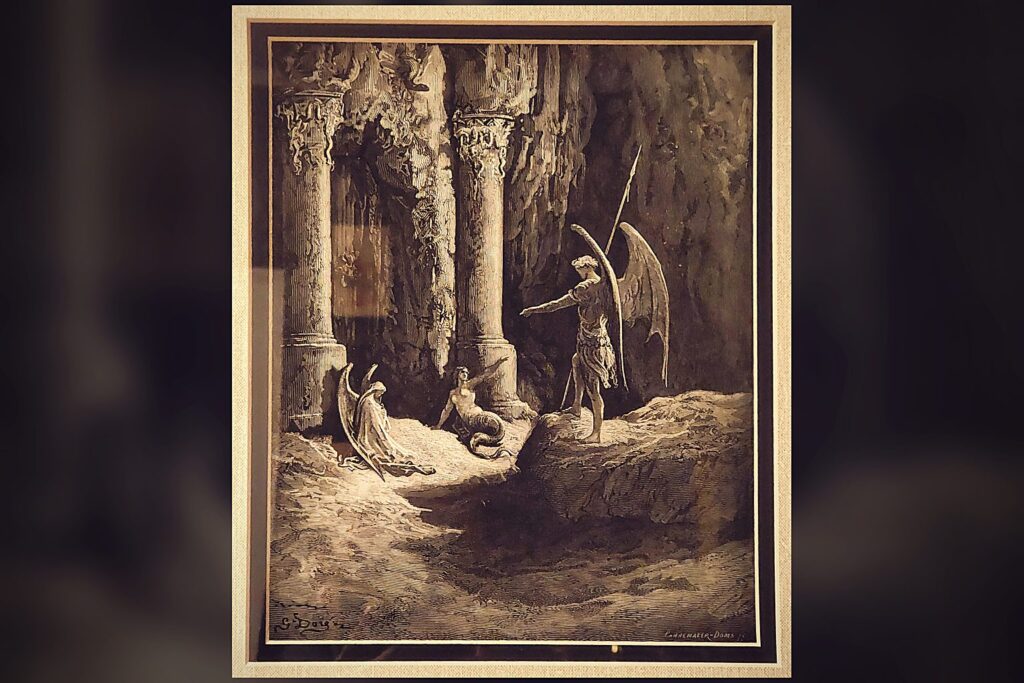
The Physics of a Fall: What “Cast Down” Might Actually Describe
Here is where the biblical account gets genuinely strange, because it keeps using language of place and state for beings that are supposed to be immaterial.
Angels in Scripture are not vague spirits. They are localized. They travel, arrive, are delayed (Daniel 10:13), and can be barred from a region. That is the behavior of entities that occupy something — a domain with rules, boundaries, and transit times. Whatever “heaven” is in these texts, it functions less like a mood and more like a jurisdiction.
That reframes the expulsion in a useful way. The rebels were not merely banished as a punishment. Revelation 12:8 says no place was found for them, which reads like a description of incompatibility — a state that can no longer be sustained by the conditions around it. A system with strict operating parameters ejects what falls outside them. Not out of cruelty. Out of physics.
And their new confinement is described with the same precision. Ephesians 2:2 calls the adversary “the prince of the power of the air.” Ephesians 6:12 locates the conflict in “high places.” Jude 1:6 says the angels who left their assigned station are “reserved in everlasting chains under darkness” — held, bounded, restricted to a shell. Whatever else this is, it is a description of beings with a reduced operating range, cut off from a domain they once had clearance to enter.
This is the same architectural logic that runs through the rest of the biblical record: the Ark of the Covenant as an object with lethal handling requirements, the New Jerusalem as a structure with published dimensions. The Bible consistently treats the invisible realm as engineered, not vague.
Why the Rebellion Failed
Strip away the imagery and the failure has a cause you can state in one line: he wanted the position without the nature that makes the position possible.
To be “like the most High” is not a rank you can occupy. It is not a chair. Every other angel held authority that was delegated — real, but received. The rebel wanted authority that was original, and original authority is not transferable, because the moment it is received it is no longer original.
His project was therefore not evil first. It was incoherent first. He attempted a logical impossibility with enormous power behind it, and the result was the most destructive event in the history of creation. That is the actual warning in the text, and it is not primarily about horns and fire. Free will is dangerous in proportion to the capability of the being exercising it — and the most capable created being in existence used his to attempt something that could never have worked.
Frequently Asked Questions About the War in Heaven
How many angels rebelled against God?
Revelation 12:4 describes the dragon’s tail drawing “the third part of the stars of heaven,” which is traditionally understood as one third of the angelic host. Scripture gives no total number of angels, so the exact figure is unknown — only the ratio.
Who won the war in heaven?
Michael and the loyal angels. Revelation 12:8 says the dragon “prevailed not,” and that no place was found for the rebels in heaven any longer. They were cast down to the earth.
Why did Michael fight Satan instead of God?
The text does not say the outcome was ever in doubt. Michael’s name — “Who is like God?” — is itself the answer to the rebel’s claim that he would “be like the most High.” Sending Michael answers the rebellion on its own terms rather than by raw power.
Where did the fallen angels go after the war?
Revelation 12:9 states they were cast out into the earth. Jude 1:6 adds that angels who abandoned their assigned station are held in chains under darkness, and Ephesians 2:2 and 6:12 place the adversary’s activity in the air and “high places” — a restricted domain rather than annihilation.
Is the war in heaven past or future?
Both readings have support. The adversary is already fallen by Genesis 3, yet still has access to God’s presence in Job 1:6. Revelation 12 may therefore describe a final expulsion at the end of the age rather than the original rebellion.
Did the fallen angels create the Nephilim?
The Nephilim of Genesis 6 are associated with a later transgression — the descent of the Watchers described in the Book of Enoch — rather than with the original war in heaven. The two events are distinct, though the pattern of abandoned stations is the same.
Conclusion: A Story Older Than You
The war in heaven establishes something that reframes every page that follows it: evil did not begin with humanity. It was not invented in a garden by two people eating fruit. It arrived here, already fully formed, carried by a fallen nobility that refused to serve — and humanity walked into a conflict that was already in progress.
That is a heavier thought than it first appears, and it is also a strangely freeing one. The chaos in human history is not simply human. We are living on the territory where the exiles landed, inside a war that began before there was anyone here to fight it.
The war that started among the stars is now being fought somewhere much smaller, and much closer. It is being fought in the human heart — and unlike the first one, this one is still undecided.
Continue Reading
- The Nephilim: What Genesis 6 Actually Describes — Four verses describe something happening, and five verses later the planet is scheduled for erasure. Who the sons of…
- What Did Jesus Say to Satan? Three Answers, One Book — Nobody else was there, so the account can only have come from him. The three offers in order, what forty days without…
- The Garden of Eden: Two of the Four Rivers Are Missing — Genesis gives the garden an address. Two rivers are on every map, two match nothing. The drowned Persian Gulf valley…