The word “seraphim” appears in the Bible exactly twice — both times in the sixth chapter of Isaiah. Every other time the Hebrew word saraph appears, it means a serpent.
That is the first thing worth knowing about what seraphim look like. The beings that most of Western Christianity places at the top of the angelic hierarchy, the ones the internet covers in eyes and stacks into burning rings, are named in a single passage, by a single witness, and share their name with the venomous snakes of the Sinai desert.
Isaiah saw them above the throne of God. What he described does not match what most people picture — and the mismatch starts with the eyes, which are not there.
What Do Seraphim Look Like?
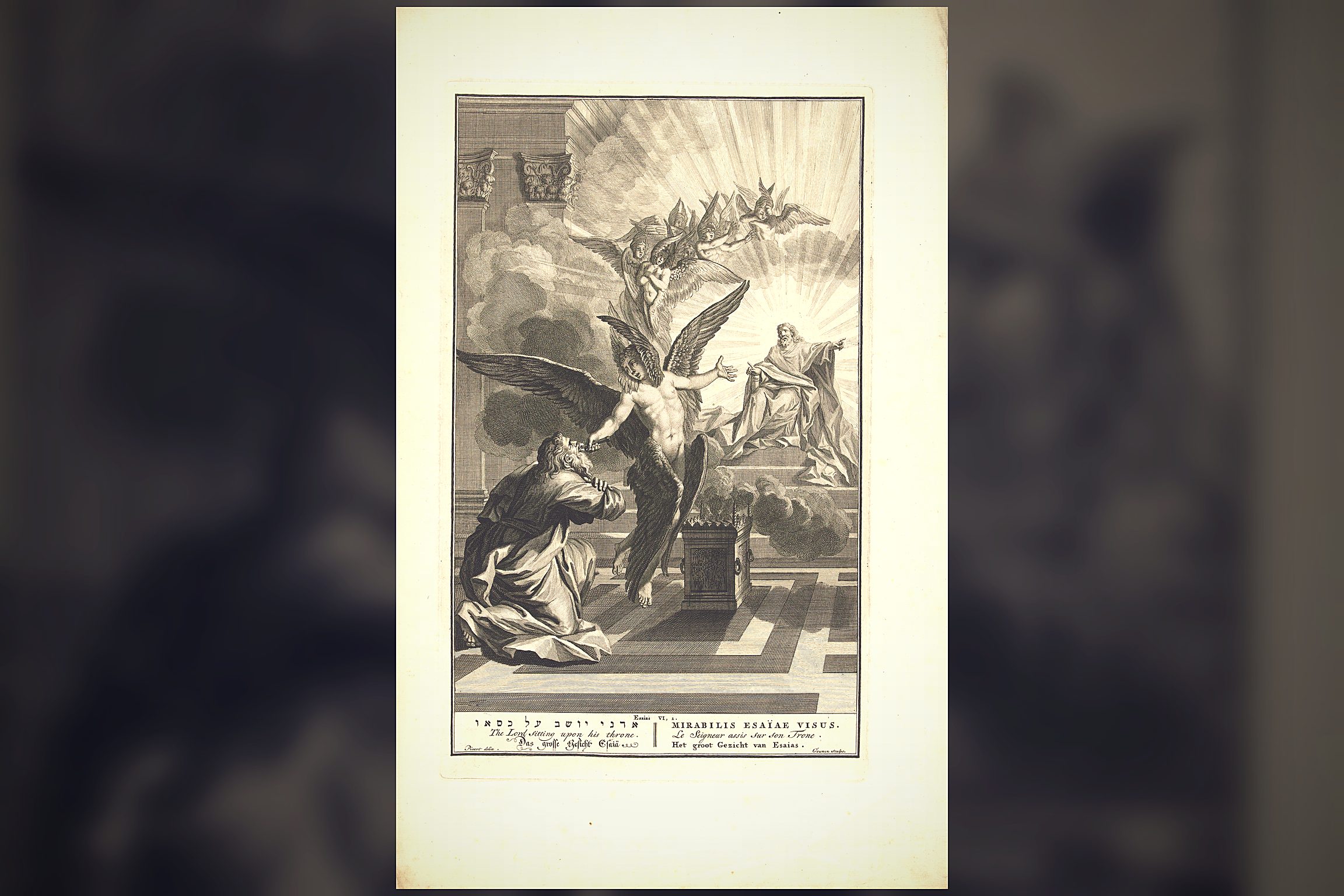
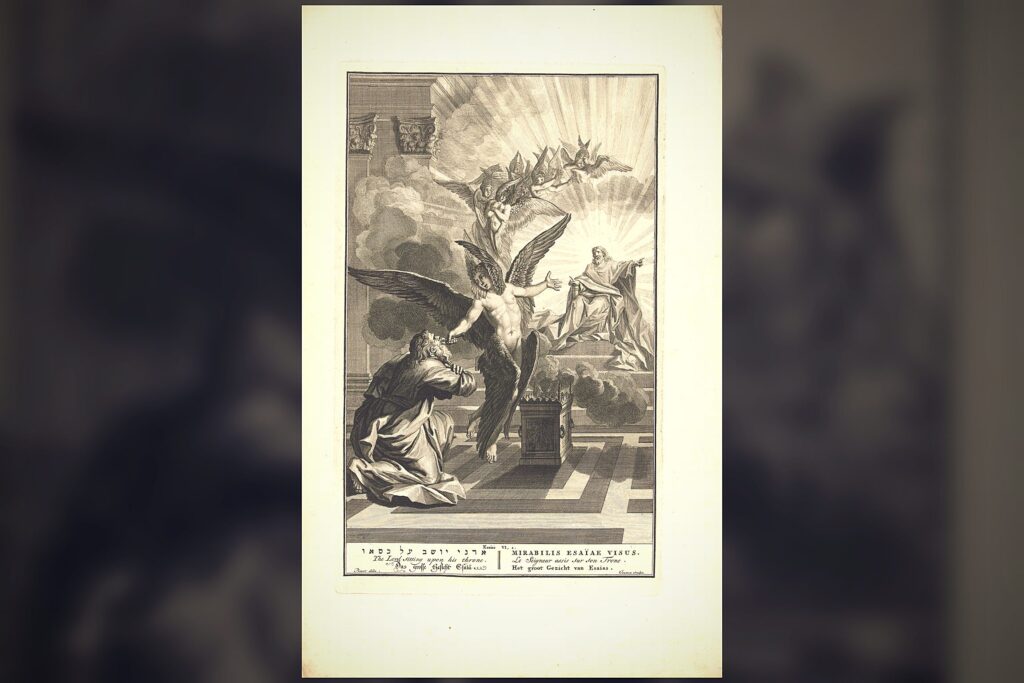
Seraphim are the beings Isaiah saw standing above the throne of God in Isaiah 6:2. Each has six wings: two covering the face, two covering the feet, and two for flight. They call to one another — “Holy, holy, holy is the LORD of hosts; the whole earth is full of his glory” — and their voices shake the doorposts and fill the temple with smoke.
The text gives them faces, feet, hands and voices. It does not describe their bodies. It does not mention eyes anywhere on them. And their name — saraph in Hebrew, שָׂרָף — means “burning one,” from the verb that means “to burn completely.”
The Text: Isaiah 6:1-7
The scene is the temple — whether earthly or heavenly, the text does not say. Isaiah sees the Lord seated on a throne, high and lifted up, with the train of His robe filling the space. Above Him stand the seraphim.
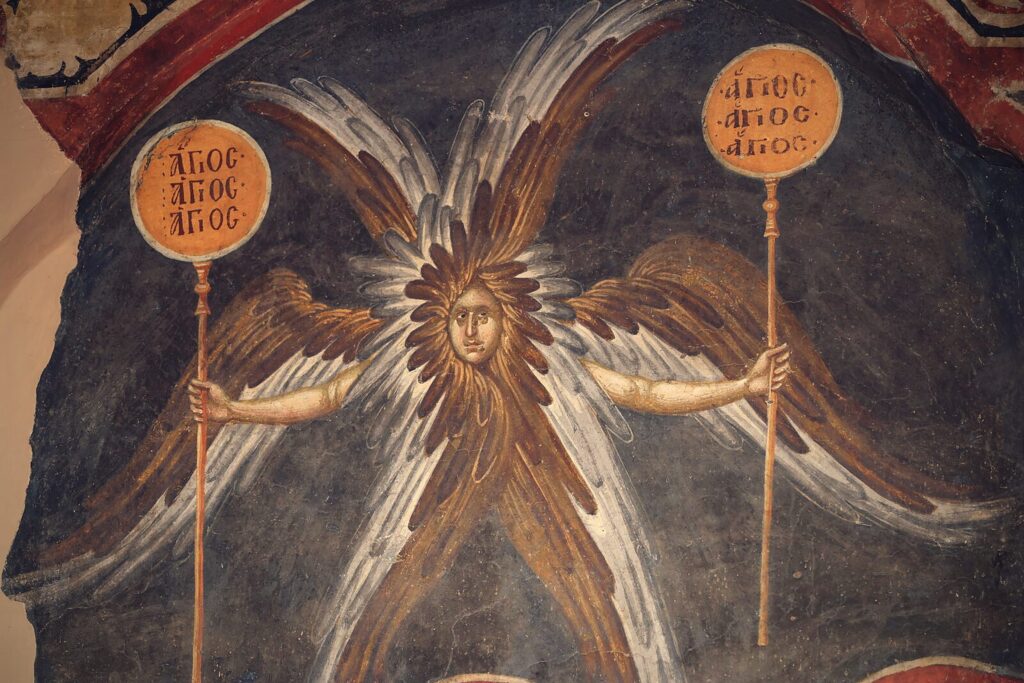
“Each one had six wings: with two he covered his face, with two he covered his feet, and with two he flew.” (Isaiah 6:2)
Two wings covering the face means they cannot look directly at God’s holiness. Two covering the feet — and raglayim, the Hebrew word here, may be a euphemism for the lower body, as G.B. Gray and the New Oxford Annotated Bible (2001) both note — means they veil themselves entirely. Two for flying means they are in motion, not stationary.
They speak — not to God, but to each other:
“And one cried unto another, and said, Holy, holy, holy, is the LORD of hosts: the whole earth is full of his glory.” (Isaiah 6:3)
Their voices shake the doorposts. The temple fills with smoke. Then one of them acts.
“Then flew one of the seraphims unto me, having a live coal in his hand, which he had taken with the tongs from off the altar: and he laid it upon my mouth, and said, Lo, this hath touched thy lips; and thine iniquity is taken away, and thy sin purged.” (Isaiah 6:6-7)
Purification by fire — administered by the burning one. The coal comes from the altar with tongs, not bare-handed. The seraph has hands, a voice and the authority to declare a man’s sin removed.
One detail is easy to miss. The Hebrew says the seraphim stood mimma’al lo — “above him.” The strongest reading is that they stood above the Lord. Commentators have struggled with this: Ibn Ezra reads “by him,” Kimchi reads “near him,” the Targum reads “before him.” Created beings standing above the Creator is theologically difficult, which is why it has been reinterpreted — but the Hebrew is plain.
A Name Borrowed from Serpents
The Hebrew noun saraph (שָׂרָף) appears seven times in the Hebrew Bible. In Isaiah 6 it appears twice, referring to the beings above the throne. In the other five it refers to serpents:
| Verse | What it describes |
|---|---|
| Numbers 21:6 | Fiery serpents sent to bite the Israelites in the wilderness |
| Numbers 21:8 | The bronze serpent God tells Moses to make |
| Deuteronomy 8:15 | The fiery serpents of the wilderness recalled |
| Isaiah 14:29 | A “flying fiery serpent” in a warning to Philistia |
| Isaiah 30:6 | A “flying fiery serpent” among the beasts of the Negev |
The root verb saraph means “to burn.” Whether the serpents were called burning because of the searing venom, the reddish colour, or something else is debated. What is not debated is the connection: the same word names both the desert snakes and the throne-room beings.
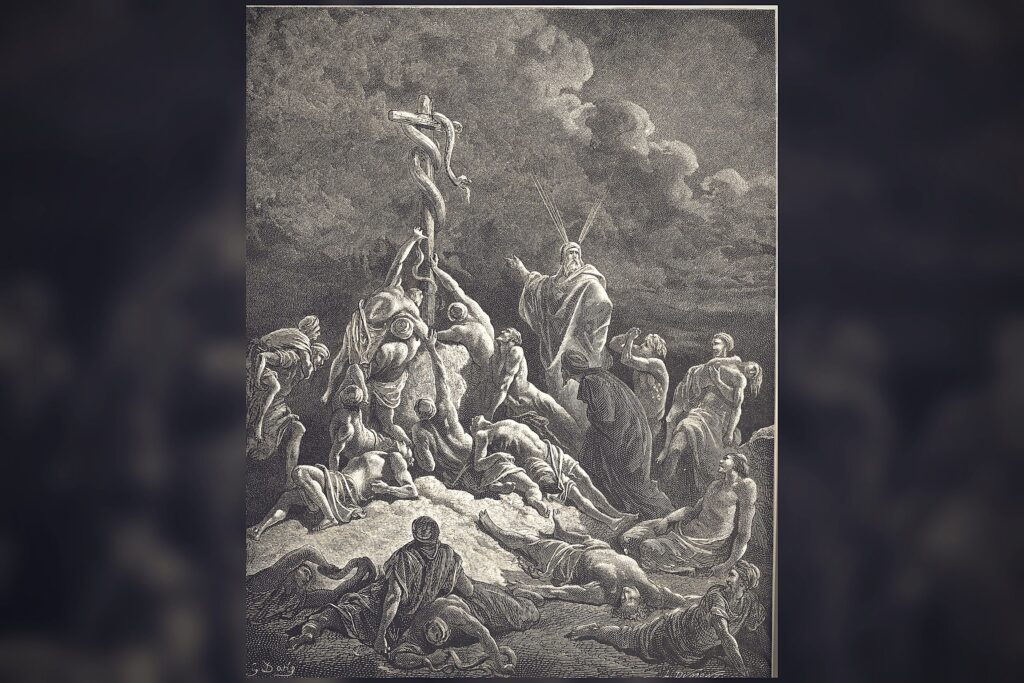
Isaiah himself uses the word both ways. In chapter 6, seraphim stand above God. In chapters 14 and 30 — the same chapter that describes the fall of the morning star — saraph me’opheph, “flying burning serpent,” is a creature of the wilderness. The same author, the same word, two very different settings.
The connection runs deeper than vocabulary. Scholars Othmar Keel and Christoph Uehlinger [1] have shown that Judean stamp seals from King Hezekiah’s reign — Isaiah’s own period, late eighth century BC — depict four-winged uraei, winged cobras that served as throne guardians in Judean royal art. The six wings of Isaiah’s seraphim, they argue, represent an intensification of a form already present in the royal iconography of his own kingdom.
And there is one more link. The bronze serpent Moses made in the wilderness — the nehushtan — was kept in the Jerusalem temple until Hezekiah destroyed it (2 Kings 18:4). Isaiah’s vision (the year King Uzziah died, around 740 BC) predates Hezekiah’s reforms by roughly twenty-five years, so the bronze serpent was still in the temple when Isaiah saw his vision. The burning serpent he knew from the sanctuary and the burning ones he saw above the throne — in a temple that also housed the Ark of the Covenant with its golden cherubim — share more than a name.
In 1 Enoch 61:10 and 71:7, the Ge’ez (Ethiopic) text uses the word Akyəst for seraphim — which translates directly as “serpents” or “dragons.” The oldest surviving text of the tradition preserves the reptilian name without softening it.
Six Wings, and What Each Pair Does
No other being in the Bible has six wings. Ezekiel’s cherubim have four. The angels who appear to Abraham, Lot, Daniel and Mary have none mentioned at all. The six wings are unique to this one class.
And the wings are not decorative. Each pair has a function:
- Two cover the face — shielding themselves from the direct presence of God. If the seraphim cannot look, the implication for anything beneath them is plain.
- Two cover the feet — veiling their bodies. Whether raglayim means feet literally or the lower body euphemistically, the result is the same: they are covered.
- Two are for flight — the only pair in active use.
Out of six wings, four are occupied with concealment and only two with motion. That ratio says something about where they are. Two thirds of their capacity is spent on the problem of existing in that proximity. Flight is the smallest part of what their wings do.
The Myth of the Many Eyes
The most common image of seraphim online — covered in eyes, nested inside wheels, staring from every feather — is wrong. Isaiah 6 does not mention eyes on the seraphim anywhere. The text says the opposite: they cover their faces. They are veiling, not watching.
The “full of eyes” description comes from three other passages, none about seraphim:
| Source | What has eyes | What it is called |
|---|---|---|
| Ezekiel 1:18 | The rims of the wheels | Ophanim |
| Ezekiel 10:12 | The bodies and wings of the creatures, and the wheels | Cherubim |
| Revelation 4:6-8 | The four living creatures | Not named by class |
The confusion comes from Revelation 4, where John’s four living creatures borrow features from both Isaiah and Ezekiel: they have six wings (like seraphim) and say “Holy, holy, holy” (like seraphim) but also have four faces (like Ezekiel’s cherubim) and are full of eyes (like Ezekiel’s cherubim and ophanim). John’s vision is a deliberate synthesis. The internet treated it as a portrait of one being, and the seraphim inherited the eyes that were never theirs.
Isaiah’s seraphim cover their faces. They are the opposite of the all-seeing figure in the meme.
The Trisagion: The Oldest Prayer Still Said
“Holy, holy, holy, is the LORD of hosts: the whole earth is full of his glory.” (Isaiah 6:3)
The Hebrew is Kadosh, kadosh, kadosh, Adonai Tsevaot, melo kol ha’aretz kevodo. The word kadosh does not mean morally pure. It means set apart — utterly distinct, other, unlike anything in creation.
The triple repetition is the Hebrew superlative. Hebrew has no comparative or superlative adjective form — no “holier” or “holiest.” Instead it repeats. To say something is very good, you say it is good, good. To say God’s holiness exceeds every category, you say it three times. Early Christian commentators read the threefold form as affirming the Trinity — Father, Son and Spirit, each holy — a reading that shaped Christian liturgy from the fourth century onward.
The seraphim do not speak to God. They speak to each other — “one cried unto another” — and the statement is about God, not addressed to Him. This is testimony, not petition. They are declaring what is true, and their voices shake the doorposts.
The same words are still recited daily. In the Jewish Kedushah, said three times a day within the Amidah, the congregation rises on their toes at each kadosh, imitating the seraphim lifting upward. In the Christian Sanctus, sung before the consecration of the Eucharist, the words have been continuous since the early church. The Talmud (Chullin 91b) teaches that the angels do not begin the trisagion in heaven until Israel says it below — human worship is the signal for angelic worship, not the other way around.
This makes the trisagion one of the most continuously spoken phrases in human religious history — over 2,700 years of daily use across two religions, and it comes from the mouth of beings who appear in exactly one chapter of the Bible.
What the Later Sources Add
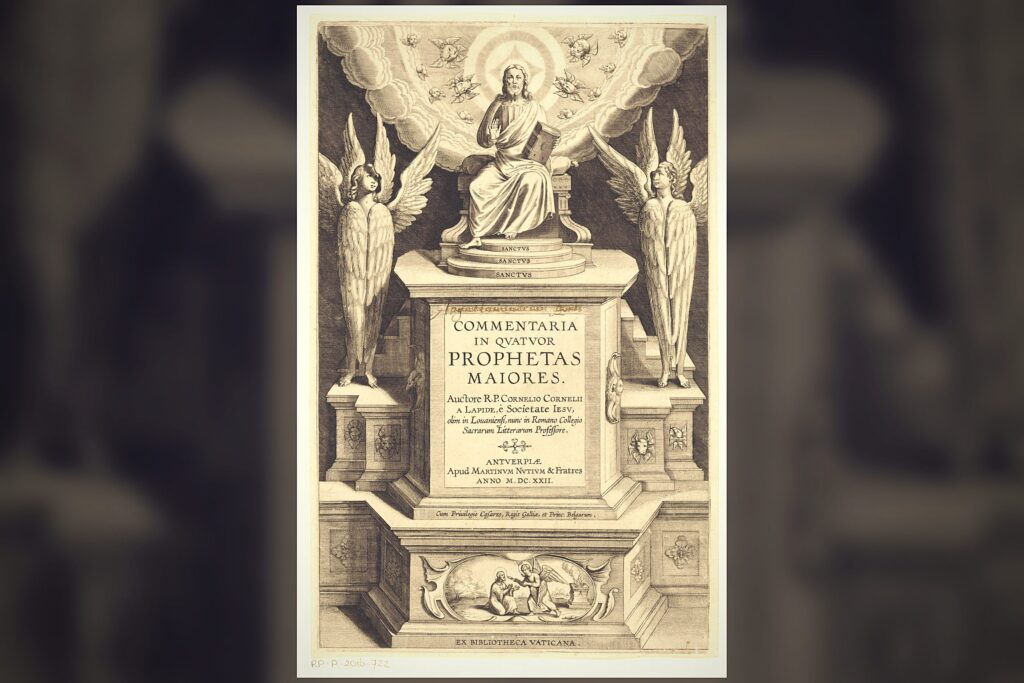
1 Enoch mentions seraphim by name in two passages. In 61:10, they appear alongside cherubim and ophanim as part of “all the host of the heavens.” In 71:7, they are around the throne: “Round about were Seraphin, Cherubic, and Ophannin: and these are they who sleep not and guard the throne of His glory.” The Ge’ez text calls them Akyəst — serpents.
2 Enoch (the Slavonic Enoch, likely first century AD) describes seven groups of angels in the sixth heaven, including seven “six-winged beings” singing in unison. The same text introduces phoenixes and chalkydri — copper-coloured serpents with twelve wings and crocodile heads — described as “flying elements of the Sun.” The burning-serpent lineage persists even in a text that invents new classes of celestial being.
The Targum Jonathan (the Aramaic translation of the Prophets, roughly 150 BC to 350 AD) translates “seraphim” as shamashim qadishin — “holy ministers.” It strips the burning and the serpentine entirely and leaves only the function: they serve.
The Songs of the Sabbath Sacrifice [2] from Qumran (4Q400-407, 11Q17), dated to about 100 BC, describe elaborate angelic worship in a heavenly temple. The fragments are heavily damaged, and whether “seraphim” appears by that exact word in the surviving text has not been confirmed from the critical editions. What the Songs do confirm is that by the first century BC, Jews were composing liturgy as though they stood in the throne room Isaiah had described.
Where the Seraphim Rank
In the fifth or sixth century AD, an anonymous author writing as Pseudo-Dionysius the Areopagite [3] arranged the angels into nine choirs in three triads, and placed seraphim at the absolute top — closest to God. He described them as beings of ceaseless fire whose name signifies “those who kindle or make hot.” Thomas Aquinas adopted the framework in the Summa Theologiae [4] and associated seraphim specifically with the virtue of charity — a burning love that characterises the first and highest hierarchy.
This is the ranking most of Western Christianity inherited. It is not the only one.
Maimonides, writing in the twelfth century, lists ten orders of angels in the Mishneh Torah [5] and places seraphim fifth — below the Chayot (living creatures), the Ophanim (wheels), the Erelim and the Chashmalim. In the Jewish ranking, the living creatures of Ezekiel’s vision outrank the seraphim. The burning ones of Isaiah are not the summit but the middle tier.
Both rankings are attempts to organise what the texts mention into a hierarchy the texts themselves do not provide. Isaiah saw seraphim above the throne. Ezekiel saw cherubim beneath it. Whether “above” outranks “beneath” or the throne-bearers outrank the attendants is a question the Bible does not answer — and two traditions answered it opposite ways.
Sources
- Othmar Keel and Christoph Uehlinger — books.google.com/books/about/Gods_Goddesses_And_Images_of…
- Songs of the Sabbath Sacrifice — en.wikipedia.org/wiki/Songs_of_the_Sabbath_Sacrifice
- Pseudo-Dionysius the Areopagite — plato.stanford.edu/entries/pseudo-dionysius-areopagite
- Summa Theologiae — newadvent.org/summa/1108.htm
- Mishneh Torah — en.wikipedia.org/wiki/Mishneh_Torah
Frequently Asked Questions
What do seraphim look like in the Bible?
Isaiah 6:2 describes each seraph with six wings — two covering the face, two covering the feet, and two for flying. The text implies faces, hands, feet and voices but never describes the body. The name saraph means “burning one” and is used elsewhere in the Hebrew Bible for serpents, leading scholars to argue the original form may have been serpentine rather than humanoid.
How many seraphim are in the Bible?
The word “seraphim” as an angelic title appears only in Isaiah 6, in verses 2 and 6. The text says they stood above the throne — plural — but does not give a number. One seraph is singled out when it flies to Isaiah with a coal from the altar.
Do seraphim have eyes?
No. Isaiah 6 does not mention eyes on the seraphim. The “full of eyes” description belongs to the wheels (ophanim) in Ezekiel 1:18, the cherubim in Ezekiel 10:12 and the four living creatures of Revelation 4:8. Popular images conflate these different beings into one.
Are seraphim the highest-ranking angels?
In the Christian hierarchy established by Pseudo-Dionysius in the fifth or sixth century AD, yes — seraphim are first of nine choirs. In Maimonides’ Jewish hierarchy from the Mishneh Torah, seraphim rank fifth of ten orders. The Bible itself does not assign ranks.
What does the word “seraphim” mean?
The Hebrew saraph (שָׂרָף) comes from the verb meaning “to burn.” It translates as “burning one” or “burning ones” in the plural. The same word is used in Numbers 21 for the fiery serpents that bit the Israelites and in Isaiah 14 and 30 for “flying fiery serpents.”
Are seraphim and cherubim the same?
No. Seraphim appear only in Isaiah 6 with six wings. Cherubim appear throughout the Bible — guarding Eden, on the Ark of the Covenant, in Ezekiel’s throne vision — with four wings and four faces. The four living creatures of Revelation 4 combine features of both, which is the source of most of the confusion.
Why do seraphim cover their faces?
Isaiah 6:2 says each seraph covers its face with two wings. Even these beings, closest to the throne, cannot bear the full direct presence of God. If seraphim must shield themselves, the implication is that the presence exceeds what any created being can sustain uncovered.
What is the trisagion?
The trisagion is the threefold “Holy, holy, holy” spoken by the seraphim in Isaiah 6:3. It is recited daily in both Jewish liturgy (the Kedushah) and Christian liturgy (the Sanctus), making it one of the oldest continuously spoken prayers in human history — over 2,700 years of unbroken use.
What Isaiah Saw, and What He Did Not Say
The seraphim of Isaiah 6 are not the figures the internet has made them. They are not covered in eyes. They are not nested in rings. They are not the all-seeing, geometrically impossible structures that became a meme in the 2020s.
They are beings of fire who share their name with serpents, who stand above the throne of God with four of their six wings devoted to the problem of being that close, and who declare in voices that shake stone what they know to be true about the one they attend. One of them carries a burning coal to a man’s mouth, and the man’s guilt disappears.
Isaiah’s account is ninety-seven words in Hebrew. It is the only direct description in the Bible. Everything else — Pseudo-Dionysius’s celestial hierarchy, the Renaissance paintings, the internet’s composite angel — is interpretation built on a passage that never asked for it.
The passage itself is short, strange, and still unanswered: beings of fire, named for serpents, who cannot look at what they serve.
Continue Reading
- What Do Angels Look Like? Men More Often Than Wings — Abraham fed three of them and took them for travellers. Daniel saw one and lost his strength. The Bible describes…
- What Do Thrones Look Like? The Bible’s Wheel Within a Wheel — The Bible never describes a being called a throne. What it describes are ophanim — wheels of translucent stone, rims…
- What Do Cherubim Look Like? Four Faces, Not Baby Wings — Four faces, eyes on every surface, and a body that gleams like burnished bronze. The Bible’s cherubim appear ninety-one…