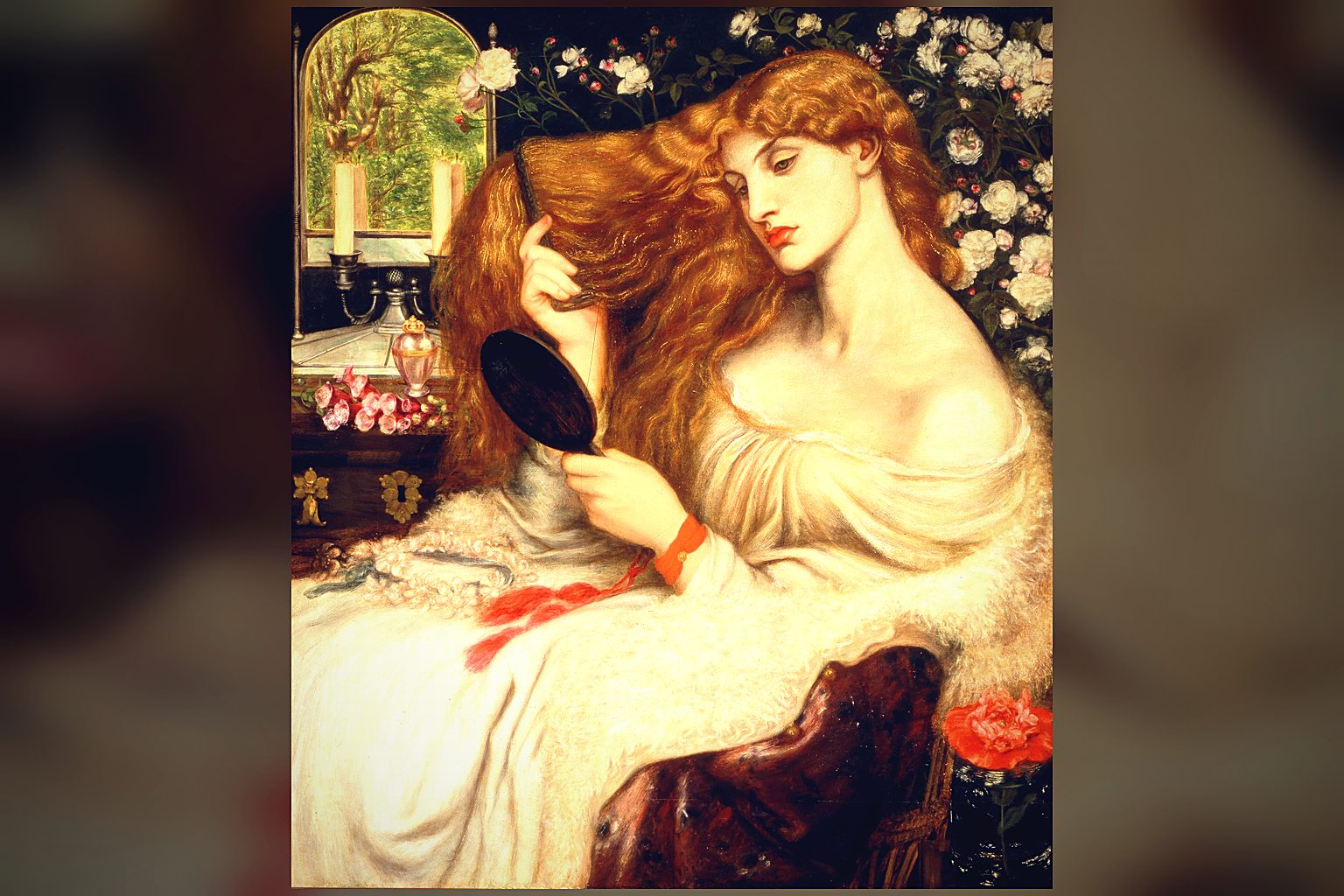
Somewhere between the years 700 and 1000, in the Islamic world, an anonymous writer produced a Hebrew and Aramaic book of proverbs arranged as two alphabetical acrostics. Attached to each saying was a story. One of those stories says that Adam had a wife before Eve, that she was made from clay exactly as he was, that she refused to lie beneath him, that she spoke the unspeakable name of God and flew out of the garden.
That book is called the Alphabet of Ben Sira. It is the first text in the world to describe Adam’s first wife.
Everything else — the paintings, the amulets, the magazine founded in 1976, the thousand retellings that begin “according to ancient Hebrew tradition” — comes downstream of it. There is no earlier version. There is no second, independent witness. The whole of what people mean by Adam’s first wife rests on one medieval manuscript tradition, and a serious body of scholarship argues that manuscript was never meant to be taken seriously in the first place.
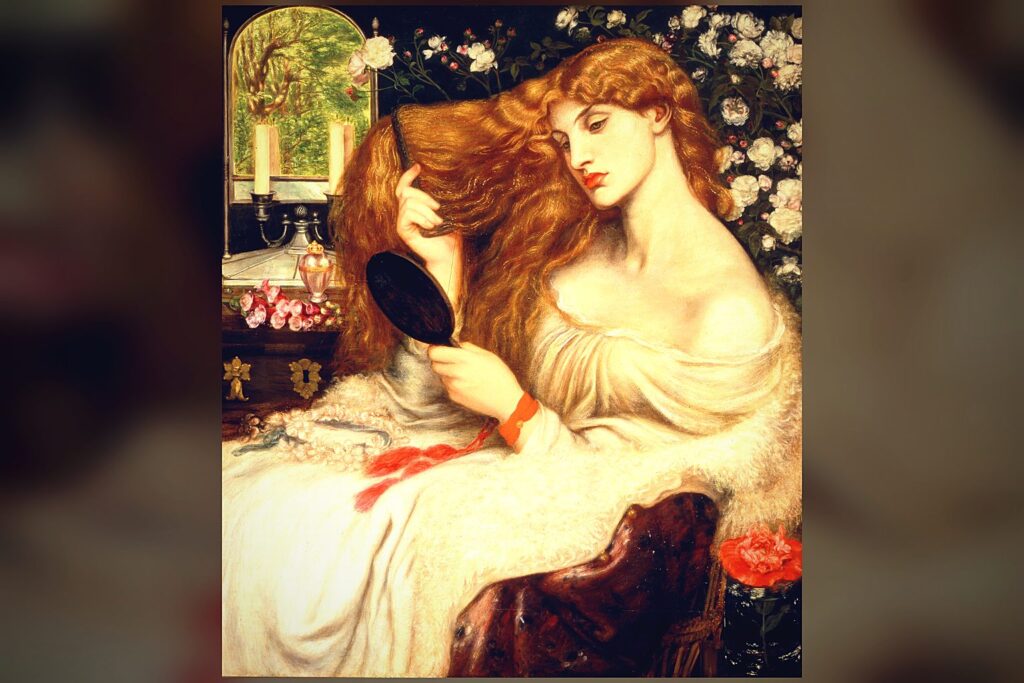
Who Was Adam’s First Wife?
In the Hebrew Bible, Adam has one wife, and her name is Eve. No first wife is named, described or implied anywhere in Genesis. The figure everyone means — Lilith, made equal to Adam, exiled for refusing to submit — appears for the first time in the Alphabet of Ben Sira, written somewhere between the eighth and tenth centuries AD. Genesis reached something close to its final form well over a thousand years earlier.
That gap is the single most important fact about the story, and it is the one most often left out. The Lilith of Adam’s first marriage is not an ancient tradition that the Bible suppressed. She is a medieval tradition that arrived long after the Bible closed.
What is ancient is the name. A word spelled `lilith` turns up in Mesopotamian incantations more than a thousand years before Genesis, and once in the book of Isaiah. Neither has anything to do with Adam. Sorting out how a Babylonian night-spirit became a Jewish first wife is the actual story, and it is more interesting than the version that gets repeated.
The Single Source, and What It Actually Says
The Alphabet of Ben Sira is not a scripture, a Talmudic tractate or a commentary. It is a pair of proverb lists — twenty-two sayings in Jewish Babylonian Aramaic, twenty-two more in medieval Hebrew, each set running through the alphabet — with folkloric narrative hung off each entry. Modern scholars file it under the heading Rabbinic Fantasies.
Its account runs roughly as follows. God forms Lilith from the earth, as he formed Adam. The two quarrel immediately about position during sex; she argues that since both were made from the same ground, neither outranks the other. When Adam insists, she pronounces the ineffable name of God and flies away to the Red Sea.
God sends three angels — Senoy, Sansenoy and Semangelof — to bring her back. She refuses. The terms she accepts instead are these: a hundred of her own children will die every day, and she will have no power over any infant protected by an amulet bearing the three angels’ names.
That last clause is the tell. The story is not really about Adam. It is an origin story for an amulet — a piece of practical apotropaic magic, explaining why the charm hung over a cradle works. The cosmic marital argument is the packaging.
Is the Source a Joke Book?
Here is where most retellings stop reading. The Alphabet of Ben Sira is a strange, coarse, frequently obscene text, and scholars have argued about its purpose since the nineteenth century.
Adolf Neubauer and Abraham Epstein both argued it is satire — a parody of rabbinic storytelling rather than an example of it. Louis Ginzberg rejected that reading and held it was meant seriously. The debate has never been settled. Some have gone further and proposed it is anti-Jewish satire written to mock the tradition from outside, though that reading sits awkwardly against the fact that medieval German Jewish mystics accepted the book and built on it.
Take the range seriously, because it decides what the Lilith story is:
| If the Alphabet is… | then the first-wife story is… |
|---|---|
| A serious folkloric compilation | a genuine medieval Jewish legend, roughly 1,200 years old |
| A parody of rabbinic aggadah | a joke that was later read straight |
| Anti-Jewish satire | a hostile invention that the tradition absorbed anyway |
Notice what none of the three options is. On no reading does the story become ancient, and on no reading does it become biblical. The most generous possible interpretation still dates it to the early Middle Ages and still leaves it resting on one book.
Lilith Is in the Bible Once, in a List of Animals
There is exactly one occurrence of the word in the Hebrew Bible, and it is not in Genesis. It is in a passage about the ruin of Edom:
“Wildcats shall meet hyenas, goat-demons shall greet each other; there too the lilith shall repose and find herself a resting place.” (Isaiah 34:14)
The Hebrew is לִּילִית. The context is a list of things that will inhabit a wasteland after its people are gone — wildcats, hyenas, goat-demons, and this. It is a bestiary of desolation, not a genealogy. Nothing in the verse connects the word to Adam, to Eden, to a marriage or to a first anything.
Translators have never agreed on what it is. The Revised JPS leaves it untranslated as “the lilith” and footnotes it as a kind of demon. Older English Bibles chose “screech owl” or “night creature”. The scholar Judit M. Blair has argued it is simply a night bird, of a piece with the other animals around it.
The Dead Sea Scrolls make the ambiguity worse rather than better. The Great Isaiah Scroll renders the word in the plural — liliyyot — where the Masoretic text has a singular. A plural does not describe an individual wife. It describes a category of creature, the way “owls” does.
The Two Creation Accounts, and What the Rabbis Actually Said
The strongest-looking argument for a first wife does not come from the Alphabet at all. It comes from Genesis itself, and it deserves to be stated at full strength before it is answered.
Genesis 1:27 has God create humanity “male and female” together, on the sixth day. Genesis 2:22 has God build the woman from Adam’s side, afterwards, because it is not good for the man to be alone. Two creations of woman, two women — and when Adam finally meets Eve he says “this time bone of my bone”, which certainly reads like a man who has been through this before.
That is a real textual observation and the rabbis noticed it long before any modern reader did. But look at what they actually did with it.
Genesis Rabbah 18:4 takes the phrase “this time” and concludes that God made the same woman twice: he formed her, Adam “saw her full of viscera and blood” and recoiled, so God distanced her and fashioned her a second time. One woman, two attempts. No second person at all.
Genesis Rabbah 22:7 does preserve a “first Eve”. Debating why Cain and Abel fought, Yehuda bar Rabbi says they quarrelled over her. Rabbi Aivu immediately objects that the first Eve “had returned to dust”, and Rabbi Huna offers a different answer entirely — an extra twin sister born alongside Abel.
So the rabbinic tradition of an earlier woman is genuine. But she is dead, she is unnamed, she is mentioned in passing inside an argument about something else, and nobody proposes she left in a rage or became a demon. Attaching the name Lilith to that figure is a later move, and the sources that make it are the same medieval mystical sources that inherited the Alphabet.
This is the same interpretive pressure that produces so much else read back into the opening chapters — the kind of thing worth keeping in mind alongside what the text actually specifies about the biology of Adam and Eve.
The Name Does Not Mean “Night”
Almost every popular account explains that Lilith means “the night one”, from the Hebrew laylah. It is tidy, it fits the character, and it is wrong.
The word arrives in Hebrew from Akkadian, where lilû (masculine), lilītu (feminine) and ardat lilî (“maiden lilû”) name a family of spirits. Akkadian took it in turn from Sumerian líl, meaning wind or air — a breath, a draught, something that moves through a room. The Sumerian root has no etymological relationship to the Akkadian word for evening. The resemblance to Hebrew laylah is a coincidence that later readers converted into a meaning.
That matters more than a footnote usually would, because the false etymology did real work. Once you believe the name means night, “night demon” follows naturally, and from there the whole apparatus of nocturnal seduction and infant death looks like it was encoded in the word from the beginning. It was not. It was read into a Sumerian word for wind.
The Mesopotamian Evidence That Is Real
Strip out the mistranslations and there is still a substantial, genuinely ancient record — it simply describes something other than a wife.
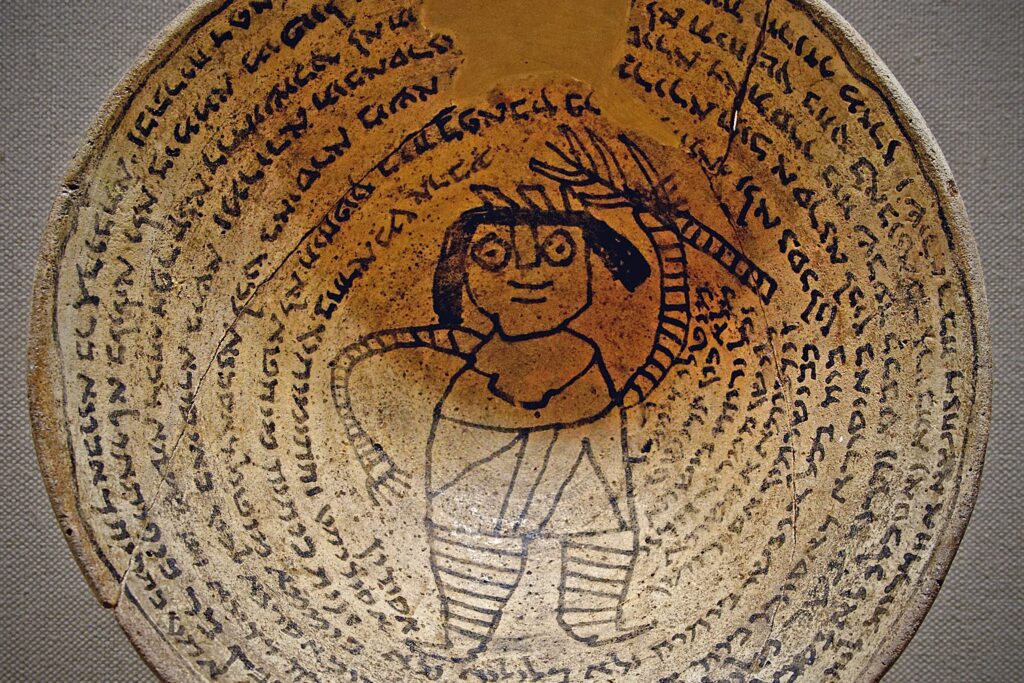
The incantation bowls. From fourth- to sixth-century Sassanid Babylonia there survive around eighty Jewish Aramaic bowls inscribed with protective spells, buried upside down beneath the floors of houses to trap what they named. Liliths appear on them constantly, in the plural, alongside a figure called Bagdana, “king of the lilits”. The formula used against them is startling: the householder serves the lilith with a writ of divorce, a document of separation, expelling her from the house as a husband expels a wife.
That is the closest thing in the ancient record to a marital connection — and note that it runs the opposite way to the legend. The bowls do not remember a lilith who walked out on a man. They are a technology for making one leave.
The Dead Sea Scrolls. In the Songs of the Sage (4Q510–511), an exorcism hymn lists the powers the singer is warding off: demons, liliths, howlers and desert dwellers. Again plural, again a class of hostile spirit, again no biography.
Across a thousand years of Mesopotamian and Jewish magical practice, lilith is a what, not a who. The shift to a single named individual with a personal history happens in the Alphabet, and not before. This is the same pattern visible in the texts that were quoted in antiquity and then left outside the canon: a later work supplies a name and a story where earlier material had only a category.
Three Famous Proofs, Checked
Three pieces of evidence are produced over and over as proof that Lilith is ancient. All three have been abandoned by the specialists who work on them, and all three are still in circulation.
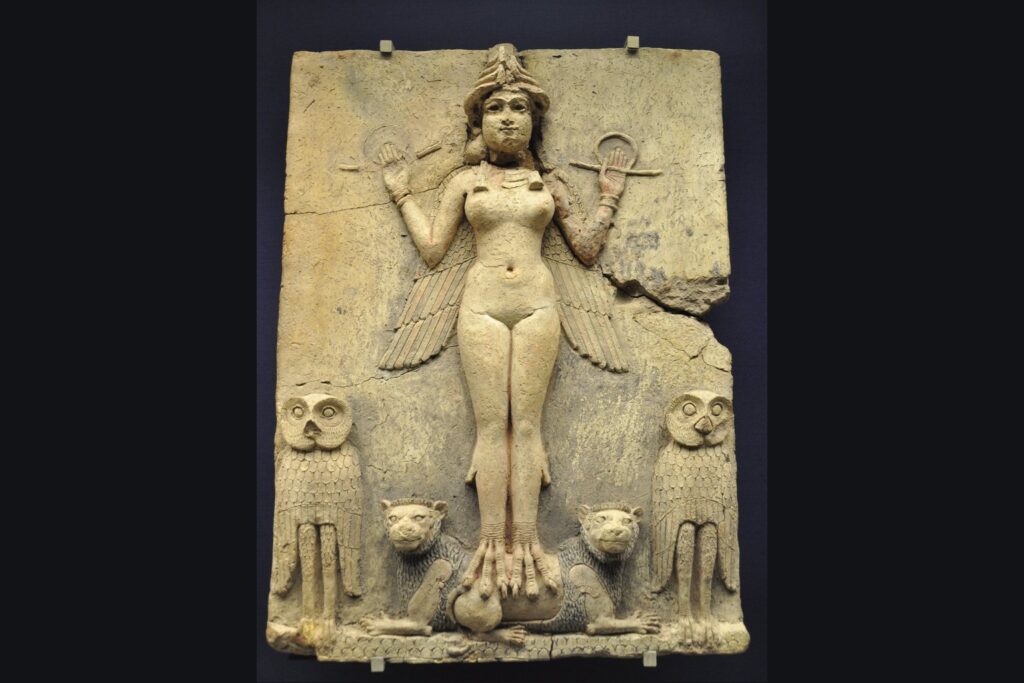
1. The Burney Relief is not Lilith. This Old Babylonian plaque, dated 1800–1750 BC, shows a winged goddess with bird’s feet standing on lions and flanked by owls. Emil Kraeling identified her as Lilith in 1937, reasoning that wings suggest a wind demon and owls suggest nocturnal habits; Henri Frankfort had laid the groundwork the year before by connecting bird-footed figures to the underworld.
The identification is now rejected. Thorkild Jacobsen argued in 1987 for Inanna/Ishtar on the grounds that the horned crown marks divinity, that lions belong exclusively to Inanna and that the rod-and-ring appears in the myths of her descent. Edith Porada proposed Ereshkigal, goddess of the underworld, a reading supported later by E. von der Osten-Sacken in 2002. The British Museum calls the object the Queen of the Night. It is also unprovenanced — never excavated, surfacing on the market around 1924 — so it cannot be tied to a findspot that might settle the question.
2. The Epic of Gilgamesh does not mention her. In the huluppu-tree episode, a creature nests in the trunk of Inanna’s tree. **Samuel Noah Kramer, working in 1932 and publishing in 1938, translated the Sumerian ki-sikil-lil-la-ke as “Lilith”**, and C. J. Gadd did the same in 1933. That translation is what put Lilith into every popular book about Mesopotamia.
It is no longer accepted. The phrase is now understood as the Sumerian equivalent of Akkadian ardat lilî — rendered “phantom maid”, “demon-maiden” or “demon-girl”. Sergio Ribichini rejected the Gilgamesh–Lilith connection on textual grounds in 1978. The passage attests a class of spirit, which is genuinely interesting; it does not attest a named individual.
3. “Lilith” does not mean night. Covered above, and it belongs on this list, because it is the claim that makes the other two feel plausible.
Why the Serpent Has a Woman’s Face
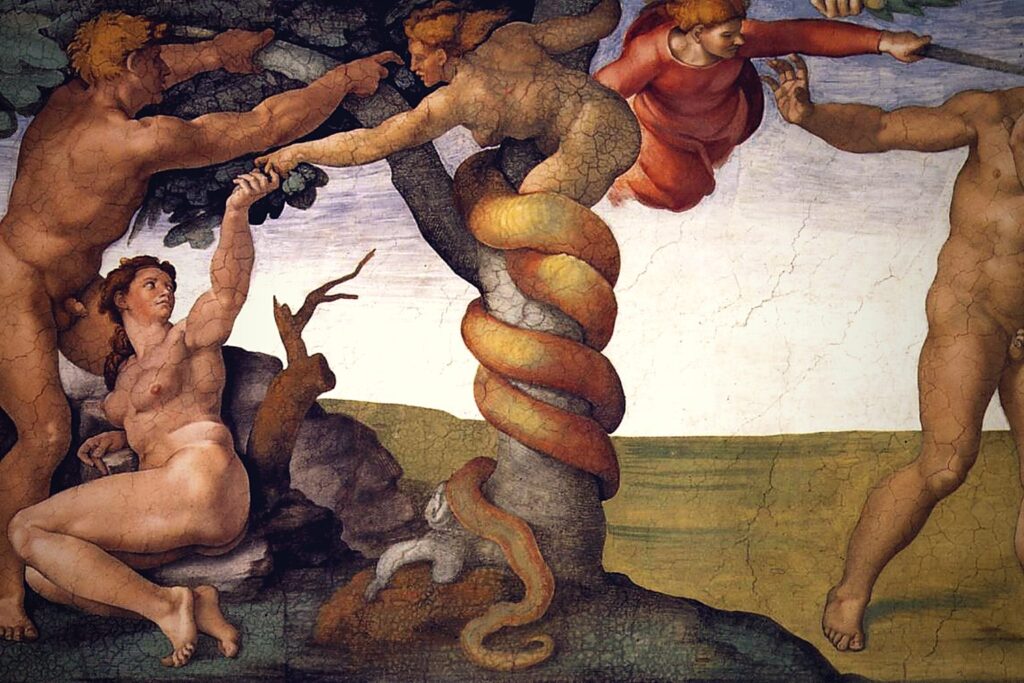
Walk through almost any collection of European religious painting and you will find the serpent of Eden with a woman’s head and torso. Michelangelo painted it that way on the Sistine ceiling. A great deal of modern writing identifies that face as Lilith, returning to the garden to take revenge on her replacement.
Genesis never names the serpent. It calls it the most subtle of the beasts of the field and says nothing more. The convention of painting it as a mirror of Eve was already well established in Christian iconography, and the serpent has been variously identified with Satan, with the Devil and with Lilith — the last of these being a reading applied to the pictures, not a caption the painters wrote.
This one is worth flagging as interpretation rather than error. It is entirely possible that some artists intended Lilith. What is not defensible is presenting a woman-headed serpent as evidence that the first-wife tradition is older than its one source. The pictures are downstream of the Alphabet too.
The Case Against It
Three honest problems with everything above.
The Alphabet may preserve something older than itself. Folklore compilations frequently write down material that circulated orally for generations. The absence of an earlier manuscript is not proof of an earlier absence, and the incantation bowls prove that lilith-lore was alive in Jewish communities centuries before the Alphabet was compiled. What cannot be shown is that the first wife element was part of that older material rather than the compiler’s own invention.
The rabbinic “first Eve” is real and unexplained. Genesis Rabbah 22:7 does not name her and does not tell her story, but it assumes its readers know who is meant. Something was in circulation. Whether it resembled the Alphabet’s account is unknown, and saying so plainly is more honest than filling the gap in either direction.
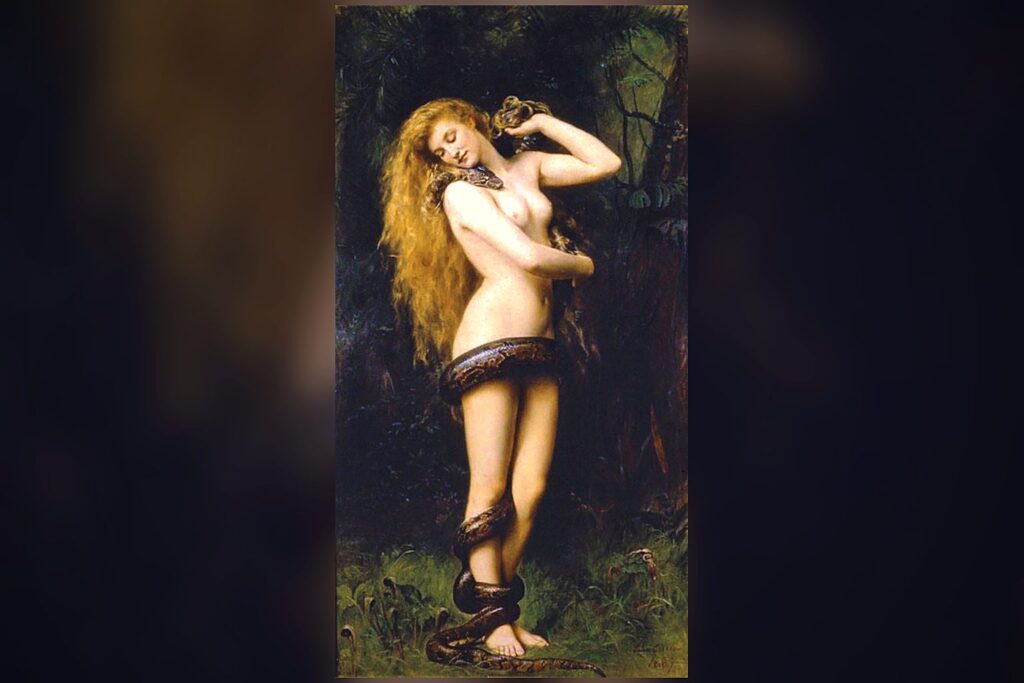
The modern figure has genuinely become a tradition. Lilith magazine was founded in 1976 by a group led by Susan Weidman Schneider, taking the name deliberately: a woman exiled for refusing to accept a subordinate position, reclaimed as a symbol of independence. Half a century of that is not nothing. Pointing out that the medieval source may be satire is a claim about textual history, and it is not an argument about what the figure has come to mean to people since.
Frequently Asked Questions
Was Adam’s first wife named Lilith?
Only in one medieval text. The Alphabet of Ben Sira, written between roughly 700 and 1000 AD, is the earliest source that names Adam’s first wife as Lilith. No biblical book, no Dead Sea Scroll and no Talmudic tractate makes that identification.
Is Adam’s first wife mentioned in the Bible?
No. Genesis names one wife, Eve. The word lilith appears once in the Hebrew Bible, at Isaiah 34:14, inside a list of creatures inhabiting a ruined wasteland alongside wildcats, hyenas and goat-demons. It is not connected to Adam or to marriage.
Where did Adam’s first wife come from?
From a medieval Jewish folklore compilation, built on a much older Mesopotamian word. Lilith descends from Akkadian lilītu, in turn from Sumerian líl, meaning wind or air spirit. The spirit is ancient; the marriage to Adam is not.
Does Lilith mean night in Hebrew?
No, although the resemblance to laylah is close enough that the folk etymology is almost universal. The word entered Hebrew from Akkadian, and the Sumerian root behind it means wind rather than night. The “night demon” reading was built on the coincidence afterwards.
Is the Burney Relief a picture of Lilith?
No. Emil Kraeling proposed the identification in 1937 and it has since been abandoned. The figure is generally taken to be Inanna/Ishtar, following Thorkild Jacobsen in 1987, or Ereshkigal, following Edith Porada. The British Museum exhibits it as the Queen of the Night.
Is Lilith in the Epic of Gilgamesh?
Not under any current reading. Samuel Noah Kramer translated ki-sikil-lil-la-ke in the huluppu-tree passage as “Lilith” in 1938, and that translation spread widely, but the phrase is now understood as the Sumerian equivalent of ardat lilî, a “phantom maid”. Sergio Ribichini rejected the connection in 1978.
Why do people say Genesis has two creations of woman?
Because it does read that way. Genesis 1:27 creates male and female together, and Genesis 2:22 builds the woman from Adam’s side afterwards. The rabbis addressed it directly: Genesis Rabbah 18:4 concludes that God made the same woman twice, not two women.
Did Lilith have children?
In the Alphabet of Ben Sira she does, and the story’s whole purpose is the bargain that follows: she accepts that a hundred of her children will die each day, and swears she cannot harm an infant guarded by an amulet naming the angels Senoy, Sansenoy and Semangelof.
Where That Leaves It
The strongest evidence about Lilith is not the painting, the relief or the epic. It is eighty clay bowls buried face-down under the floors of Babylonian houses, inscribed in Aramaic, and the document they serve on her.
Those bowls do not tell a story. They do not say she was made from clay, or argued about position, or flew to the Red Sea. They name her in the plural, treat her as a category of hostile spirit and hand her a writ of separation — a legal instrument, drawn up by people who believed it would work, addressed to something they believed was in the room.
That is what a thousand years of actual lilith-tradition looks like. The first wife, the refusal, the exile — all of it enters the record in a single medieval book of proverbs that half the scholars who have read it closely think was a parody. Both halves of that sentence are true at the same time, and neither one cancels the other.
If you want the older layer of this material — the part that predates the compilers and the retellings — it is not in the legend. It is in the class of hostile spirits that every culture seems to describe the same way, in the texts that were read and quoted in antiquity before anyone drew a canon around them, and in what Genesis 6 says about a different set of beings who were not supposed to be there.
Continue Reading
- The Garden of Eden: Two of the Four Rivers Are Missing — Genesis gives the garden an address. Two rivers are on every map, two match nothing. The drowned Persian Gulf valley…
- Demonic Possession in the Bible: Every Case, and the One That Comes Back — The evil spirit on Saul. Legion in the tombs. The boy the disciples could not help. Every case of demonic possession in…
- Demonic Possession vs Mental Illness: The Argument That Never Ended — For thousands of years, madness meant possession. Then psychiatry relabelled the symptoms and offered drugs that work…