Search for the lost books of the Bible, or the banned ones, and you will find lists. Long ones. Usually seventy-five or so titles, presented as works the Church suppressed, hid, or burned to keep something from you.
The lists are real. Most of the books on them are real. The argument is over one word: banned.
No record survives of the moment the word implies — an authority holding a vote, striking books out of an existing Bible and destroying the copies. Anyone using the word anyway will tell you that silence is exactly what a successful suppression looks like. What the surviving documents do show is slower and messier: a large body of religious literature circulating for centuries, different communities using different parts of it, and a rough consensus forming over roughly four hundred years about which texts carried authority.
Some books never made that consensus. Whether that amounts to being banned is the whole subject.
What Are the Lost Books of the Bible?
“Lost books of the Bible” is a popular label covering several very different categories of text. Separating them is the single most useful thing you can do with the subject.
| Category | What it means | Examples |
|---|---|---|
| Deuterocanonical | In Catholic and Orthodox Bibles, not in Protestant ones | Tobit, Judith, Wisdom, Sirach, 1-2 Maccabees |
| Pseudepigrapha | Written under a famous name long after that person lived | 1 Enoch, Jubilees, Testament of the Twelve Patriarchs |
| New Testament apocrypha | Christian works not accepted as scripture | Gospel of Thomas, Gospel of Mary, Acts of Paul |
| Gnostic texts | A distinct religious movement’s own literature | Most of the Nag Hammadi library |
| Genuinely lost | Mentioned in the Bible but no longer extant | The Book of Jasher, the Book of the Wars of the LORD |
| Modern forgeries | Written recently and passed off as ancient | Pseudo-Jasher (1751) |
A list that mixes all six and calls them “banned” is not describing history. It is describing a marketing category.
What Happened at Nicaea
The most repeated claim in this whole area is that the Council of Nicaea in 325 decided the canon — that Constantine convened bishops who voted on which books were in, burned the rest, and invented the Bible.
It did not happen. Nicaea dealt with the Arian controversy over the nature of Christ, and with setting the date of Easter. The surviving records from the council — its canons, its creed, the accounts of those who attended — contain no list of biblical books and no discussion of the canon at all.
The myth has a traceable origin. A 17th-century compilation called the Synodicon Vetus repeated a legend in which disputed books were placed under an altar and the canonical ones miraculously jumped on top. Voltaire picked this up in his Dictionnaire philosophique as a joke at the Church’s expense. The story then travelled for two centuries and was handed to a mass audience by Dan Brown’s The Da Vinci Code.
The actual process took far longer and involved no vote:
- c. 170 — the Muratorian Fragment, the earliest surviving canon list, already includes most of the New Testament
- c. 200s — Origen and others discuss which books are “disputed” and which are “acknowledged”
- 367 — Athanasius, in his 39th Festal Letter, lists exactly the 27 New Testament books we have now
- 393 and 397 — the councils of Hippo and Carthage affirm that list regionally
Note what that timeline shows: the canon was substantially settled by usage before any council ratified it, and debate over a handful of books continued long after 325. Revelation in particular remained disputed in the East for centuries.
Nobody banned anything. Communities kept reading what they found useful, and the books that were read everywhere ended up in the list.
Why Books Were Actually Left Out
The criteria that emerge from the early discussions are boringly practical:
Apostolic connection. Was it written by an apostle or someone close to one? This is the strongest single factor, and it is why date mattered so much.
Date. Most excluded gospels are demonstrably late. The Gospel of Thomas is usually placed somewhere between AD 60 and 140; the Gospel of Judas around 150-180; the Gospel of Mary in the 2nd century. The canonical four are all first-century.
Widespread use. A text read in one city was treated differently from one read across the whole Mediterranean.
Consistency. Did it agree with what the churches were already teaching?
Two things follow from this that cut against the conspiracy framing. First, the excluded texts were mostly excluded for being late, not for being dangerous. Second, many of them were never hidden — early writers discuss them openly, by name, and explain why they are not using them.
The Books Worth Knowing
1 Enoch. The most consequential of all of them, because the New Testament quotes it. Jude 1:14-15 cites 1 Enoch 1:9 by name and calls it prophecy. Aramaic fragments turned up among the Dead Sea Scrolls, confirming it circulated in Judea before the New Testament was written. It is fully canonical in the Ethiopian Orthodox Tewahedo Church, which is why the complete text survives at all. The full account is here.
Jubilees. A retelling of Genesis and Exodus on a strict 364-day solar calendar, also found at Qumran and also canonical in Ethiopia. The full account of what it says and why the calendar mattered is here.
The Gospel of Thomas. Not a narrative — 114 sayings attributed to Jesus, with no crucifixion, no resurrection and no miracles. A Coptic copy was found at Nag Hammadi in 1945; Greek fragments had already turned up at Oxyrhynchus decades earlier. Some sayings closely parallel the canonical gospels; others do not — and whether the book is Gnostic at all is a longer argument than it looks.
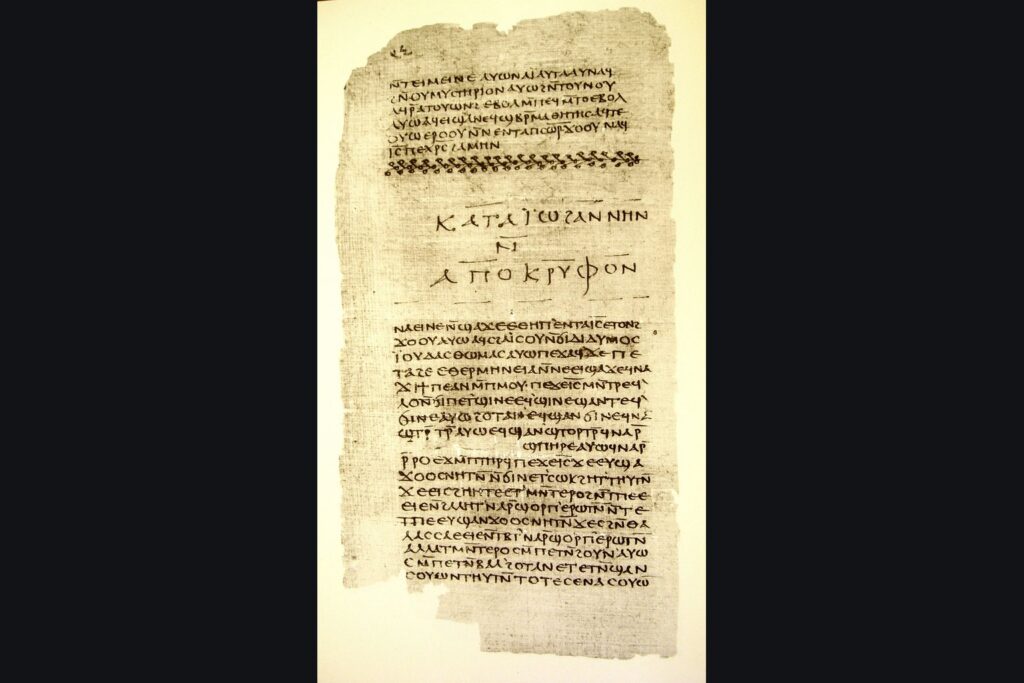
The Nag Hammadi library. Thirteen leather-bound codices found buried in a jar in Upper Egypt in 1945, containing around 52 texts. This is the single largest recovery of Gnostic literature ever made, and it transformed the field — before 1945, Gnosticism was known mainly through the writings of its opponents.
The Book of Giants. An Enochic work found at Qumran, expanding on the Nephilim and naming the giants.
The deuterocanon. Tobit, Judith, Wisdom, Sirach, Baruch and 1-2 Maccabees are not lost or hidden at all — they are simply in some Bibles and not others, a split that hardened at the Reformation.
The Book of Jasher: Two Different Texts
This section is a summary; the full account of all three books called Jasher goes through each one.
This one deserves its own section because it is the clearest case of a genuine mystery and a modern fake sharing a name.
The real Book of Jasher is genuinely lost. It is referenced twice in the Bible as an existing source — Joshua 10:13 and 2 Samuel 1:18 — and no copy survives.
Two later books claim the title:
The Sefer haYashar, a medieval Hebrew midrash first printed in Naples in 1552. It is a real Jewish text that collects genuine legendary material, and nobody serious claims it is the book Joshua cites.
Pseudo-Jasher, published in 1750-51 by Jacob Ilive, which claimed to be an ancient work translated by the 8th-century scholar Alcuin. It is a forgery, and it was spotted almost immediately — the Monthly Review called it an obvious hoax within weeks, partly because the “8th-century translation” was written in the English of the King James Bible. Ilive was later imprisoned with hard labour for a different publication. The forgery was largely forgotten until a Rosicrucian order reprinted it in 1934, which is how it re-entered circulation.
Both are sold today, often without the distinction being made clear.
Where the Popular Framing Slips
Four claims worth retiring:
“The Church burned them.” Some texts were suppressed at various points, but the great majority of excluded works simply stopped being copied. Manuscripts survive because someone keeps making new ones; a text nobody reads disappears without anyone deciding to destroy it.
“They were hidden to protect a secret.” The Nag Hammadi codices were buried around the 4th century, most plausibly by monks complying with a directive about non-canonical books — but the texts themselves had been discussed openly by their critics for two hundred years.
“They contain the real Jesus.” The excluded gospels are generally later and more theologically developed, not earlier and plainer. If you are looking for the earliest material, the canonical gospels are the earliest material.
“There are exactly 75 lost books.” The number varies by whichever list you found. There is no fixed set, because “lost books of the Bible” is not a historical category.
What Is Genuinely Interesting Here
Strip the suppression narrative and something better remains.
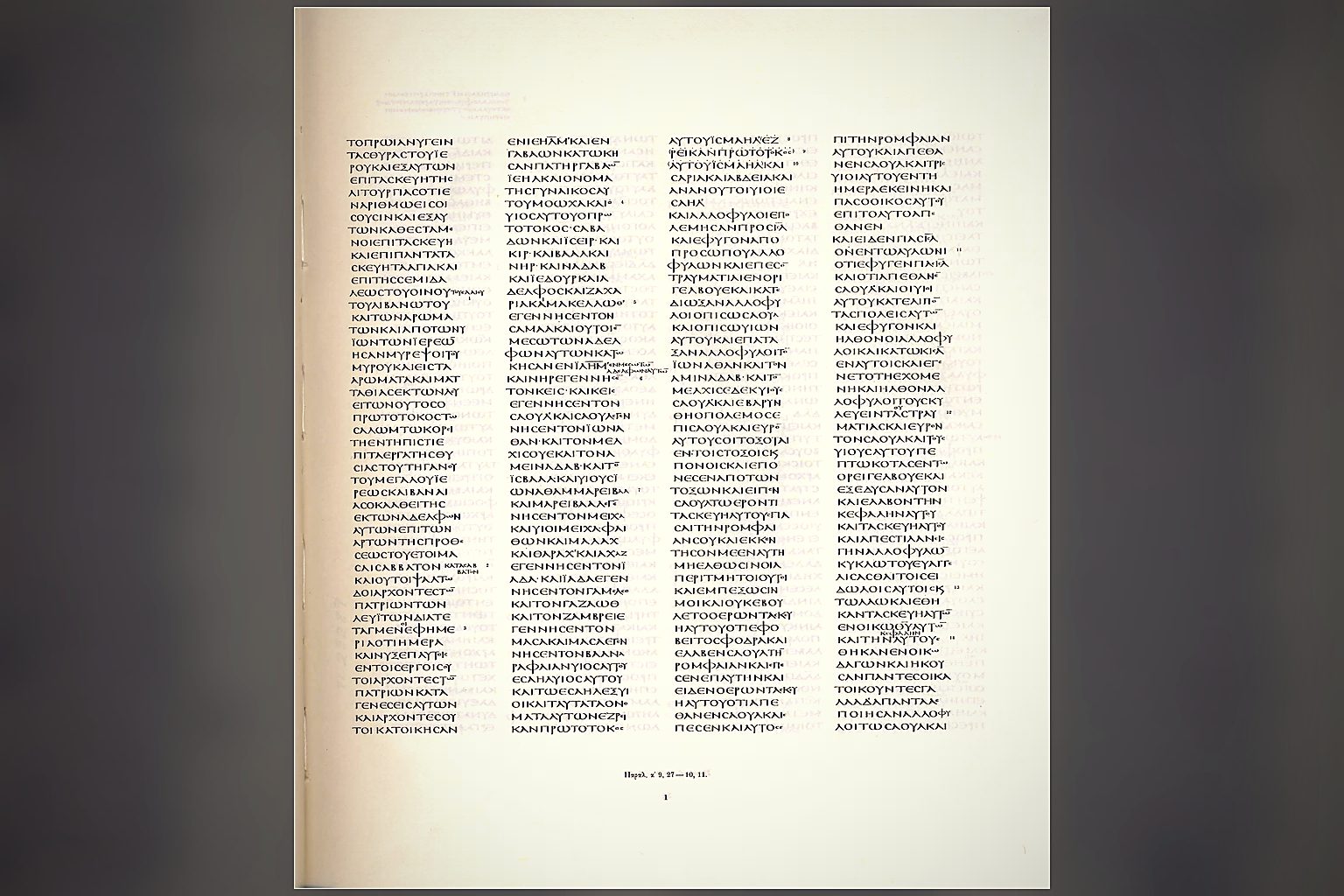
For several centuries, the boundary of scripture was genuinely open. Codex Sinaiticus, a 4th-century Bible, contains the Epistle of Barnabas and the Shepherd of Hermas. Codex Alexandrinus contains 1 and 2 Clement. These were not smuggled in — they were bound into complete Bibles by people who considered them worth including.
The Ethiopian canon still runs to 81 books and includes Enoch and Jubilees. So there is no single answer to “what is in the Bible”; there are several, and they have coexisted for sixteen centuries.
That is the real story, and it is stranger than suppression: not a locked vault, but a long, public, unresolved argument that different communities settled differently — and one of which is still reading Enoch on Sunday.
Frequently Asked Questions
What are the banned books of the Bible?
None were banned. The phrase covers several different categories: books in Catholic and Orthodox Bibles but not Protestant ones, Jewish works written under ancient names, early Christian texts not accepted as scripture, Gnostic literature, genuinely lost books, and modern forgeries.
Did the Council of Nicaea decide which books are in the Bible?
No. Nicaea in 325 dealt with the Arian controversy and the date of Easter. Its surviving records contain no canon list and no discussion of the subject. The myth traces to a legend in the 17th-century Synodicon Vetus, repeated by Voltaire and popularised by The Da Vinci Code.
When was the biblical canon settled?
Gradually. The Muratorian Fragment of around AD 170 already lists most of the New Testament; Athanasius listed the current 27 books in 367; the councils of Hippo (393) and Carthage (397) affirmed that list. Some books, notably Revelation, remained disputed in the East for centuries.
Why was the Book of Enoch left out?
Mainly because it is pseudepigraphal — written in Enoch’s name between roughly the 3rd century BC and the 1st century AD, long after the figure it is attributed to. It remains fully canonical in the Ethiopian Orthodox Tewahedo Church, and Jude 1:14-15 quotes it directly.
Is the Gospel of Thomas real?
It is a real ancient text, with a Coptic copy found at Nag Hammadi in 1945 and Greek fragments found earlier at Oxyrhynchus. It is a collection of 114 sayings with no narrative, crucifixion or resurrection, generally dated later than the canonical gospels.
Is the Book of Jasher authentic?
The Book of Jasher referenced in Joshua 10:13 and 2 Samuel 1:18 is genuinely lost. Two later books use the name: the medieval Hebrew Sefer haYashar, a real Jewish midrash printed in 1552, and Pseudo-Jasher, an 18th-century forgery by Jacob Ilive exposed as a hoax within weeks of publication.
What is the Nag Hammadi library?
Thirteen leather-bound codices containing around 52 texts, found buried in a jar in Upper Egypt in 1945. It is the largest recovery of Gnostic literature ever made and transformed a field previously known mostly through the writings of Gnosticism’s opponents.
Which Bible has the most books?
The Ethiopian Orthodox Tewahedo canon, at 81 books, including 1 Enoch and Jubilees, which no other major tradition treats as scripture.
Where That Leaves It
The image the “banned books” framing puts in your head is a locked room — a council, a decision, a fire, a secret kept.
What the evidence actually shows is a four-hundred-year argument conducted in the open, in letters and commentaries and lists that still survive, in which serious people disagreed about serious things and wrote down their reasons. Some of those reasons were good. Some were about date and authorship. Some communities reached different conclusions and have held them ever since.
The books were not taken from you. Most of them are a click away, in full, for free, and have been in print for over a century.
What was actually lost is smaller and sadder than the conspiracy: the Book of Jasher, the Book of the Wars of the LORD, and the other titles the Bible itself cites as sources it expected you to be able to consult — gone not because anyone hid them, but because at some point people stopped copying them out.
Continue Reading
- Books Mentioned in the Bible but Not Included: The Dead Links — Around twenty books are named in scripture as its own sources, cited more than forty times, and not one has ever been…
- The Gospel of Thomas: 114 Sayings and No Story — Found twice — in an Egyptian rubbish mound in 1897 and a sealed jar in 1945. What the 114 sayings actually say, whether…
- The Book of Jasher: Three Books, One Name, None of Them It — The Bible cites it twice and no copy survives. What the lost book probably was, why the medieval Sefer haYashar is not…