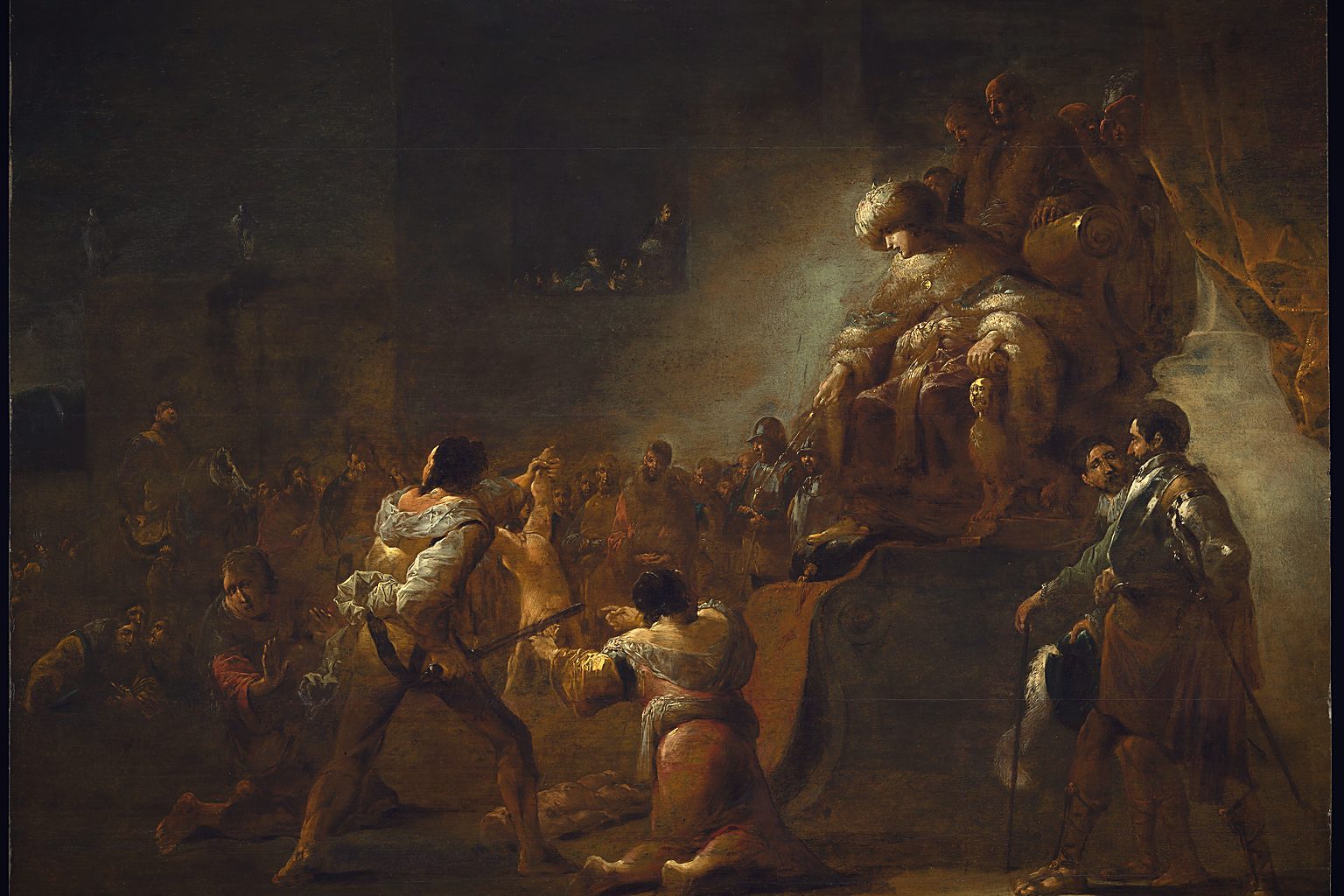
In February 2013 a team from Tel Aviv University collected ten date pits and an olive pit out of a smelting camp in the Timna Valley — the site sold to tourists as King Solomon’s mines — and sent them to Oxford for radiocarbon dating.
The results put industrial copper production in the Arava desert squarely in the tenth century BC — the century the Bible assigns to Solomon, and the century most archaeologists had spent forty years insisting was too early for anything organised in that region.
That is the single strongest piece of physical evidence anywhere near the biblical account of King Solomon. It is worth understanding exactly what it proves, because it is not what the headlines said. Nothing at Timna names Solomon. The best current reading of the site is that it was run by Edomites.
Was King Solomon Real?
There is no inscription, seal, monument or foreign record that names Solomon. Everything we know about him as a person comes from the Bible, written down centuries after he is said to have lived.
What archaeology can speak to is narrower and more interesting: whether a centralised kingdom capable of the building projects attributed to him existed in tenth-century BC Israel. That question is live, contested, and has moved twice in the last fifteen years.
So the honest answer has two halves. A king called Solomon is not attested outside the Bible. A tenth-century Judahite state with monumental architecture and industrial copper production is increasingly hard to deny. Those are different claims and most popular coverage merges them.
What the Bible Actually Claims
1 Kings and 2 Chronicles give a detailed and, in places, checkable account. Solomon reigns forty years, builds the Temple in Jerusalem and a larger palace beside it, marries a pharaoh’s daughter, trades with Tyre, receives the Queen of Sheba, and accumulates gold in quantities the text seems aware are extravagant.
One verse in that account is different from the others, because it lists places that can be dug:
“And this is the reason of the levy which king Solomon raised; for to build the house of the LORD, and his own house, and Millo, and the wall of Jerusalem, and Hazor, and Megiddo, and Gezer.” (1 Kings 9:15)
Three named cities, three excavated sites. That verse is where the argument has been fought for seventy years.
The Testable Verse: Hazor, Megiddo, Gezer
In the 1950s Yigael Yadin noticed that all three sites had near-identical six-chambered gatehouses — the same plan, the same dimensions, the same masonry — and concluded they were built by one central administration following one blueprint. Given 1 Kings 9:15, he dated them to Solomon. For decades that was the textbook position.
In the 1990s Israel Finkelstein proposed the Low Chronology: the pottery sequence the gates were dated by should be shifted down by roughly eighty to a hundred years. On that reading the gates are the work of the Omride dynasty in the ninth century, Ahab rather than Solomon, and tenth-century Jerusalem was a modest highland town with no capacity for anything of the kind.
The counter-case has been made most consistently by Amihai Mazar, whose “modified conventional chronology” splits the difference, and by William Dever, who excavated Gezer. A radiocarbon programme at Gezer published in 2021 returned dates for the gate in the first half of the tenth century BC, which is Yadin’s answer arrived at by a method Yadin did not have.
That is where it stands. Not settled — Finkelstein and Adams responded on the Megiddo material the same year — but the physical dating has moved toward the earlier position rather than away from it.
| Claim | Evidence for | Evidence against |
|---|---|---|
| Solomon existed as a person | Biblical narrative only | No inscription names him |
| A tenth-century state built monumentally | Gate complexes at three sites; 2021 Gezer radiocarbon | Low Chronology reads the same pottery as ninth-century |
| Industrial copper in his era | Timna radiocarbon, 10th century BC | Operation looks Edomite, not Israelite |
| The dynasty existed | Tel Dan stele: “House of David” | Stele names David’s house, not Solomon |
| The Temple as described | None | Site inaccessible; no contemporary record |
King Solomon’s Mines Are Real. They Are Probably Not His.
The Timna Valley has been mined for copper since the Chalcolithic. In 1969 Beno Rothenberg found an Egyptian temple to Hathor there, and the field settled on the view that the mines were an Egyptian New Kingdom operation that shut down when Egypt withdrew around 1150 BC.
Erez Ben-Yosef’s excavations at the site nicknamed Slaves’ Hill overturned that. Hundreds of furnaces, thick slag layers, a defended camp with a gatehouse, evidence of a workforce fed on imported food — and radiocarbon dates clustering in the tenth century BC, long after the Egyptians left.
The preservation is freakish. The Arava is dry enough that donkey dung from the camp’s pack animals survived, and the pollen and seeds in it show fodder brought in from the Mediterranean coast, hundreds of kilometres away. That is a logistics operation, not a scratch mine.
What it is not is proof of a biblical king. Timna lies in what the Bible calls the territory of Edom, and the most economical reading is that the operation was Edomite. Ben-Yosef’s own broader argument is more provocative than the headline: that a people without permanent stone architecture — nomads — could run an industrial enterprise of this scale, which means archaeology’s habit of measuring statehood by buildings systematically underestimates desert polities.
The honest formulation is that the mines are real, they were active in Solomon’s century, and the kingdom running them was most likely not his. Whether Israel controlled or taxed the trade is unknown.
The House of David
In 1993 an excavation at Tel Dan turned up a broken basalt victory stele in Aramaic, erected by a king of Damascus in the ninth century BC. It refers to a king of the bytdwd — the House of David.
This is the only thing close to external confirmation of the dynasty, and it does real work: a century after David’s traditional dates, a hostile neighbouring king identified the southern kingdom by its founder’s name. Dynasties are not usually named after people who did not exist.
It does not mention Solomon. Nothing does. A related reading of the Mesha stele from Moab has been proposed and remains contested.
What There Is No Evidence For At All
- The Temple. Nothing of it has been excavated, and nothing will be: the Temple Mount is a working religious site and has never been subject to controlled excavation. Absence of evidence here is guaranteed by circumstance, which means it is not evidence of absence — but it also means the building cannot be confirmed. The vessel it was built to house, the Ark of the Covenant, disappears from the record at the same point.
- The empire’s extent. The Bible’s account of a kingdom from the Euphrates to Egypt has no archaeological or foreign-record support, and Egypt in this period kept good records.
- The gold of Ophir. The location of Ophir is unknown. A potsherd from Tell Qasile reading “gold of Ophir for Beth-Horon” confirms the name was in use; it does not locate the place.
- The seven hundred wives. A literary number. Ancient Near Eastern texts routinely use large round figures for royal households.
The Case Against It
The Solomon debate is unusually vulnerable to motivated reasoning in both directions, and it is worth naming how.
The maximalist failure mode is treating any tenth-century monumental structure as Solomonic by default. A gate built in the right century is evidence of a state, not a signature. Sites are routinely labelled “Solomon’s stables” or “Solomon’s gate” in signage that the excavation reports do not support.
The minimalist failure mode is treating the absence of an inscription as proof of non-existence. Almost no tenth-century Levantine king is attested by his own inscriptions; the epigraphic habit in the region belongs to the ninth century and later. Holding Solomon to a standard his contemporaries also fail is not scepticism.
And the pottery chronology itself — the thing the whole argument rests on — has an error range wide enough to accommodate both readings. Radiocarbon has narrowed it and will narrow it further. It has not closed it.
Why Any of This Matters
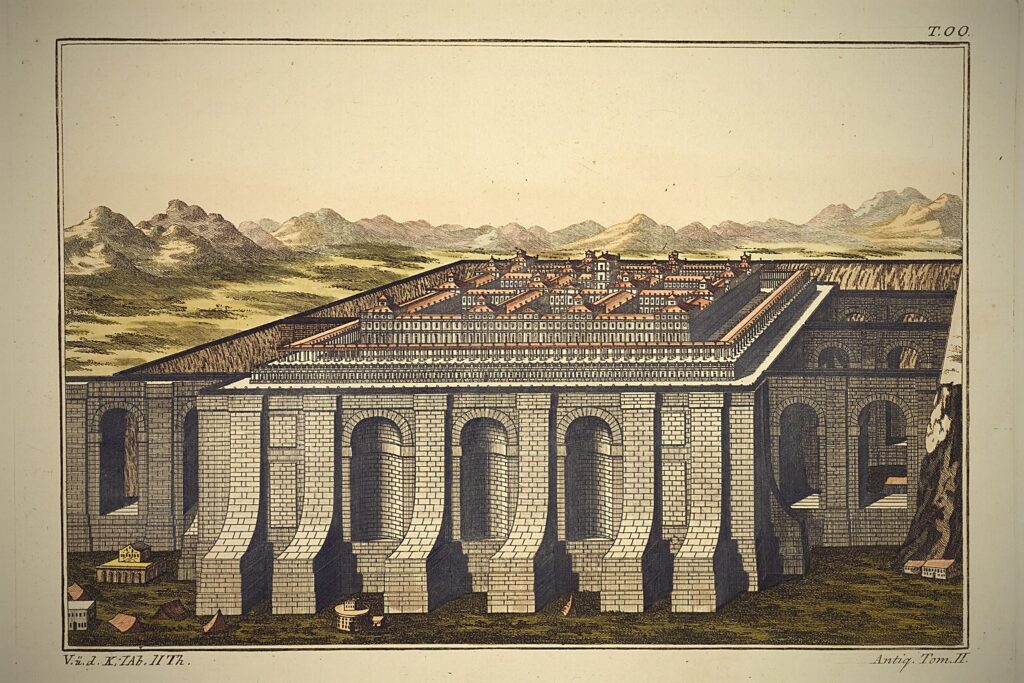
Because the tenth century BC is the hinge. If a centralised kingdom existed then, the biblical narrative of a united monarchy has a plausible historical core and the later texts are working from real memory. If it did not, those chapters are a retrojection written by a much later court to give a small kingdom an imperial past.
That is a genuine question about how history gets written, and it is being settled by date pits and slag heaps rather than by argument. The same shift has happened at other sites where the textbook date turned out to be a habit rather than a measurement — the dating of Göbekli Tepe moved the origin of monumental building by six thousand years on the same kind of evidence.
Frequently Asked Questions
Was King Solomon real?
No inscription or foreign record names him, so he is not externally attested. The dynasty he belongs to is: the Tel Dan stele refers to the “House of David” within about a century of his traditional dates. Most archaeologists accept a historical core while disputing the scale of his kingdom.
Are King Solomon’s mines real?
The copper mines in the Timna Valley are real and radiocarbon dating puts industrial smelting there in the tenth century BC, Solomon’s era. The operation appears to have been Edomite rather than Israelite, and nothing found there names Solomon.
Does King Solomon’s Temple still exist?
No. Nothing identified as the First Temple has been excavated, and the Temple Mount has never been open to controlled archaeology. It was destroyed by the Babylonians in 586 BC, and the Second Temple that replaced it was destroyed by Rome in AD 70.
What is the Low Chronology?
Israel Finkelstein’s proposal that the pottery phases used to date Iron Age sites should be shifted roughly eighty to a hundred years later. Under it, the monumental gates at Hazor, Megiddo and Gezer belong to the ninth-century Omride kings rather than to Solomon.
What is the Tel Dan stele?
A ninth-century BC Aramaic victory inscription found at Tel Dan in 1993, in which a king of Damascus mentions defeating a king of the “House of David”. It is the earliest extra-biblical reference to the Davidic dynasty.
How did King Solomon die?
The Bible says only that he died after reigning forty years and was buried in the City of David. There is no account of the circumstances and no archaeological evidence bearing on it.
Did the Queen of Sheba really visit Solomon?
No external source records the visit — though almost nothing external records any Levantine king of that century, which is the same gap that surrounds Solomon himself. The kingdom of Saba in southern Arabia was real and wealthy, but its documented prominence begins several centuries after Solomon’s traditional dates, and that is the part the account has to answer for.
Why is there no archaeological evidence of Solomon himself?
Because almost no Levantine king of that century left inscriptions. The practice of royal monumental inscription in the region becomes common in the ninth century BC, which is also when the first external mentions of Israelite and Judahite kings appear.
What Would Settle It
The Solomon question has been rescued from theology by two unglamorous techniques: radiocarbon dating and the chemical analysis of ancient rubbish.
What they have produced so far is a tenth century BC with more going on in it than the sceptical consensus of the 1990s allowed — organised copper production in the desert, monumental gates at three cities, a dynasty a hostile neighbour could name. What they have not produced is Solomon.
The next move will come from the same place the last one did: a soil sample, a seed, an isotope ratio, and an argument about what it means. Not from a lost chamber under the Temple Mount, which nobody is going to be allowed to open.
Continue Reading
- The Shroud of Turin: A Negative Nobody Ordered — Dust vacuumed from the cloth in 1978 has now been sequenced, and the result was reported as evidence the Shroud came…
- The Third Temple: What Is Actually Ready, and What Is Not — The vessels are finished, the garments are woven and the plans exist. What does not exist is a valid set of ashes, an…
- What Destroyed Sodom and Gomorrah? The Evidence, Updated — The famous airburst study was retracted in 2025 – and almost nobody updated the story. What the geology of the Dead Sea…