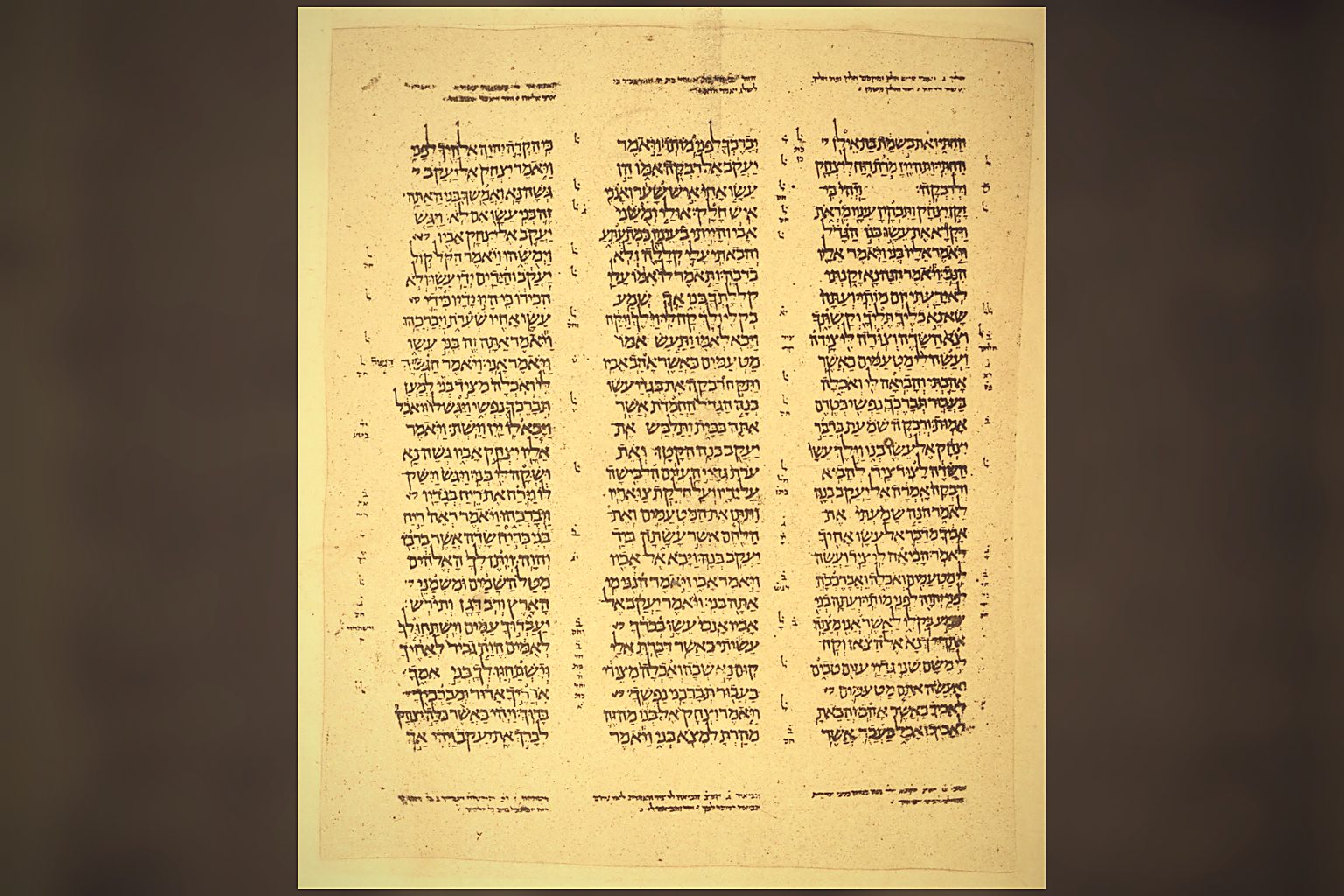
There is a long list of books mentioned in the Bible but not included in it, and almost nobody notices the strangest thing about that list. These are not books somebody rejected. Nobody voted on them. They are the Bible’s footnotes — the sources its own authors tell you to go and consult if you want the rest of the story.
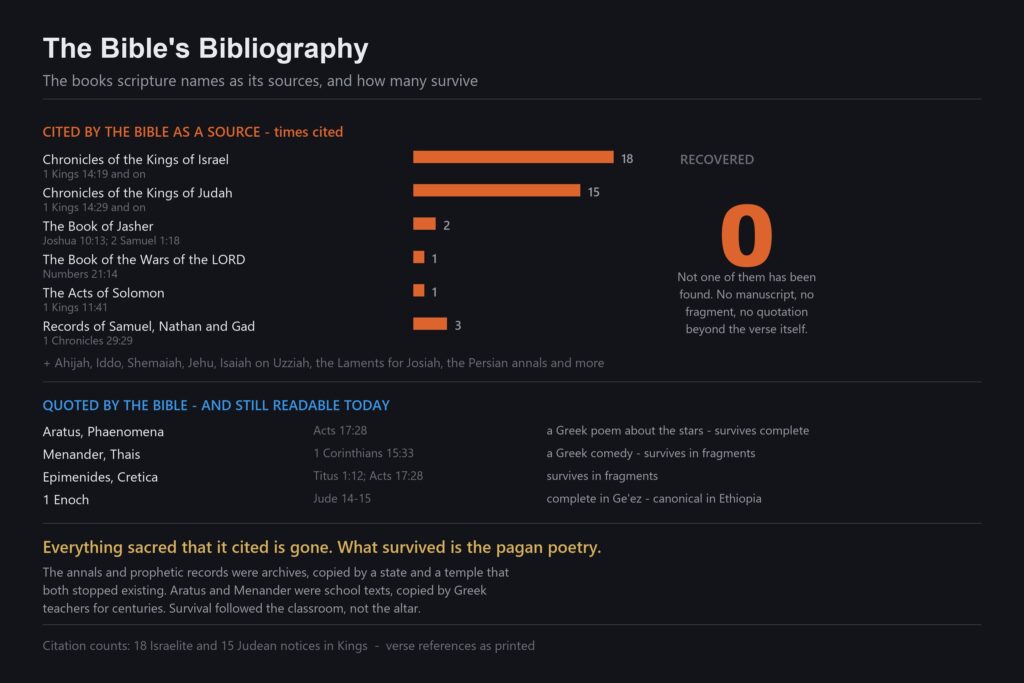
Around twenty of them are named outright. They are cited more than forty times. And not one has ever been found.
Meanwhile, four books the Bible quotes word for word are sitting on the shelf of any decent university library, fully readable. Three of them are pagan Greek poetry.
The Bible Has Footnotes
Open 1 Kings and you keep hitting the same sentence, king after king, like a stamp:
Now the rest of the acts of Jeroboam, and how he warred, and how he reigned, behold, they are written in the book of the chronicles of the kings of Israel. (1 Kings 14:19)
That is a citation. The writer is telling you, plainly, that he is working from an archive, that he has not put everything in, and that the fuller record exists somewhere else. He does it eighteen times for the northern kingdom’s annals and fifteen times for Judah’s — thirty-three referrals, in one pair of books, to two documents nobody has ever seen.
This is worth sitting with, because it cuts against how scripture is usually imagined. The writer of Kings does not present himself as receiving a text whole. He presents himself as an editor with a bibliography, selecting from state records and expecting his reader to be able to check him.
The whole of the Bible’s cited library is a dead link.
The Two Famous Ones
The Book of the Wars of the LORD appears exactly once, in Numbers 21:14, and the way it appears is what makes it tantalising. The text does not summarise it. It quotes it, mid-verse, and then moves on — leaving a fragment of an otherwise unknown book embedded in the Pentateuch like a fly in amber. From the surrounding lines it looks like a collection of victory songs about Israel’s campaigns east of the Jordan.
The Book of Jasher is cited twice, at Joshua 10:13 and 2 Samuel 1:18, and both times for poetry — the sun standing still at Gibeon, and David’s lament for Saul and Jonathan. Two citations, four centuries apart in narrative time, both reaching for the same anthology.
The original is gone. What is sold under that title today is a medieval midrash and an eighteenth-century forgery, neither of them it — a tangle that deserves its own page and has one.
Solomon’s Lost Library
This one rarely makes the lists, and it is the largest single loss on it.
And he spake three thousand proverbs: and his songs were a thousand and five. And he spake of trees, from the cedar tree that is in Lebanon even unto the hyssop that springeth out of the wall: he spake also of beasts, and of fowl, and of creeping things, and of fishes. (1 Kings 4:32–33)
Three thousand proverbs. The biblical book of Proverbs contains roughly nine hundred verses in total, and not all are attributed to Solomon. A thousand and five songs; the Song of Songs is one. And then a systematic treatment of trees, beasts, birds, reptiles and fish — which is a description of a natural-history work, written three thousand years ago, by a king with the resources to commission one.
Separately, the Book of the Acts of Solomon is cited at 1 Kings 11:41 as the place to find the rest of his reign.
None of it survives. What is in the Bible is an anthology drawn from a much larger body of work, and the Bible says so itself.
The Prophets Kept Records Too
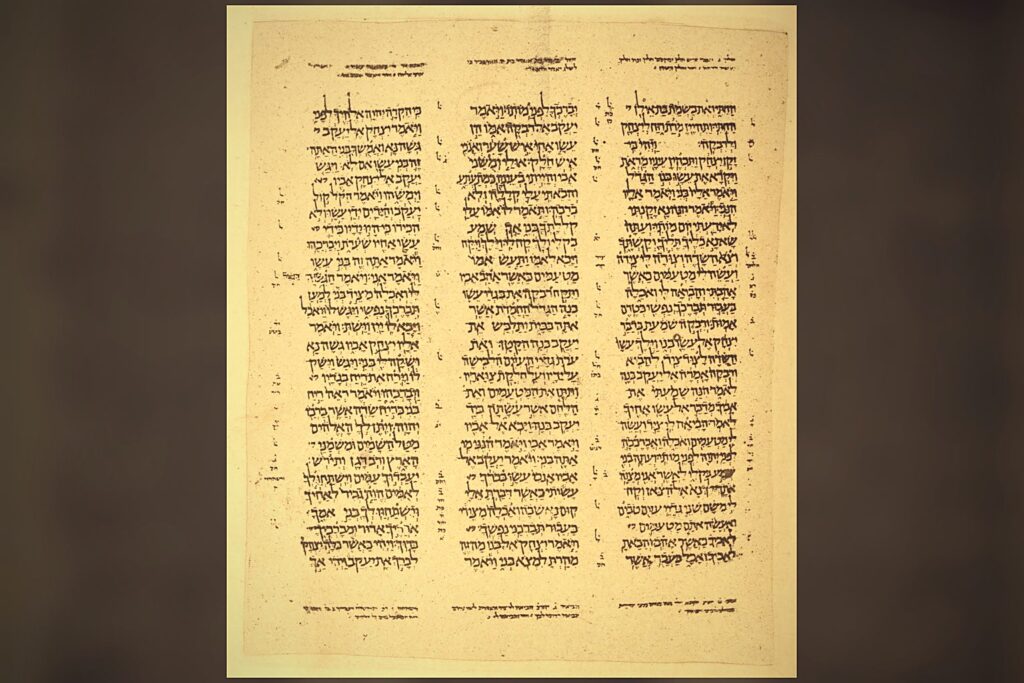
Chronicles is even more citation-heavy than Kings, and it points at a different kind of source: documents attributed to individual prophets and seers.
| The source | Where it is cited |
|---|---|
| The acts of Samuel the seer, Nathan the prophet, Gad the seer | 1 Chronicles 29:29 |
| The prophecy of Ahijah the Shilonite; the visions of Iddo the seer | 2 Chronicles 9:29 |
| The book of Shemaiah the prophet | 2 Chronicles 12:15 |
| The story of the prophet Iddo | 2 Chronicles 13:22 |
| The book of Jehu the son of Hanani | 2 Chronicles 20:34 |
| The acts of Uzziah, written by Isaiah the prophet | 2 Chronicles 26:22 |
| The sayings of the seers | 2 Chronicles 33:19 |
| The story of the book of the kings | 2 Chronicles 24:27 |
| The laments for Josiah | 2 Chronicles 35:25 |
| The chronicles of the kings of Media and Persia | Esther 10:2 |
Two of those deserve a note, because popular lists usually get them wrong.
The laments for Josiah are not the book of Lamentations. 2 Chronicles 35:25 says Jeremiah composed dirges for the dead king, that singers were still performing them when the Chronicler wrote, and that they were “written in the laments”. Canonical Lamentations is about the fall of Jerusalem, not the death of Josiah. The Chronicler is pointing at a different collection, presumably a temple or palace songbook, and it is gone.
“The story of the book of the kings” at 2 Chronicles 24:27 translates the Hebrew midrash. That word occurs only twice in the entire Hebrew Bible — here and at 2 Chronicles 13:22 — and both times it is the name of a source being cited. The technical vocabulary of later Jewish commentary appears in scripture only as the title of two books nobody has.
The Missing Letters
The New Testament has the same problem in miniature, and it is sharper there because the timescale is so short.
Paul wrote to Corinth before 1 Corinthians. He says so: “I wrote unto you in an epistle not to company with fornicators” (1 Corinthians 5:9). That letter is not in the New Testament. It was written to a church that kept Paul’s other correspondence, within a generation of people who knew him, and it still did not survive.
There was a painful letter too. In 2 Corinthians 2:4 Paul refers to writing “out of much affliction and anguish of heart… with many tears”. Many scholars think this one is not lost at all, and that chapters 10–13 of 2 Corinthians are it, physically attached to the wrong letter when the collection was assembled. That is a reasonable reading of an abrupt change of tone at chapter 10, and it is not provable.
And there is a letter from Laodicea. Colossians 4:16 instructs the Colossians to swap letters with the Laodicean church and read “the epistle from Laodicea”. Nobody knows which letter that is. A short Epistle to the Laodiceans circulated in the Latin west for centuries; it is generally judged a later assembly of phrases lifted from Paul’s genuine letters, produced to fill exactly this gap.
So on the usual count, Paul’s correspondence with Corinth ran to at least four letters and two are missing, and at least one letter elsewhere is unaccounted for.
Quoted Without Being Cited
A separate category, and the most interesting one: passages that plainly draw on a book without naming it.
Jude 14–15 quotes a prophecy of “Enoch, the seventh from Adam”. It is 1 Enoch 1:9, close to word for word. Jude does not say “the book of Enoch”, but he is unmistakably quoting a text, and treating it as prophecy. That book is very much not lost — Aramaic fragments came out of Qumran, and the complete work survives in Ge’ez because it is canonical scripture in the Ethiopian Orthodox Tewahedo Church, whose Bible runs to eighty-one books. What it says about the giants, and the lost companion volume about them, is a story of its own.
Jude 9 describes the archangel Michael disputing with the devil over the body of Moses. That episode is nowhere in the Old Testament. Clement of Alexandria and Origen both say Jude took it from a work called the Assumption — or Ascension — of Moses. A text called the Testament of Moses does survive, in a single damaged Latin manuscript, and here is the honest complication: the dispute over the body is not in the surviving text. The manuscript breaks off before the end. Whether the missing portion contained it, or whether the Assumption was a separate book altogether, cannot currently be settled.
2 Timothy 3:8 names Jannes and Jambres as the magicians who opposed Moses. Exodus tells the story but never names them. The names come from Jewish tradition circulating outside scripture, which Paul expects his reader to recognise without explanation.
The Ones That Survived Are the Pagan Ones
Now the part that ought to be better known.
There are books the New Testament quotes directly that you can read this afternoon, in translation, complete or nearly so. All three are Greek, and none of them is remotely religious in the biblical sense.
**Aratus, Phaenomena.** In Acts 17:28, speaking to the Athenians, Paul says “as certain also of your own poets have said, For we are also his offspring.” That is a line from a third-century BC Greek poem about constellations and weather signs. It survives complete.
**Epimenides, Cretica.** Titus 1:12 — “One of themselves, even a prophet of their own, said, The Cretians are alway liars, evil beasts, slow bellies.” The earlier half of the Acts 17:28 sentence, “in him we live, and move, and have our being,” is generally traced to the same Cretan source. It survives in fragments.
**Menander, Thais.** 1 Corinthians 15:33 — “evil communications corrupt good manners” — is a line from a Greek comedy by a playwright who died around 291 BC. It survives in fragments, most of them recovered from Egyptian rubbish heaps.
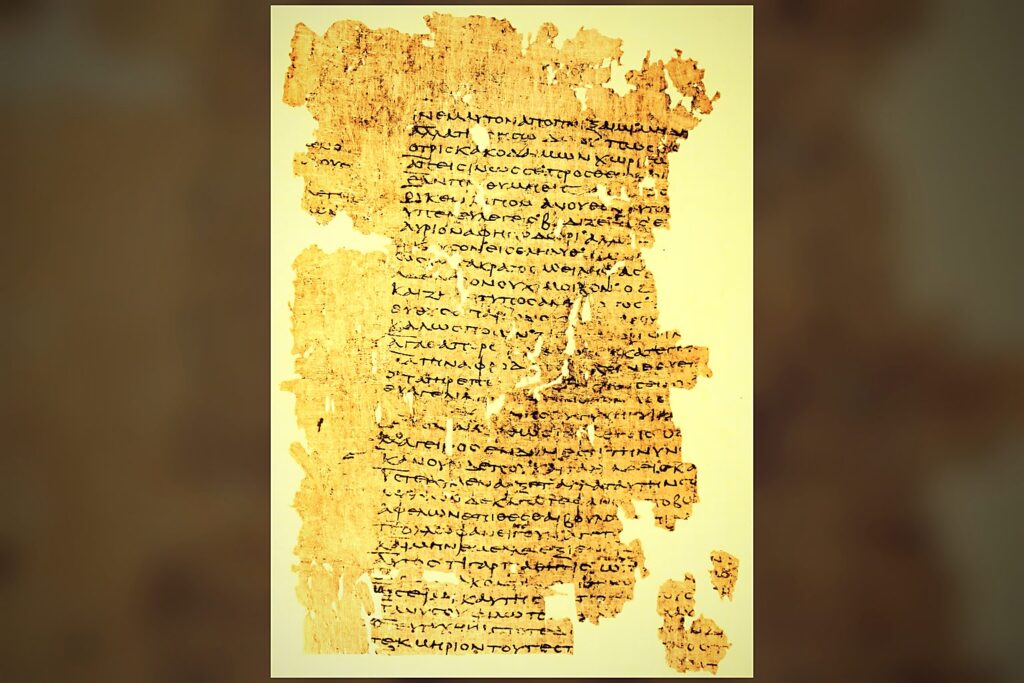
So line up the two categories honestly. Every source the Hebrew writers cite as an archive — royal annals, prophetic records, national song collections — is gone without trace. Every source the New Testament quotes from Greek literature is still here.
The reason is not mysterious, and it is not theological. It is about who does the copying. The annals of Israel and Judah were administrative documents held by a state and a temple, and both of those institutions were destroyed. A document that lives in one archive dies with the archive. Aratus and Menander, by contrast, were school texts — copied out by generations of Greek-speaking students as exercises, in thousands of copies, across the whole Mediterranean. Survival followed the classroom, not the altar.
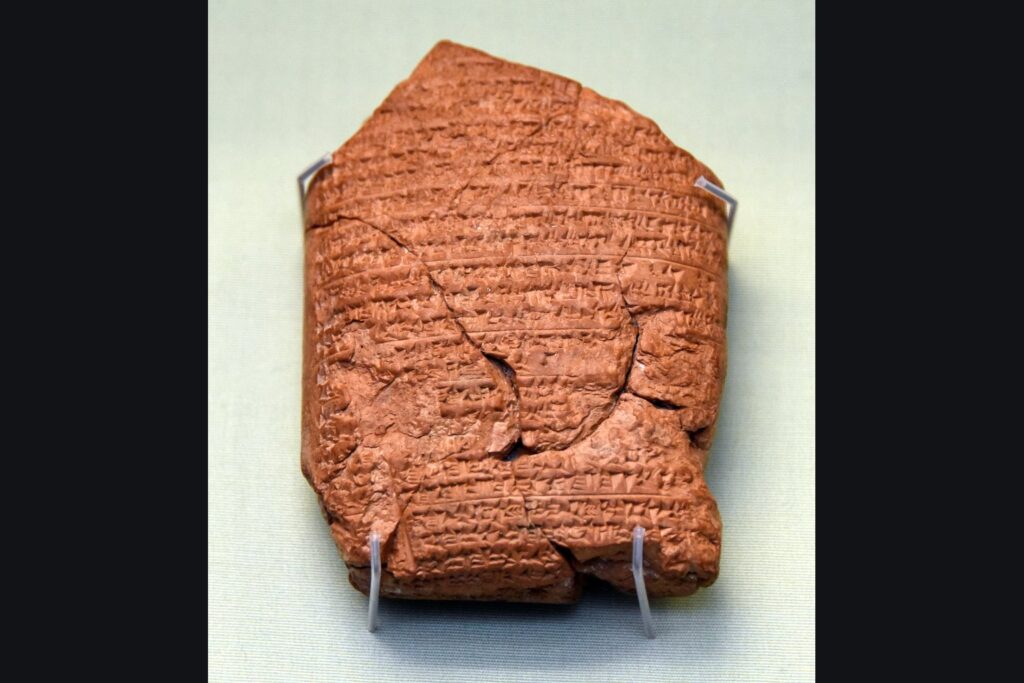
And the comparison that makes the point sharpest: Babylon’s royal chronicles did survive. They were written on clay, which fire bakes rather than destroys, and they were buried in mounds rather than kept on shelves. One of them records the capture of Jerusalem in 597 BC. The genre the Bible keeps citing is attested, in quantity, from the neighbours. Israel wrote its annals on papyrus and leather in a wet-winter climate, in a city that was burned twice. That is the whole difference.
What This Does to the “Lost Books” Story
The popular version of this subject is about suppression — councils, bans, books hidden because they said the wrong thing. That framing has its own problems, and the books it concerns are mostly later gospels and apocalypses, a different set entirely from the ones on this page.
The books listed here embarrass that story in a simple way: they are still in the Bible. The references were never removed. Any editor minded to hide the existence of the Wars of the LORD had only to delete one half-verse in Numbers, and any editor wanting to obscure the royal annals had thirty-three sentences to strike and struck none of them. The citations sit there, in every printed Bible on earth, pointing at documents that are not there.
That is not what concealment looks like. It is what an honest bibliography looks like after the library burns.
What Would Change If One Turned Up
Worth being concrete about the stakes, because they are high.
An authentic manuscript of the Chronicles of the Kings of Israel would be the most significant find in biblical archaeology ever made — a contemporary administrative record of the northern kingdom, against which the biblical narrative could be checked line by line. The Wars of the LORD would give a pre-monarchic Hebrew poetic source. The Acts of Solomon would put a tenth-century court on the record.
The odds are poor. Papyrus and leather survive in Egypt and in the Dead Sea caves because both are bone dry; Samaria and Jerusalem are neither. The material that does keep — the Dead Sea Scrolls, the Elephantine papyri, the Lachish ostraca — shows what would be possible if the climate had cooperated.
Until then the situation is the one the Bible describes and nobody else will: a book that names its sources, and a world in which the sources are gone.
Frequently Asked Questions
What books are mentioned in the Bible but not included in it?
Roughly twenty named works. The best known are the Book of the Wars of the LORD (Numbers 21:14), the Book of Jasher (Joshua 10:13; 2 Samuel 1:18), the Book of the Acts of Solomon (1 Kings 11:41), and the Chronicles of the Kings of Israel and of Judah (cited eighteen and fifteen times in Kings). Chronicles adds records attributed to Samuel, Nathan, Gad, Ahijah, Iddo, Shemaiah, Jehu and Isaiah. The New Testament adds at least two lost letters of Paul.
Have any of the lost books mentioned in the Bible been found?
No. Not one of the works cited as a source in the Hebrew Bible has been recovered — no manuscript, no fragment, and no quotation beyond the verse that names it. The single exception in the wider category is 1 Enoch, which is quoted in Jude 14–15 rather than cited as a source, and which survives complete in Ge’ez and in Aramaic fragments from Qumran.
What is the Book of the Wars of the Lord?
A lost work cited once, at Numbers 21:14. The biblical text quotes a fragment of it rather than summarising it, and from the context it appears to have been a collection of victory songs about Israel’s campaigns east of the Jordan. Nothing of it survives apart from the lines embedded in Numbers.
How many times does the Bible cite the Chronicles of the Kings?
Thirty-three times in the books of Kings — eighteen referrals to the annals of Israel and fifteen to the annals of Judah, using a standard formula: “the rest of the acts of [the king]… are they not written in the book of the chronicles of the kings of…”. Chronicles cites further royal and prophetic records on top of that.
Did Paul write letters that are lost?
Yes. 1 Corinthians 5:9 refers to an earlier letter to Corinth that is not in the New Testament. 2 Corinthians 2:4 mentions a painful letter written in tears, which many scholars believe survives as chapters 10–13 of 2 Corinthians rather than being lost. Colossians 4:16 mentions a letter from Laodicea that cannot be identified.
Does the Bible quote books that still exist?
Yes, and they are not religious texts. Acts 17:28 quotes the Greek poem Phaenomena by Aratus, which survives complete. Titus 1:12 quotes Epimenides of Crete. 1 Corinthians 15:33 quotes the comedy Thais by Menander. They survived because Greek schools copied them for centuries — unlike the Hebrew royal archives, which existed in few copies and were destroyed with the institutions that held them.
Why was the Book of Jasher not included in the Bible?
It was never excluded, because it was never a candidate. Joshua and 2 Samuel cite it the way a historian cites a source, not the way scripture cites scripture, and the original disappeared without any council considering it. The books sold under the name today are a medieval Hebrew midrash and a forgery published in 1750.
Is the dispute over Moses’ body in Jude from a lost book?
Clement of Alexandria and Origen both attributed Jude 9 to a work called the Assumption or Ascension of Moses. A related text, the Testament of Moses, survives in one damaged Latin manuscript — but the dispute over the body is not in the part that survives, and the manuscript is incomplete. Whether the passage stood in the missing portion, or came from a separate book, is unresolved.
Continue Reading
- The Lost Books of the Bible: Who Left What Out — The lists are real. Most of the books are real. The argument is over one word: banned. What the categories actually…
- The Book of Jasher: Three Books, One Name, None of Them It — The Bible cites it twice and no copy survives. What the lost book probably was, why the medieval Sefer haYashar is not…
- The Book of Enoch Giants: The Lost Book That Names Them — They were enormous and they ate people — that is the part everyone knows. The part nobody knows is that a second book…