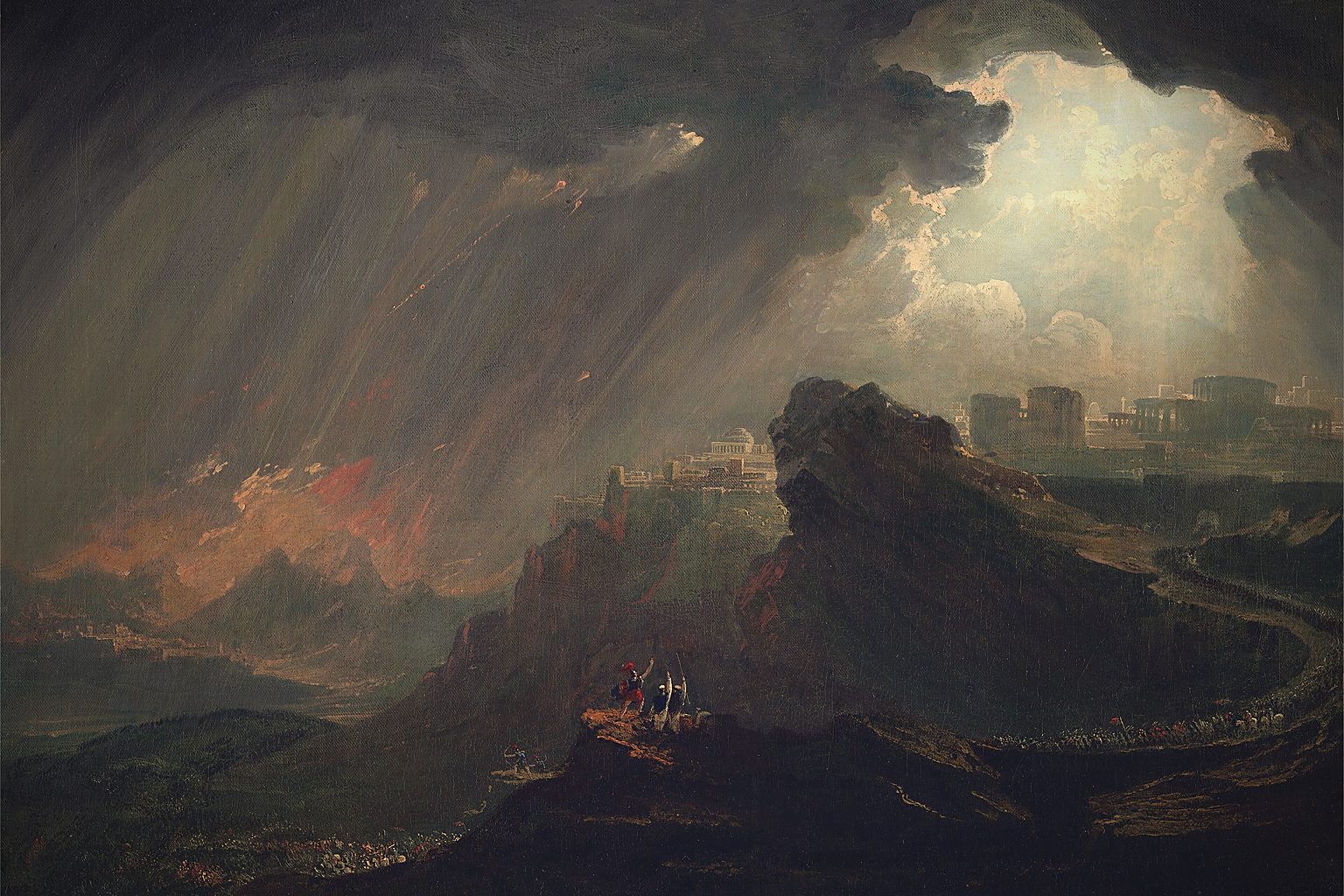
Twice, the Hebrew Bible stops mid-narrative and cites a source. Not a prophet, not a tradition — a book, by name, as though the reader could go and check it.
“And the sun stood still, and the moon stayed, until the people had avenged themselves upon their enemies. Is not this written in the book of Jasher?” (Joshua 10:13)
Nobody has been able to check it for about two and a half thousand years. The Book of Jasher is genuinely lost — and three entirely different books are sold today under its name, one of which is an eighteenth-century forgery that was exposed within a month of publication.
Sorting out which is which takes ten minutes and saves a lot of embarrassment, so here it is.
What Is the Book of Jasher?
The Book of Jasher is a lost Israelite source cited twice in the Hebrew Bible, in Joshua 10:13 and 2 Samuel 1:18. No copy of it survives, no ancient author quotes it at length, and it was already gone by the time the Dead Sea Scrolls were copied.
Start with the name, because it is routinely misread. Jasher is not a person. The Hebrew is sefer hayashar, “the book of the upright” or “the book of the just” — yashar, straight or upright, the same root that gives Jeshurun as a poetic name for Israel. English Bibles transliterated it as a proper noun and created a phantom author.
What the Two Citations Actually Have in Common
Both quotations are poetry.
Joshua 10:12-13 is verse — a couplet addressed to the sun and the moon, sitting inside a prose chapter, introduced as a quotation. And 2 Samuel 1:18 introduces David’s lament for Saul and Jonathan, the Song of the Bow, which is one of the finest pieces of Hebrew poetry in the Bible:
“How are the mighty fallen in the midst of the battle! O Jonathan, thou wast slain in thine high places.” (2 Samuel 1:25)
That is the strongest available clue about what the book was. Not a chronicle, not a secret gospel, not a suppressed alternative history — an anthology of national songs, the sort of collection every literate culture of the period kept. The Bible cites two other such works and they have the same flavour: the Book of the Wars of the LORD (Numbers 21:14) and, in the Greek Septuagint at 1 Kings 8:53, “the book of the song” — sefer hashir, which is sefer hayashar with two letters transposed, and may well be the same book under a scribal slip.
A song collection explains the citation formula too. The narrator is not proving the miracle happened; he is telling you where the famous verse comes from, the way one might note that a line is from a well-known ballad.
The Three Books Called Jasher
| Text | Date | What it is | Honest? |
|---|---|---|---|
| The Book of Jasher cited in Joshua | Before ~600 BC | Lost. Probably a collection of national poetry | — |
| Sefer haYashar (the midrash) | Medieval, printed Venice 1625 | A real Hebrew retelling of Genesis to Judges, built from rabbinic legend | Yes — never claimed to be the lost book |
| Pseudo-Jasher, “translated by Alcuin” | Printed 1750, dated 1751 | An English forgery by Jacob Ilive | No |
| Sefer haYashar of Rabbeinu Tam | 12th century | An ethical treatise. Unrelated to any of the above except by title | Yes |
Four rows, because the title was a popular one. Sefer hayashar was to Hebrew publishing roughly what “The Book of Virtues” is to English — a name several unrelated books wore.
The Medieval Sefer haYashar: A Real Book, Wrongly Marketed
The text most people actually buy when they buy “The Book of Jasher” is the Hebrew midrashic Sefer haYashar, printed in Venice in 1625 by Joseph ben Samuel, whose introduction refers to an earlier Naples printing of 1552 that nobody has since produced a copy of.
It is a genuine and rather good piece of Jewish literature. It retells the biblical narrative from Adam to the judges, filling gaps with material from the Talmud, the midrashim and popular legend: Abraham smashing his father’s idols, the names of the wives of the patriarchs, an expanded account of Joseph in Egypt, a long treatment of the war with the giants. Anyone who enjoys the Enoch traditions will recognise the register immediately.
The Venice printer made a cautious claim — that a scribe had copied it from an old manuscript — and rabbinic readers of the period treated it as what it is, a late compilation. Its publishers did not claim it was the book Joshua cites. Its modern republishers frequently do.
In 1840 Mordecai Manuel Noah published an English translation of the Venice text in New York, and it is that translation, reprinted in Salt Lake City in 1887 and in cheap editions ever since, that circulates today with a title page implying rather more than the Hebrew ever did.
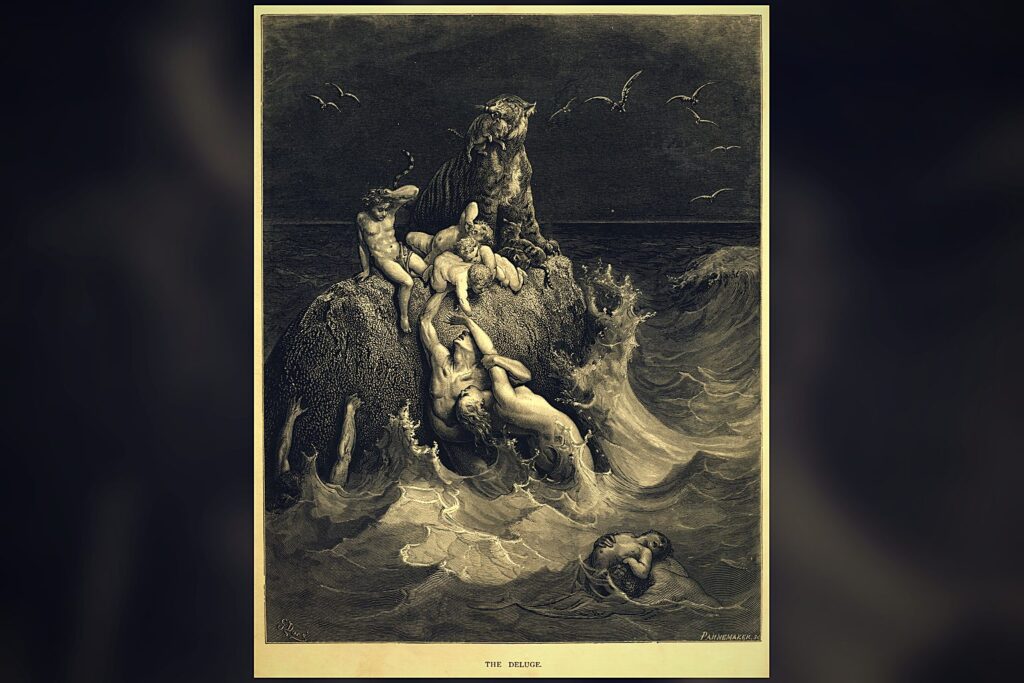
The Forgery: Jacob Ilive, 1750
The other Jasher is a straightforward fake, and it is worth knowing because it still turns up in reading lists.
It was printed in November 1750 with an imprint date of 1751, and its title page claimed the text had been “translated into English by Flaccus Albinus Alcuinus, of Britain, Abbot of Canterbury, who went on a pilgrimage into the Holy Land and Persia, where he discovered this volume in the city of Gazna.”
Every part of that sentence is wrong. Alcuin of York was an eighth-century scholar at Charlemagne’s court; he was never Abbot of Canterbury, and he never went to Persia. And the supposed eighth-century English is the English of the King James Bible, which was published in 1611.
The Monthly Review called it an obvious hoax in December 1750 — within weeks. The forger was almost certainly Jacob Ilive, a London printer with a documented history of deception and a theological grudge against orthodox Christianity; he was later imprisoned with hard labour over a separate publication.
That should have been the end of it. What revived it was a reprint in 1934 by an occult order, after which it re-entered circulation as an “ancient text”, and the internet has kept it there ever since.
How to Tell Which One You Are Holding
Thirty seconds, no Hebrew required.
- Open it at the beginning. The medieval Sefer haYashar starts with the creation of Adam and runs through the patriarchs. The Ilive forgery opens with a preface about Alcuin.
- Look for Alcuin. Any mention of Alcuin, Gazna, or a pilgrim-translator means you are holding the 1750 fake.
- Look at the chapter structure. The Venice text is chaptered as a continuous narrative; the forgery is arranged in short numbered aphoristic chapters.
- Check the claim on the cover. “The lost book referenced in Joshua” is a publisher’s claim, never the text’s own.
Checking the Popular Claims
Four claims circulate constantly and and the record does not support them.
The Book of Jasher was not among the Dead Sea Scrolls. This is the single most common error, and it is worth stating plainly: no fragment of any book called Jasher was found at Qumran, and no scroll catalogue lists one. The scrolls that were found are well documented and the list is public. The confusion comes from Jubilees and Enoch genuinely turning up there, which encourages the assumption that everything apocryphal did.
It was not removed from the Bible. It is cited as an outside source by the Bible, in the same breath as the Book of the Wars of the LORD. A book that a biblical author quotes as an external reference was never inside the collection. The broader “banned books” framing goes wrong in the same way.
The medieval text is not independent confirmation of Genesis. It is a retelling of Genesis, written more than two thousand years later, using the Bible as its source. Where it supplies extra detail — names, dates, dialogue — the detail is legend, not testimony. Using it to corroborate scripture is circular.
The sun-standing-still verse is not evidence of an astronomical event recorded elsewhere. Claims about a “missing day” found by NASA computers are a twentieth-century urban legend with no institutional source and no mechanism. The verse is poetry quoted from a song book, which is exactly how the narrator introduces it.
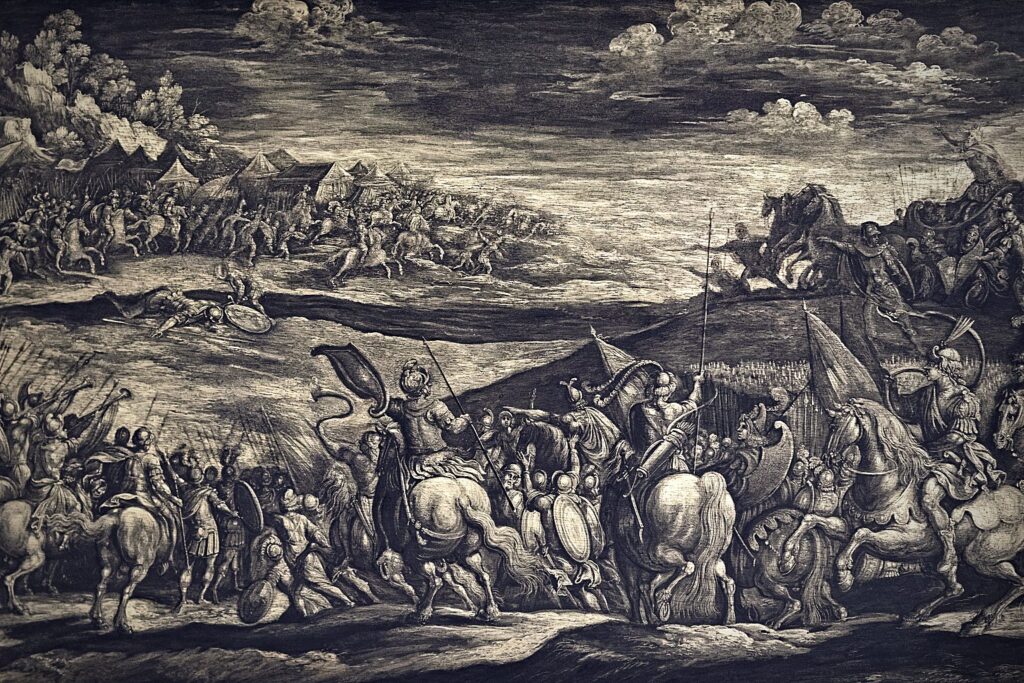
What Is Genuinely Interesting Here
Strip away the two impostors and something better is left.
The Bible openly cites sources it expects its readers to know. That is a window into a literary culture with more books than we have — royal annals, war records, prophetic collections, and at least one anthology of poetry good enough that both Joshua and Samuel reach for it. Israel was not an oral culture that wrote one book. It was a writing culture, most of whose writing is gone.
And the Sefer haYashar that does survive, read as what it actually is, is a useful document: it shows how Jewish readers of the Middle Ages filled the gaps in Genesis, which is the same instinct that produced the giant traditions and the expanded flood accounts. The gap-filling is the subject, not the evidence.
Frequently Asked Questions
Is the Book of Jasher in the Bible?
No. It is cited twice by the Bible — Joshua 10:13 and 2 Samuel 1:18 — as an external source, which is the opposite of being part of it. No canon has ever included it.
Which Book of Jasher is the real one?
None of the books currently sold under that name is the lost one. The medieval Hebrew Sefer haYashar, printed in Venice in 1625, is a genuine Jewish text but a much later retelling. The version attributed to Alcuin is an outright forgery from 1750.
Was the Book of Jasher in the Dead Sea Scrolls?
No. Nothing called Jasher was found at Qumran. The Dead Sea Scrolls did contain Jubilees and Enoch in multiple copies, which is where the confusion comes from.
Who wrote the Book of Jasher?
The lost book’s author is unknown, and since it appears to have been a poetry anthology it may have had no single author. The 1750 forgery was written by Jacob Ilive, a London printer. The medieval Sefer haYashar is an anonymous compilation.
Does the Book of Jasher contradict the Bible?
The surviving medieval text adds a great deal that is not in the Bible and occasionally conflicts with it on detail, because it is drawing on legend. It does not present a rival theology; it is a decorated version of the same story.
What does the name Jasher mean?
It is not a name. The Hebrew sefer hayashar means “the book of the upright” or “the book of the just”. English translators transliterated the adjective as though it were a person.
Is the Book of Jasher authentic?
The citation in Joshua is authentic evidence that such a book existed. Every text on sale today under the title is either a medieval compilation or an eighteenth-century fake, and neither is the book Joshua meant.
Why do Latter-day Saint bookshops sell it?
Because a Salt Lake City firm reprinted Mordecai Manuel Noah’s 1840 translation of the Venice text in 1887. The reprint is of the medieval Hebrew midrash, not the forgery, and the Church has never treated it as scripture.
Conclusion: The Book That Is Still Missing
Two verses in the Hebrew Bible point at a book, and the book is not there. That is the whole of the honest story, and it is more interesting than either substitute.
The lost Jasher was almost certainly a collection of the songs Israel sang about its own battles — the place a writer went for the famous couplet about the sun at Gibeon and the famous lament for Jonathan. It disappeared the way most ancient anthologies disappeared, without a ban, a council or a conspiracy.
What filled the hole was one medieval compilation that never claimed the title and one forgery that did, exposed in a magazine within a month and still in print two hundred and seventy-five years later.
Continue Reading
- The Lost Books of the Bible: Who Left What Out — The lists are real. Most of the books are real. The argument is over one word: banned. What the categories actually…
- Books Mentioned in the Bible but Not Included: The Dead Links — Around twenty books are named in scripture as its own sources, cited more than forty times, and not one has ever been…
- The Book of Enoch Giants: The Lost Book That Names Them — They were enormous and they ate people — that is the part everyone knows. The part nobody knows is that a second book…