In the caves above the Dead Sea, the scroll hunters found somewhere between fourteen and fifteen fragmentary copies of a single book. That is more copies than they found of Kings. More than Chronicles. More than Ezra and Nehemiah put together.
The book was not in anybody’s Bible. It is called Jubilees, and whoever lived at Qumran read it constantly.
That is the fact worth starting with, because the popular framing — a banned book, suppressed by a church that did not yet exist when it was written — gets the story backwards. The Book of Jubilees was not hidden. It was extremely popular, for about three hundred years, among people who lost an argument.
What Is the Book of Jubilees?
The Book of Jubilees is a Jewish text from roughly the middle of the second century BC that retells Genesis and the first half of Exodus — from creation to the giving of the Law at Sinai — as a single revelation delivered to Moses by an angel.
It is not a commentary. It is the same story told again, with the gaps filled in, the chronology nailed down, and the awkward parts explained. Fifty chapters, and it rewrites the ones you know.
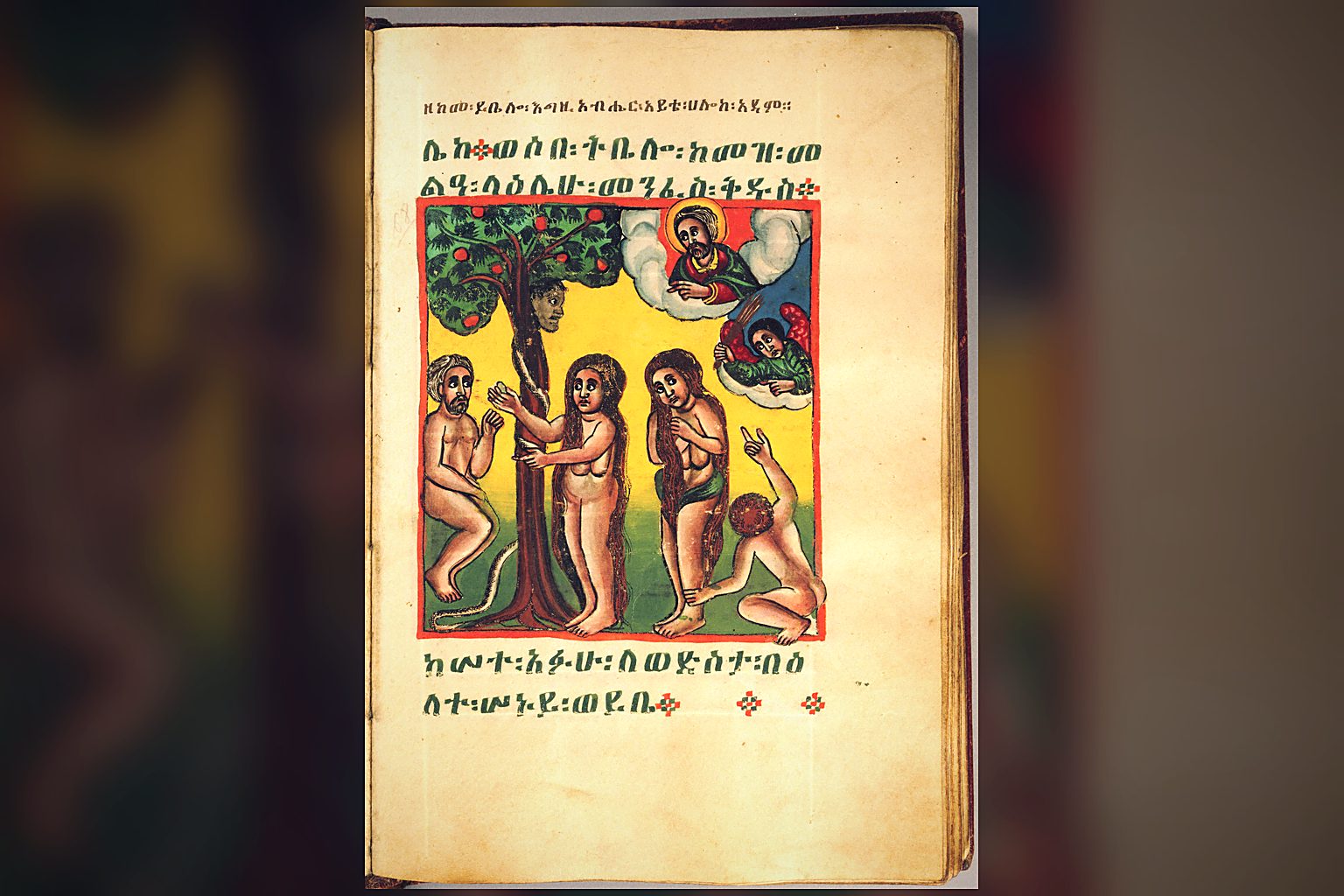
The Hebrew original is lost. What survives complete is a Ge’ez translation preserved by the Ethiopian Orthodox Tewahedo Church, which treats the book as scripture to this day. Fragments of the Hebrew turned up among the Dead Sea Scrolls in the 1940s and 50s and confirmed what nobody could prove before: the Ge’ez text was a faithful translation of a genuinely ancient Jewish book, not a later Christian invention.
The Frame: An Angel Dictating on Sinai
Jubilees opens where Exodus 24 leaves off. Moses is on the mountain for forty days, and an angel of the presence is instructed to dictate to him the history of the world from creation forward.
That frame does specific work. It makes the book a revelation rather than a retelling, and it lets the author present his additions as material Moses always had. The laws in Jubilees are not new rules — they are described as inscribed on heavenly tablets, which existed before Sinai, which means the patriarchs were already keeping them.
So Noah celebrates the Feast of Weeks. Abraham keeps the Feast of Tabernacles. Levi is made a priest generations before there is a priesthood. The argument underneath is that the Law is not a late arrangement between God and Israel but the permanent structure of the universe, and Genesis is simply the record of people who already knew it.
The 364-Day Calendar, and Why It Was Worth Fighting Over
The most consequential thing in Jubilees is arithmetic.
The book insists on a solar year of exactly 364 days, divided into four quarters of thirteen weeks. It repeats the number, attaches it to the heavenly tablets, and curses anyone who keeps a different reckoning:
“And there will be those who will assuredly make observations of the moon — how it disturbs the seasons and comes in from year to year ten days too soon.” (Jubilees 6:36)
364 divides by seven exactly. In such a year every festival falls on the same weekday, every year, forever — and no festival ever collides with the Sabbath. That is the point. A lunar calendar of about 354 days drifts, requires human judgment to correct, and regularly puts a feast on a Saturday.
Jubilees treats that drift as not merely inconvenient but an offence, because it means Israel keeps its holy days on the wrong days. The Temple establishment in Jerusalem used a lunar-solar calendar. The Qumran community used a 364-day one.
This is the least mystical and most important disagreement in Second Temple Judaism. It determined who ate the Passover with whom, and on which day — which is to say, it determined who was in communion with whom. The calendar is why a book this popular ended up outside the canon of the people who preserved the rest of its library.
A 364-day year is also, of course, about a day and a quarter short. Jubilees never explains how the count is kept from sliding, and the surviving Qumran calendrical texts do not settle it either. Whether the community intercalated a week periodically or simply let the error accumulate is genuinely unknown.

Who Wrote It, and Why the Dating Is Firm
Nobody knows the author’s name. What can be established is narrower and more useful than a name.
The book divides history into jubilees — periods of forty-nine years, seven weeks of years — and dates every event to a year within one. Creation to the entry into Canaan comes out at fifty jubilees exactly, 2,450 years. That scheme is the book’s title and its organising obsession, and it is also a dating tool for the book itself: an author who counts this precisely is writing after the Priestly chronology of Genesis was fixed, not before it.
Three lines of evidence converge on the middle of the second century BC. The Hebrew of the Qumran fragments belongs to that period rather than to classical biblical Hebrew. The oldest copy found at Qumran, 4Q216, is palaeographically dated to around 125-100 BC, which is a copy, not the original. And the book’s preoccupations — circumcision, Sabbath, calendar, intermarriage, separation from Gentiles — are the live disputes of the Maccabean crisis, when Hellenising priests in Jerusalem were doing precisely what Jubilees condemns.
Whether the author belonged to the community that later settled at Qumran is a separate question, and the honest answer is that the arrow probably points the other way: Jubilees looks like a book that community adopted rather than wrote. The sectarian rulebooks cite it as an authority. A group does not usually cite itself that way.
Where Jubilees Rewrites Genesis
The additions cluster in the places where Genesis is thin and readers have always asked questions.
| Genesis leaves it open | Jubilees answers |
|---|---|
| When were the angels made? | Day one, before anything else |
| Who did Cain marry? | His sister Awan |
| Why does Genesis 6 skip the detail? | The Watchers descended in Jared’s time; their offspring are the giants |
| Who tests Abraham? | Mastema, a named adversary, who requests permission |
| How old is the world? | Counted exactly, in jubilee periods of 49 years |
| What language did Abraham speak? | Hebrew, taught to him by an angel after Babel |
Two of those deserve more than a row. The Watchers material in Jubilees 5 and 7 is a compressed version of the story told at length in the Book of Enoch, and the two books clearly know each other — Jubilees cites Enoch by name as a writer of testimony. If you have read the Enoch material on the Watchers, Jubilees is the same tradition with the chronology tightened.
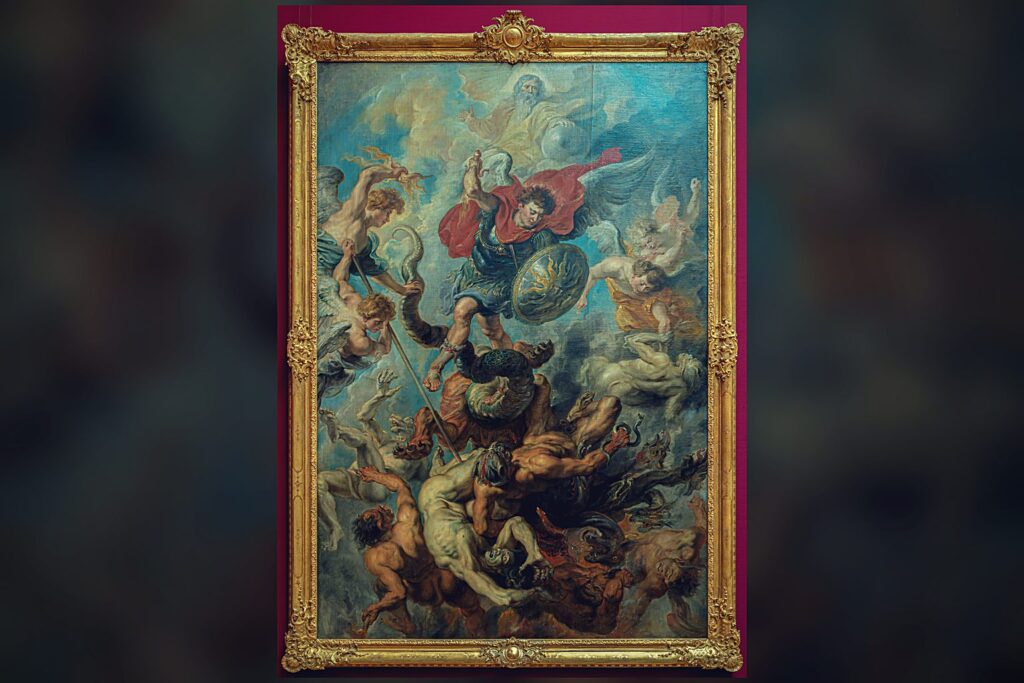
And Mastema is the more interesting invention. In Genesis 22 it is God who tests Abraham, which readers have always found uncomfortable. In Jubilees 17 it is Mastema — “the prince of the demons” — who proposes the test, exactly as the adversary proposes Job’s. The theology is being smoothed: God does not devise the cruelty, he permits it. That move, from God as tester to a named accuser who asks permission, is one of the clearest windows in ancient literature onto how a religion’s ideas actually change.
Does the Book of Jubilees Contradict the Bible?
Yes, in specific and checkable ways — though “contradict” is doing more work than most people who ask the question intend.
It contradicts on calendar. The 364-day year is incompatible with the lunar-solar reckoning that Leviticus 23 and the whole festival system assume in practice.
It contradicts on chronology. Jubilees dates every event to a year within a jubilee cycle. Those dates do not always match the numbers in the Masoretic text of Genesis, and its exodus chronology is its own.
It adds where Genesis is silent, which is not contradiction but is where most of the friction is. Awan, Mastema, the angelic language lesson and the patriarchs keeping festivals are all absent from Genesis, and several of them imply things Genesis does not say.
It agrees on the spine. Creation, flood, covenant, patriarchs, Egypt, Sinai — the sequence is the same. Anyone expecting a suppressed alternative religion will be disappointed. Jubilees is an argument about how to keep the Law, conducted by someone who takes Genesis entirely seriously.
Why Ethiopia Kept It, and Nobody Else Did
The Ethiopian Orthodox Tewahedo Church has the largest biblical canon in Christianity — commonly counted as 81 books — and Jubilees is in it, under the name Mets’hafe Kufale, “the Book of Division”. The Book of Enoch is in it too.
This is usually presented as a mystery. It is mostly a matter of isolation and translation. Ethiopian Christianity received its scriptures early, in Ge’ez, from a Greek-speaking Egyptian church that at that point still circulated both books, and then developed for centuries with limited contact with the councils and controversies that trimmed the canon elsewhere. What Ethiopia has is not a secret library. It is an older snapshot.
Jubilees was also known to early Christian writers in Greek and Latin and quoted without embarrassment — Epiphanius and the Byzantine chronographers cite it. It faded in the West not by decree but by disuse, and the Hebrew disappeared entirely until the Dead Sea Scrolls gave it back.
Checking the Popular Claims
Several claims made for Jubilees today sit awkwardly against the text.
It is not older than Genesis. The internal evidence — its Hebrew, its interest in the Maccabean-era conflicts, its handling of Enoch — places it in the second century BC, a thousand years after the events it narrates and centuries after the Genesis material took its shape. It is a reading of Genesis, not a source for it.
It was not removed from the Bible. It was never in the Jewish or the mainstream Christian canon to be removed from. The phrase “removed from the Bible” assumes a finished Bible that later lost pages, which is not how the canon formed. The full version of that argument is worth reading if the “banned books” framing is what brought you here.
Its Qumran popularity is not the same as canonicity. Fifteen copies means the community read it constantly. It does not mean they filed it beside Isaiah. The Qumran library also held sectarian rulebooks and horoscopes, and nothing called Jasher was in it at all, and what those scrolls did and did not change is a separate question from what the community liked to read.
The calendar does not work as advertised. A 364-day year loses a day and a quarter annually. Within a normal lifetime, a calendar that never corrects will put the spring festival in winter. If the community had a correction mechanism, it did not write it down where we can read it.
Frequently Asked Questions
Is the Book of Jubilees in the Bible?
It is in the Ethiopian Orthodox Tewahedo canon, where it is one of 81 books. It is not in the Jewish, Catholic, Orthodox or Protestant canons. It was never in them, so it was not removed.
When was the Book of Jubilees written?
Most scholars date it to the middle of the second century BC, roughly 160-150 BC, based on its language, its allusions to events of that period, and the age of the oldest Qumran copies.
Does the Book of Jubilees contradict the Bible?
On the calendar and on some chronological details, yes. On the narrative spine of Genesis and Exodus, no — it follows the same sequence and treats the same covenant as binding. Most of its friction with Genesis comes from additions rather than reversals.
Was the Book of Jubilees in the Dead Sea Scrolls?
Yes. Fourteen to fifteen fragmentary Hebrew copies were identified at Qumran, more than for most books that did become canonical. Those fragments proved the Ge’ez text preserved a genuinely ancient Jewish work.
What is the 364-day calendar in Jubilees?
A solar year of exactly 52 weeks, so that every festival falls on the same weekday every year and none can collide with the Sabbath. Jubilees presents it as inscribed on heavenly tablets and condemns lunar reckoning as an error.
Does the Book of Jubilees mention Jesus?
No. It is a pre-Christian Jewish text written roughly a century and a half before the gospels, and it contains no reference to Jesus or to Christian ideas.
Who is Mastema in the Book of Jubilees?
A named adversary who commands the spirits that survive the flood, and who proposes the testing of Abraham and opposes Moses in Egypt. He performs the function the Bible assigns to the satan in Job, given a proper name and a standing role.
Does the Book of Jubilees talk about Adam and Eve?
At length. It dates their entry into Eden, gives them daughters as well as sons, has Adam offer incense on leaving the garden, and uses the timing of their creation to derive the purification laws of Leviticus 12.
Conclusion: Fifteen Copies and the Wrong Calendar
The Book of Jubilees is the best surviving evidence that Second Temple Judaism was an argument, not a settled position — and that the argument was frequently about days rather than doctrines.
Its author believed the Law predated Sinai, that the patriarchs kept it, and that the festivals had fixed weekdays assigned before creation. The people who agreed with him copied the book more often than they copied Kings. The people who disagreed ran the Temple.
When the Temple fell in AD 70 and the community at Qumran was destroyed, the losing side’s library went into caves and the winning side’s calendar became Judaism. The book survived anyway — in Ge’ez, three thousand kilometres away, in a church that never heard the argument.
Continue Reading
- The Lost Books of the Bible: Who Left What Out — The lists are real. Most of the books are real. The argument is over one word: banned. What the categories actually…
- The Dead Sea Scrolls: The Gap That Got Filled — For eighteen centuries the claim that the text came down unchanged was untestable. Then a shepherd threw a rock into a…
- Books Mentioned in the Bible but Not Included: The Dead Links — Around twenty books are named in scripture as its own sources, cited more than forty times, and not one has ever been…