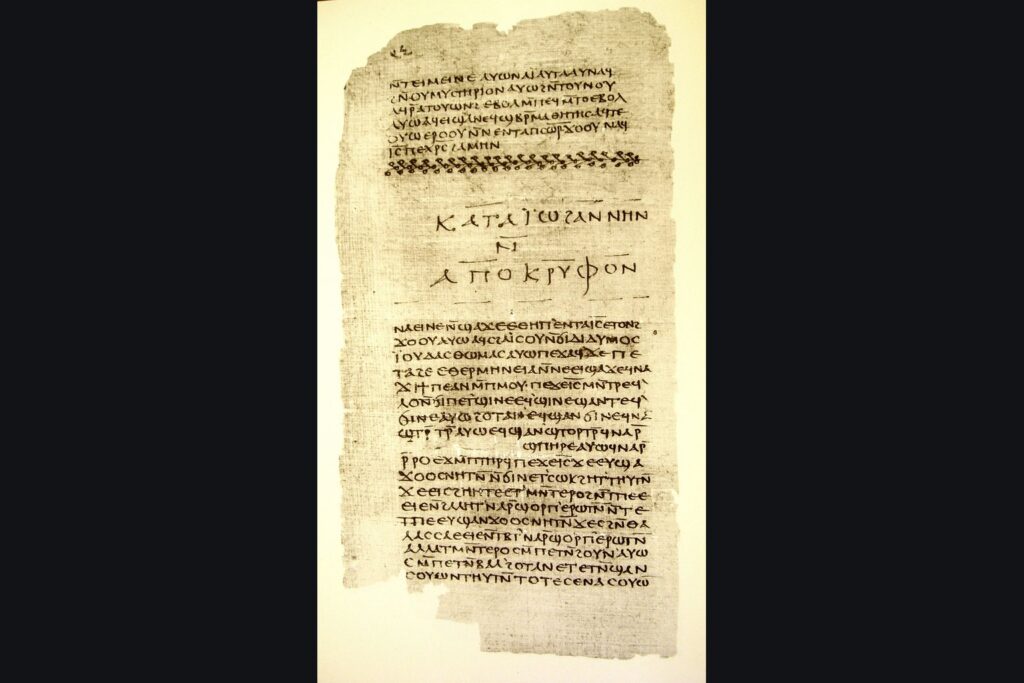
In January 1896 a German diplomat named Carl Reinhardt bought a battered Coptic codex from a dealer in Cairo. It had reportedly been found wrapped in feathers, in a niche in a wall, at a Christian burial site near Akhmim.
Bound inside it was a text nobody had seen since antiquity: a gospel written in the name of a woman.
It then took fifty-nine years to publish. Carl Schmidt had an edition nearly ready in 1912 when a water pipe burst in the Leipzig printing house and destroyed the sheets. The First World War intervened, then Schmidt’s death, then the Second. Walter Till finally brought the Gospel of Mary out in 1955 — a decade after Nag Hammadi had changed what everybody expected such a text to contain.
What Is the Gospel of Mary?
The Gospel of Mary is a short second-century Christian text in which Mary — almost certainly Mary Magdalene — relays a private teaching she received from the risen Jesus, and is challenged by Peter and Andrew for doing so.
It survives in three manuscripts, and none is complete:
- Papyrus Berolinensis 8502, the Coptic codex Reinhardt bought. Fifth century. The most complete witness, and it is missing ten pages.
- Papyrus Rylands 463, a third-century Greek fragment, published in 1938.
- Papyrus Oxyrhynchus 3525, another third-century Greek fragment, excavated between 1897 and 1906 and not published until 1983.
Two independent Greek copies from the third century tell us something useful on their own: this was not one eccentric’s manuscript. It circulated.
The Ten Missing Pages
The damage is not random, and it is worth being explicit about, because nearly every confident claim made about this text depends on material that is not there.
Pages 1 to 6 are gone. Pages 11 to 14 are gone. What survives is roughly the second half of a farewell discourse, and then the argument that follows it.
So we do not have the opening. We do not have most of Mary’s vision — the part that was presumably the reason for the book. What we have is the frame around a missing centre, which is why the Gospel of Mary supports an unusual density of interpretation per surviving word.
What the Gospel of Mary Says
The surviving text opens mid-sentence, in a conversation about the nature of matter. The Saviour is answering questions before departing, and his closing instruction is the line that has done the most work in modern discussion:
“Do not lay down any rules beyond what I appointed for you, and do not give a law like the lawgiver, lest you be constrained by it.”
Then he leaves, and the disciples are afraid. They have been told to preach to the Gentiles and they do not want to go. Mary stands up and steadies them, and Peter — Peter, of all people — asks her to tell them what she knows:
“Sister, we know that the Saviour loved you more than the rest of women. Tell us the words of the Saviour which you remember.”
She describes a vision and a teaching: the soul’s ascent past a series of hostile powers, each of which challenges it and is answered, until the soul reaches rest. Four pages of it are missing. What survives of the ascent is a dialogue in which the soul defeats Desire, Ignorance and Wrath by naming what they are.
And then the text does the thing that makes it genuinely interesting.
The Argument at the End
Andrew objects that the teaching is strange and not the Saviour’s. Peter — who invited the account — turns on her:
“Did he really speak privately with a woman and not openly to us? Are we to turn about and all listen to her? Did he prefer her to us?”
Mary weeps and asks whether he thinks she invented it. Levi intervenes, tells Peter he has always been hot-tempered, and says plainly that if the Saviour made her worthy, who is Peter to reject her. The disciples then go out to preach, and the book ends.
That closing scene is the reason this text matters historically, and it does not require the missing pages to interpret. A second-century Christian community wrote down an argument about whether a woman’s testimony counted — and wrote it in a form where the woman wins, and the objection is put in the mouth of the apostle who would become the emblem of institutional authority.
Whatever else it is, that is evidence that the question was live and contested.
Which Mary Is It?
The Coptic text simply says “Mary”. The identification with Mary Magdalene is an inference, and it is a strong one.
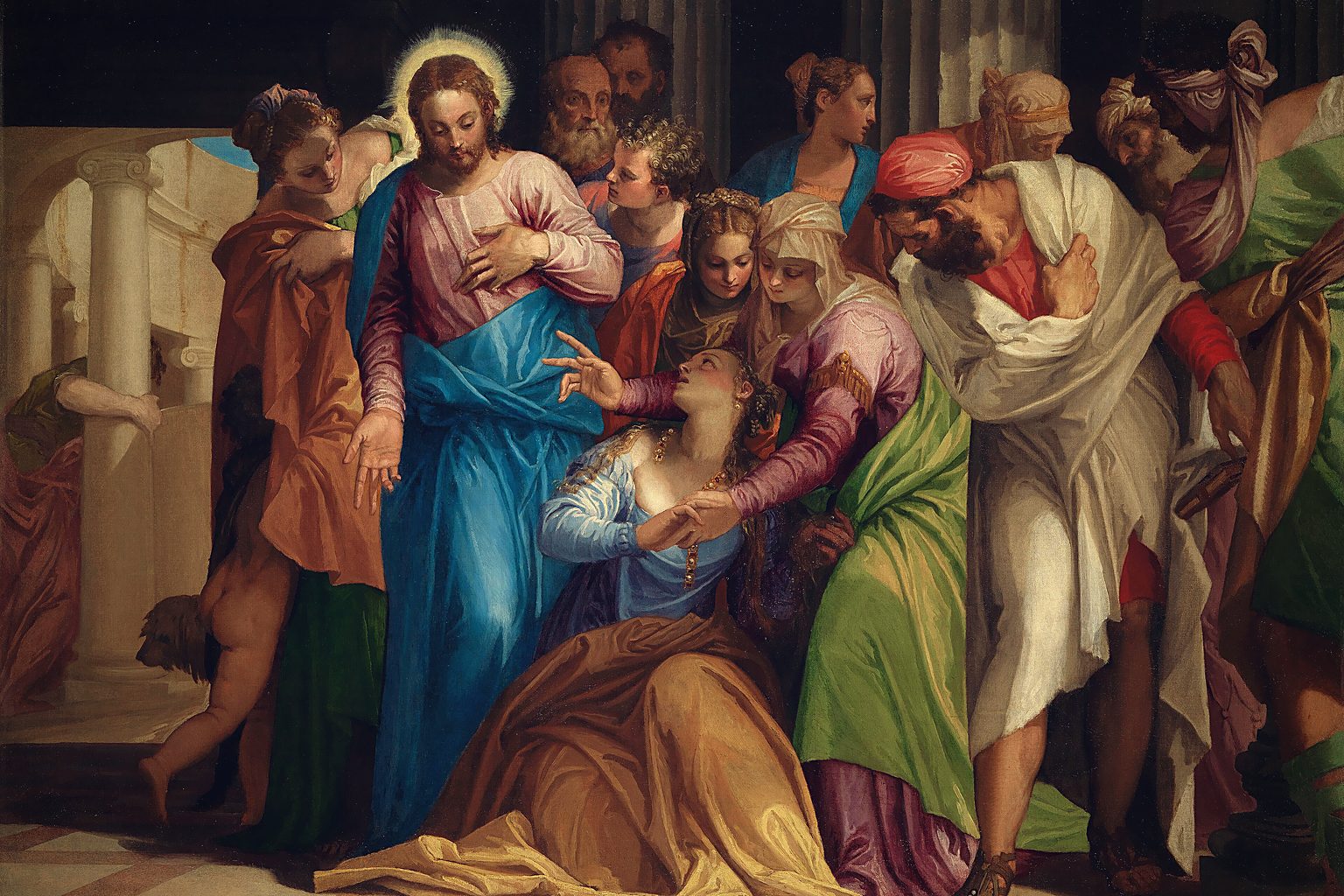
She is presented as a disciple who was present with the others, who receives private revelation, and whom the Saviour “loved more than the rest of women” — a formula close to the one used of the Magdalene in other early texts. The mother of Jesus would not need Peter to invite her to speak, and would not be defended on the grounds of worthiness. Most specialists, including Karen King, who produced the standard modern study, read it as the Magdalene.
Why Was the Gospel of Mary Rejected?
The short answer is that it was never a candidate, and this is where popular accounts go furthest wrong.
There was no vote on it. No church father lists it among disputed books, which means it was not circulating widely enough in the Greek-speaking mainstream to require an opinion. Compare the Gospel of Thomas, which Origen and Eusebius both name and both exclude — the Gospel of Mary does not even get that.
Three reasons it stayed marginal, in order of weight:
- Date. A mid-second-century composition is roughly a century after the events, and well after the four canonical gospels were circulating as a set.
- Genre. It is a post-resurrection revelation dialogue, a form that became characteristic of texts the emerging mainstream treated as speculative. It has no ministry, no passion, no resurrection narrative — only the aftermath.
- Content. The soul’s ascent past hostile powers is the machinery of second-century esoteric Christianity. It is milder than the full Gnostic systems, but it is recognisably in that family.
The suppression story adds a fourth reason — that a gospel giving authority to a woman was too dangerous to keep — and there is a grain in it: the text itself stages that conflict. But a text nobody in the mainstream cites cannot have been suppressed by them. It was ignored, which is a duller and better-evidenced fate. The general shape of how books actually ended up outside the canon is the same here as everywhere else.
Checking the Popular Claims
It does not say Jesus was married to Mary Magdalene. It says he loved her more than the other women, in the context of teaching. There is no marriage, no wedding, no child, no bloodline. The novelistic version of this claim rests on the Gospel of Philip, a different text, which uses a Coptic word for companion and has a hole in the manuscript at the decisive point.
The “Gospel of Jesus’ Wife” is a forgery. A papyrus fragment announced in 2012 containing the phrase “Jesus said to them, my wife” was shown by 2016 to be a modern fake, its owner’s account having collapsed under journalistic investigation. It has nothing to do with the Gospel of Mary and should never be cited alongside it.
Mary Magdalene was not a prostitute, and the Gospel of Mary is not the correction. That identification comes from a homily of Pope Gregory the Great in AD 591, which merged three separate women in Luke and John into one. The Catholic Church revised its liturgical calendar to separate them again in 1969. This is a well-documented case of a reading error hardening into a tradition, and it needed no lost gospel to undo.
It is not Gnostic in the full sense. There is no demiurge, no fallen Sophia, no creation myth. The soul’s ascent past the powers is shared with Gnostic literature, but the text lacks the cosmology that defines it — the same distinction that applies to the Gospel of Thomas.
It was not found among the Dead Sea Scrolls. The Berlin Codex was bought in Cairo in 1896, fifty years before Qumran, and the Dead Sea Scrolls contain no Christian texts at all.
Frequently Asked Questions
What does the Gospel of Mary say?
It records a private teaching Mary says she received from the risen Jesus — a vision of the soul rising past hostile powers — and the argument that follows when Andrew and Peter refuse to accept her account. Levi defends her and the disciples go out to preach.
Is the Gospel of Mary real?
It is a genuine ancient text preserved in one fifth-century Coptic manuscript and two third-century Greek fragments. It is not a modern invention. Its historical value as testimony about Jesus is a separate and much weaker question.
When was the Gospel of Mary written?
Most scholars place the original in the middle of the second century AD, roughly 120 to 180, on the basis of its theology and its genre. The Greek fragments show it was already circulating in Egypt by the third century.
Why was the Gospel of Mary rejected?
It was not rejected so much as never considered. No early church writer lists it, which indicates it never circulated widely enough in the mainstream to be debated. Its late date, its revelation-dialogue form and its esoteric content kept it marginal.
Is the Gospel of Mary about Mary Magdalene?
The text says only “Mary”, but the details — her presence among the disciples, the private revelation, the phrase about being loved more than other women — point to Mary Magdalene, and that is the standard scholarly identification.
Does the Gospel of Mary say Jesus and Mary were married?
No. It describes her as loved and as a recipient of teaching. The marriage claim comes from a contested passage in the Gospel of Philip and from a papyrus fragment that was proved to be a modern forgery in 2016.
Where was the Gospel of Mary found?
The main manuscript was bought in Cairo in 1896 by Carl Reinhardt and is thought to have come from Akhmim in Egypt. The two Greek fragments come from Oxyrhynchus and from the Rylands collection, both excavated in Egypt around the turn of the twentieth century.
How much of the Gospel of Mary is missing?
Ten of the eighteen manuscript pages are lost — the first six and four from the middle. What survives is the end of a farewell discourse, part of Mary’s vision, and the dispute that closes the text.
Conclusion: The Argument Survived, the Vision Did Not
Ten pages of the Gospel of Mary are gone, and they are the ten that mattered most to whoever wrote it. The revelation is missing. What survived the fire, the water pipe and the two wars is the quarrel about whether the revelation counted.
That may be the more valuable half. The canonical gospels give us the apostles as a group; this text gives us the group in conflict, over a question — who is allowed to teach — that the churches would keep arguing about for the next nineteen centuries.
A second-century Christian wrote that argument down, and put the best line in Levi’s mouth: if the Saviour made her worthy, who are you to reject her.
Continue Reading
- The Gospel of Thomas: 114 Sayings and No Story — Found twice — in an Egyptian rubbish mound in 1897 and a sealed jar in 1945. What the 114 sayings actually say, whether…
- Books Mentioned in the Bible but Not Included: The Dead Links — Around twenty books are named in scripture as its own sources, cited more than forty times, and not one has ever been…
- The Book of Jasher: Three Books, One Name, None of Them It — The Bible cites it twice and no copy survives. What the lost book probably was, why the medieval Sefer haYashar is not…