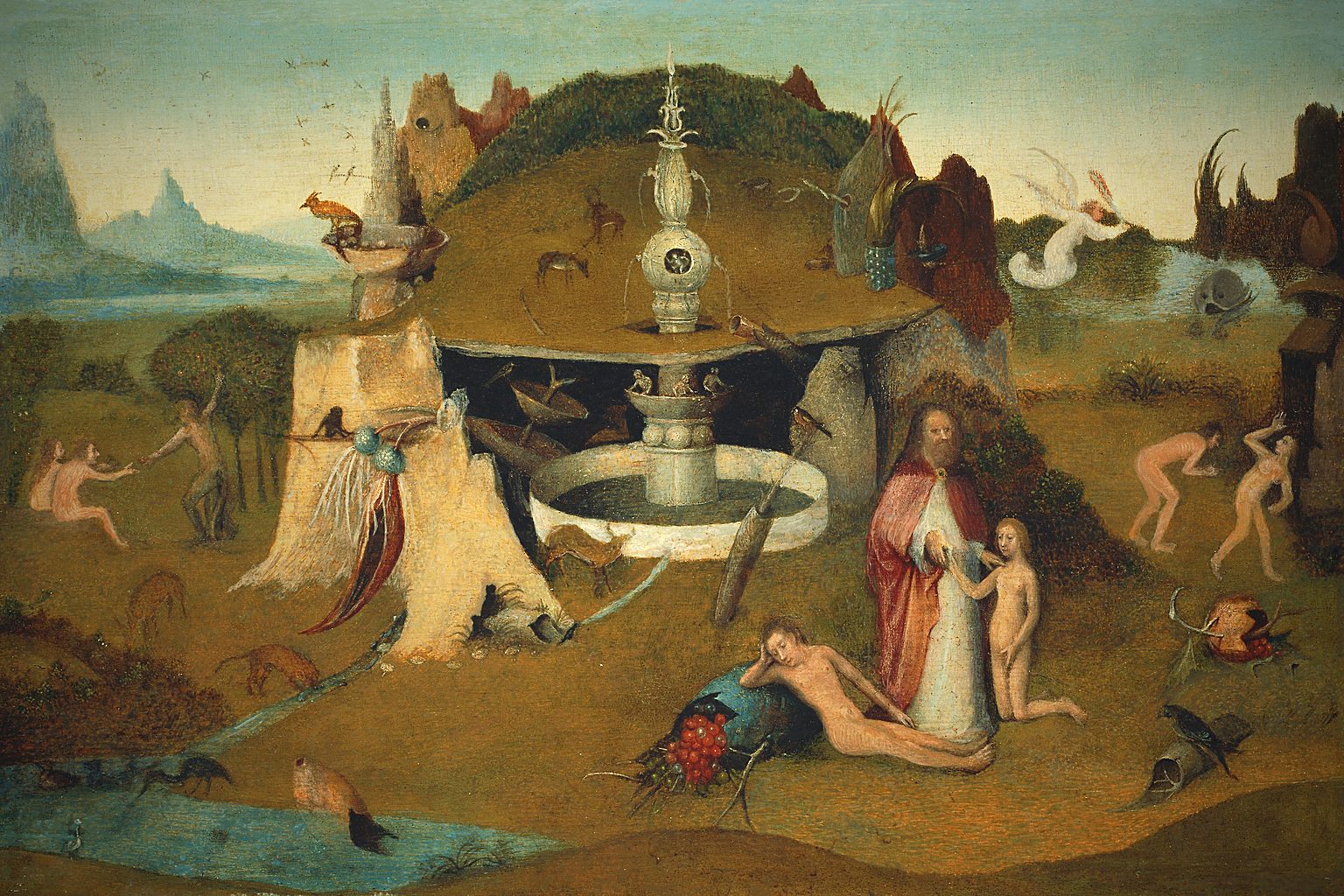
Genesis does something with the Garden of Eden that it does not do with any other place in the primeval history. It gives directions.
“And a river went out of Eden to water the garden; and from thence it was parted, and became into four heads.” (Genesis 2:10)
Then it names them. Two of the four are on every map of the Middle East — the Tigris and the Euphrates. The other two, the Pishon and the Gihon, match nothing that flows today, and the text describes the countries they wind through as though the reader will recognise them.
That specificity is why the Garden of Eden has been hunted with theodolites, Landsat imagery and sonar, and why the hunt keeps producing near-misses. A text that gives you two real rivers and two missing ones is either a map with two features erased, or it is not a map at all.
Where Was the Garden of Eden?
No location has been established, and on the current evidence none can be. What exists is a set of hypotheses of varying quality, one of which — the Persian Gulf reconstruction — is genuinely interesting geology even if it fails as exegesis.
The obstacle is not that the clues are vague. It is that they are mutually inconsistent. A single source cannot have fed the Tigris and the Euphrates, which rise 400 kilometres apart in eastern Turkey, and also two rivers in Arabia and Africa. Whatever Genesis 2 is doing, it is not describing a watershed that ever existed.
The Four Rivers, and What Genesis Says About Them
The passage is unusually detailed for three verses.
“The name of the first is Pison: that is it which compasseth the whole land of Havilah, where there is gold; and the gold of that land is good: there is bdellium and the onyx stone.” (Genesis 2:11-12)
Pishon waters Havilah, which is gold country, and also produces bdellium — an aromatic resin — and onyx. Arabia is the usual identification, and the Arabian shield does contain ancient gold workings, including the Mahd adh-Dhahab mine that was worked in antiquity.
Gihon “compasseth the whole land of Ethiopia” in the King James rendering. The Hebrew is Cush, and that is where the trouble starts: Cush means Nubia, south of Egypt, everywhere else in the Hebrew Bible. A river encircling Nubia cannot share a source with the Euphrates. Some read a second Cush — the Kassites of western Iran — which would put the Gihon in the Zagros and make the Karun a candidate.
Hiddekel is the Tigris; the name is the Akkadian Idiglat. Perath is the Euphrates. No dispute about either.
So: two certain rivers in Mesopotamia, one probable in Arabia, one that points either to Africa or to Iran depending on which reading of a single word you accept.
The Persian Gulf Hypothesis
In the 1980s the archaeologist Juris Zarins proposed the reconstruction that still dominates serious discussion, and its strength is that it starts from geology rather than from scripture.
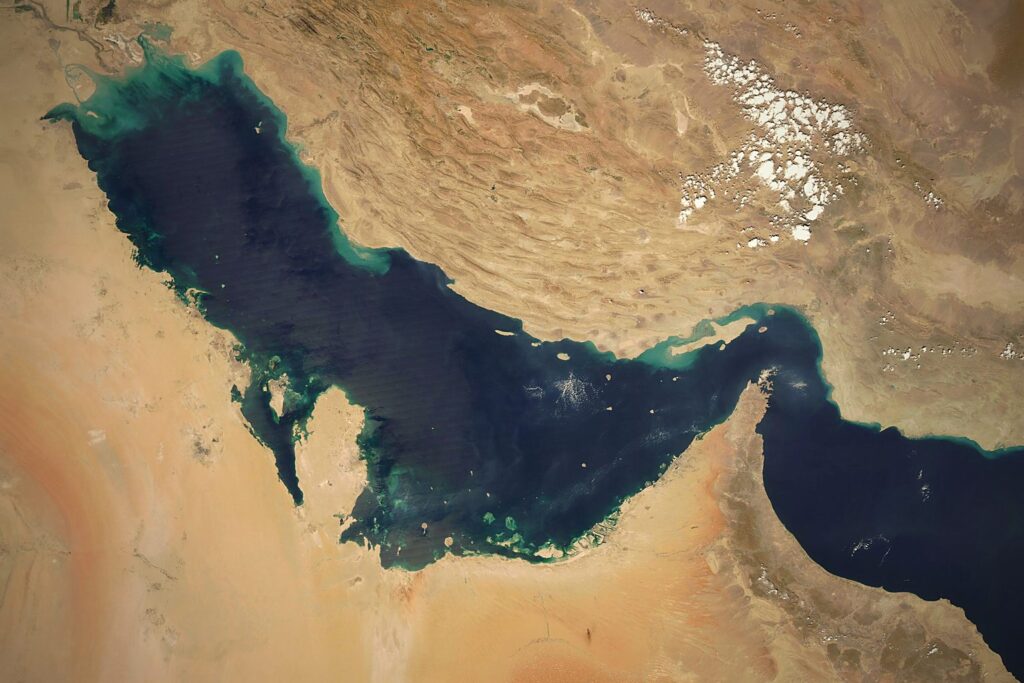
At the last glacial maximum, around 20,000 years ago, global sea level was roughly 120 metres (394 ft) lower than today. The Persian Gulf is shallow — much of it under 40 metres (131 ft). At that sea level it was not a gulf at all. It was a broad river valley, dry land all the way to the Strait of Hormuz, with the combined Tigris and Euphrates running down its length to meet the sea somewhere near the Gulf of Oman.
Into that valley, Zarins argued, drained four river systems: the Tigris, the Euphrates, the Karun from the Zagros — his Gihon — and a fossil river from central Arabia — his Pishon. As the ice melted, the sea rose and drowned the valley, finishing somewhere around 4000 BC. A garden at the confluence would now be under 50 metres (164 ft) of water.
The River That Showed Up on Satellite Images
The Pishon half of that reconstruction got unexpected support from remote sensing.
Working with Landsat data, the geologist Farouk El-Baz traced a fossil riverbed running roughly 850 kilometres from the Hijaz mountains of western Arabia northeast across the peninsula to Kuwait — a dry channel, invisible at ground level, buried under sand and detectable only from orbit. It is known as the Wadi al-Batin; El-Baz called it the Kuwait River. It flowed during wetter phases of the Holocene and dried up, on the usual estimates, somewhere between 5000 and 3000 BC.
Its course passes through the gold-bearing region of the Arabian shield. If any river ever “compassed the whole land of Havilah, where there is gold”, this one has the best claim.
That is a satisfying convergence, and it is the reason the Gulf hypothesis keeps being revived. It is also where the case stops.
Why the Text Resists the Reconstruction
Three problems, and the first is fatal on its own.
The rivers run the wrong way. Genesis has one river going out of Eden and dividing into four heads — water leaving a single source and flowing outward. Zarins’s model has four separate rivers flowing inward and converging at a delta. As the biblical scholar Joel Baden has pointed out, that is the opposite arrangement, and no amount of geology fixes it.
No marine archaeology supports it. The floor of the Gulf has been surveyed. Drowned Neolithic occupation has been found around the Gulf’s margins and in the wider region, but nothing at the scale the hypothesis implies has come out of the basin itself.
The dating does not fit the people. A garden drowned by 4000 BC is being remembered by a text written, at the earliest, in the first millennium BC — a gap of three thousand years of oral transmission with no writing at either end of the period in that region.
The Other Candidates
| Location | Argument | Problem |
|---|---|---|
| Eastern Turkey, near Lake Van | The Tigris and Euphrates genuinely rise there, which fits “a river parted into four heads” | No candidate at all for Pishon or Gihon |
| Persian Gulf basin | Geologically real; fits Havilah’s gold | Rivers converge instead of diverging |
| Tabriz, north-west Iran | Nineteenth-century proposal based on the Gihon-as-Araxes reading | Requires ignoring Cush |
| Bahrain / Dilmun | Sumerian Dilmun is a pure, paradisal land in the Enki myths | Dilmun is a trading centre, not a garden, and the parallel is thematic |
| Jerusalem / Temple Mount | Ezekiel and Revelation both put a river and a tree of life in a temple city | Theological reading, not geographic — and it knows it is one |
The Lake Van option is the one that most often gets lost in the noise, and it deserves a word. If you start from the two rivers everyone agrees on and simply walk upstream, you end in the Armenian highlands, and the text’s “a river went out of Eden… and parted” is a fair description of a highland watershed feeding multiple drainages. It fails only because nothing there answers to Pishon or Gihon.
What the Word Eden Actually Means
The popular etymology derives Eden from the Sumerian edin, meaning steppe or plain — which would make the garden a garden in the plain, a Mesopotamian image.
The better-supported reading is different. The Hebrew root ʿdn means luxury, abundance, delight, and a ninth-century BC bilingual inscription from Tell Fekheriye in Syria uses an Aramaic cognate of that root in the sense of making abundant or enriching. On that reading “the garden in Eden” means something closer to the garden in the place of abundance — a description, not a place name.
That matters for the search. If Eden is a quality rather than a toponym, then looking for it on a map is a category error, and the four rivers are doing what ancient Near Eastern temple texts routinely do: locating a sacred garden at the source of the world’s water, because that is where a sacred garden belongs.
Checking the Popular Claims
“The Garden of Eden has been found.” It has been announced many times — under the Gulf, in Turkey, in Iraq’s marshes, in Florida, in Missouri. None of these announcements has produced an excavation report, and several were never made by the archaeologists whose work they cite.
Satellite images of the Kuwait River are not images of Eden. El-Baz identified a fossil river. That is a real and useful finding about Holocene climate. The identification with the Pishon is an interpretation layered on top of it, and El-Baz’s data cannot confirm or refute it.
The flaming sword is not a landmark. Genesis 3:24 places cherubim and a turning sword at the east of the garden, which several searches have treated as a physical marker. It is the same class of image as the cherubim over the ark — a guardian motif, not a monument. The wider question of what the Genesis flood narrative preserves runs into exactly the same interpretive wall.
Eden is not Atlantis. The two get merged constantly in the lost-paradise genre, but they are different kinds of claim: Atlantis has one source and a known author, while Eden sits inside a tradition with no single author and no date of composition.
Frequently Asked Questions
Where was the Garden of Eden located?
No location has been established. Genesis names four rivers, two of which are the Tigris and Euphrates and two of which — Pishon and Gihon — cannot be identified with certainty. The leading reconstruction places it in the Persian Gulf basin, which was dry land during the last ice age.
Does the Garden of Eden still exist?
Not as a findable place. If the Persian Gulf reconstruction is right, the site would now be beneath about 50 metres (164 ft) of seawater. On the philological reading, “Eden” describes abundance rather than naming a location, in which case there is nothing to find.
What were the four rivers of Eden?
Pishon, Gihon, Hiddekel and Perath. Hiddekel is the Tigris and Perath the Euphrates. Pishon is usually placed in Arabia, and Gihon is disputed between a Nubian and an Iranian reading depending on how the word Cush is understood.
Is the Garden of Eden real?
There is no archaeological evidence for it as a physical site. The surrounding geography — the Tigris, the Euphrates, the gold of Arabia — is real, and the Holocene drying of the Arabian rivers is documented. Whether those elements were assembled from memory or from geography is unknown.
What is the Kuwait River?
A fossil riverbed roughly 850 kilometres long, traced across Arabia from the Hijaz to Kuwait using Landsat imagery by Farouk El-Baz. It flowed during wetter phases of the Holocene and dried between about 5000 and 3000 BC. Some researchers identify it with the Pishon.
Was the Garden of Eden in Africa?
Only on the reading that takes Cush at its usual biblical value, Nubia, which would put the Gihon in north-east Africa. That reading cannot be reconciled with a shared source for the Tigris and Euphrates, so it is generally treated as evidence that the geography is symbolic.
What does the name Eden mean?
The Hebrew root means delight, luxury or abundance, and a ninth-century BC Aramaic inscription from Tell Fekheriye uses a cognate meaning to enrich. An older proposal derives it from Sumerian edin, steppe or plain. The abundance reading is now better supported.
Why are there four rivers in the Genesis account?
Ancient Near Eastern temple and palace texts routinely place a sacred garden at the source of the waters that feed the known world. Four rivers flowing out to the four quarters is a standard image of a centre, which is why many scholars read the passage as cosmological geography rather than a route description.
Conclusion: Two Rivers Too Many
The Garden of Eden is the only place in Genesis 1-11 with an address, and the address does not resolve. That is the whole problem in one sentence.
Everything that has been proposed since — the drowned Gulf valley, the fossil river under the Arabian sand, the Armenian headwaters — is an attempt to find a geography in which four named rivers could once have shared a source. The geology behind the best of those attempts is sound and independently interesting. The exegesis is not: Genesis has water leaving Eden, and every reconstruction has it arriving.
Which leaves the most likely reading as the least dramatic one. The four rivers are not directions to a site. They are a claim about where the world’s water starts — and the author put a garden there, because that is where a garden of that kind was always put. The biology of the first humans is a more tractable question than their postcode.
Continue Reading
- Adam’s First Wife: The Lilith Story Has One Source — The first wife, the refusal, the exile – all of it enters the record in a single medieval book of proverbs that half…
- The Divine Engineer: The Biology of Adam and Eve — Formed, then breathed – two separate operations. What dust of the ground gets chemically right, why tsela probably does…
- Human Chromosome 2: The Fusion, and the 1,280 Who Carried It — You have 46 chromosomes. Every other great ape has 48. What sits at 2q13, the case against reading it as a fusion, and…