Tag: Creation

  • The Divine Engineer: Decoding the Perfect Biology of Adam and Eve

    the Perfect Biology of Adam and Eve

    If you look at a cathedral, you know there was an architect. If you look at a book, you know there was an author. But when we look at the human body—a structure so complex that modern science is still struggling to understand it—we are told it is a result of chance.

    The Bible tells a different story. In Psalm 139, King David writes: “I am fearfully and wonderfully made.”

    Today, through the lens of modern genetics, we can see just how literal that statement is. The creation of man was not a myth; it was an act of supreme biological mastery. God did not just form man; He wrote the very instructions of life into his being.

    The Language of Life: 3 Billion Letters

    At the center of every one of your 37 trillion cells lies the most sophisticated storage system in the universe: Deoxyribonucleic Acid (DNA).

    It is a double-helix molecule composed of four nitrogenous bases: Adenine (A), Cytosine (C), Guanine (G), and Thymine (T). This is the alphabet of life.

    The sequence of these letters determines everything about you—from the color of your eyes to the structure of your heart valves.

    • The human genome contains approximately 3.2 billion base pairs.
    • If you were to write out the information contained in your own DNA, it would fill libraries.
    • DNA is so dense that all the information in the world today could be stored in a biological container no larger than a few grams.

    This is not random chaos. This is structured, linguistic information. In the laws of logic, information never arises from noise; it always originates from a Mind. The “Word” (Logos) that spoke the world into existence literally wrote the instructions into our cells.

    Adam: The Original Blueprint

    When Genesis 2:7 says God formed man from the “dust of the ground,” it speaks to our chemical composition. The human body is composed of oxygen, carbon, hydrogen, nitrogen, calcium, and phosphorus—the very elements found in the earth’s crust.

    Adam was the perfect creation. In his original state, his biology was likely free of defects.

    • No Mutations: Today, we carry thousands of genetic errors passed down from ancestors. Adam’s genetic structure was pristine.
    • Perfect Telomeres: At the end of our chromosomes are protective caps called telomeres. Every time a cell divides, these caps get shorter, leading to aging and death. In the beginning, these mechanisms likely functioned without decay, explaining why the first generations lived for hundreds of years.

    The First Surgery: Eve and the Rib

    One of the most criticized stories in the Bible is the creation of Eve.

    “And the LORD God caused a deep sleep to fall upon Adam… and he took one of his ribs, and closed up the flesh instead thereof; And the rib, which the LORD God had taken from man, made he a woman.” (Genesis 2:21-22)

    Skeptics often ask: Why a rib? Why not a toe or a finger?

    Modern medicine provides a stunning answer. The rib is the only bone in the human body that can truly regenerate.

    Surrounding human bones is a tissue membrane called the periosteum. This membrane is rich in cells called osteoblasts (bone builders) and stem cells.

    • If a surgeon removes a rib bone but carefully leaves the periosteum membrane intact, the body will use those cells to regrow the rib entirely.
    • Surgeons today use rib bone grafts for facial reconstruction precisely because of this unique regenerative capability.

    The Creator chose the one part of Adam’s body that could be removed without leaving him permanently damaged. It was a calculated, medically accurate procedure.

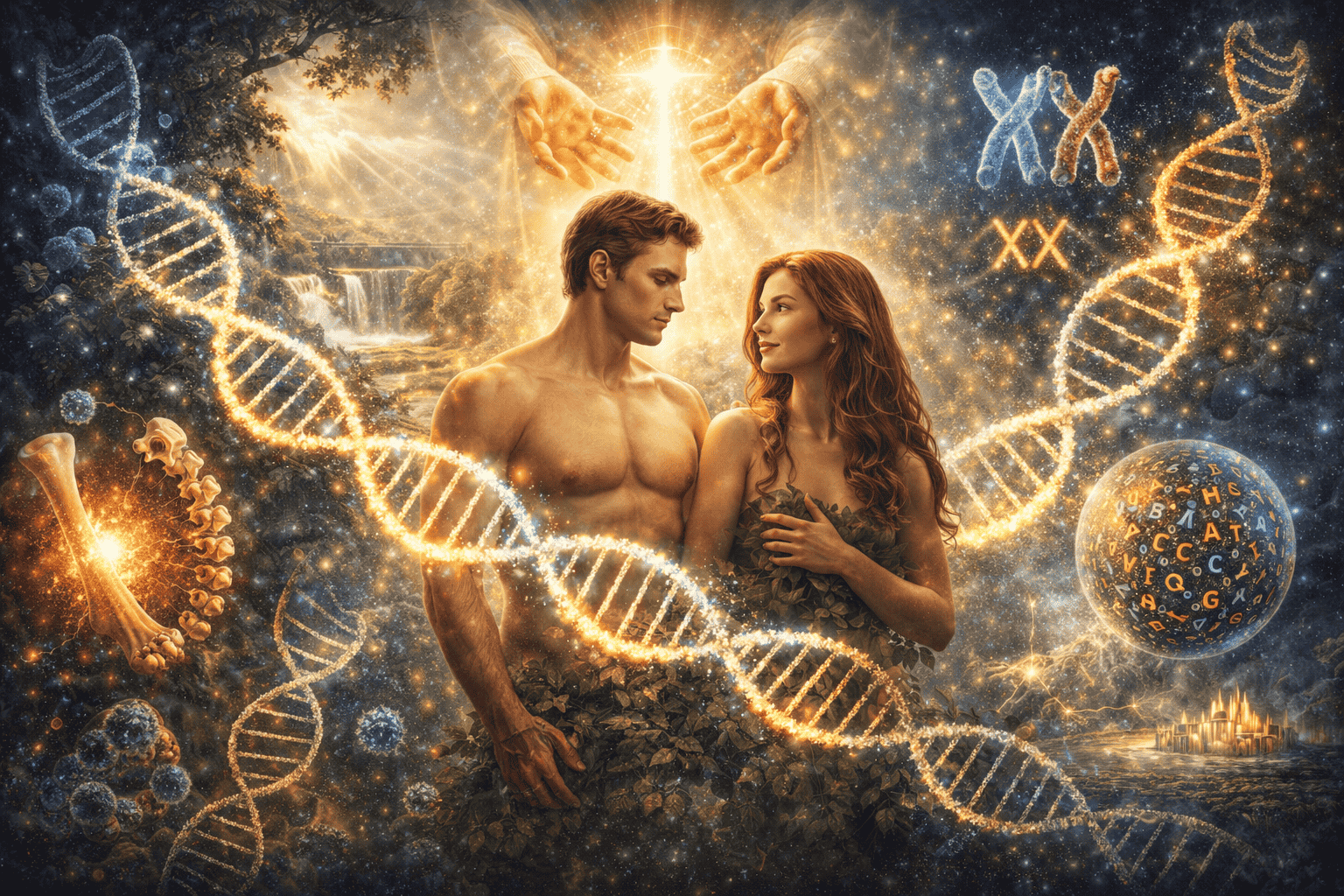
    Genetic Engineering: XX from XY

    From a genetic standpoint, creating Eve from Adam is a feat of immense complexity.

    • Adam (Male) carries XY chromosomes. He possesses the genetic material for both male and female.
    • Eve (Female) carries XX chromosomes.

    To create Eve, the Creator took Adam’s genetic material (the rib), removed the Y chromosome, and doubled the X chromosome. This means Eve was derived from the same “substance” as Adam—literally “bone of my bones and flesh of my flesh”—yet she was unique.

    She was not a separate creation; she was refined from the original source. This explains the deep biological connection between men and women—they are two halves of the same genetic equation.

    The Broken Vessel

    If we were designed so perfectly, why do we get sick? Why do we die?

    The Bible calls it “The Fall.” Science observes it as Genetic Entropy. Ever since the separation from the Creator, the human genome has been degrading. With every generation, we copy the errors of our parents and add new ones. We are living in bodies that are fading copies of the original masterpiece.

    Conclusion

    When you study the complexity of DNA, the regenerative power of the rib, and the perfect chemical balance of life, you are not seeing the result of billions of years of accidents. You are looking at the signature of a Designer.

    We are made of dust, powered by the breath of God, and written in a language so complex that we are only just beginning to read it.
  • Viruses, Instruction, and Corruption: A Biblical Meditation

    Viruses Instruction and Corruption

    What a Virus Is
    Biology places viruses in an uneasy position. They are not alive in the way animals or plants are alive, yet they are not simply dead matter. They have no metabolism, no independent reproduction, and no capacity for growth. What defines them is information.

    At its core, a virus acts as a microscopic package of instructions. It drifts until it encounters a living cell capable of reading those instructions and carrying them out. Once inside, the cell does not resist the message. Instead, it follows it.

    For this reason, a virus functions less like a creature and more like a delivery system—an entity whose primary role is to insert information into life.

    Viruses as More Than Accidents
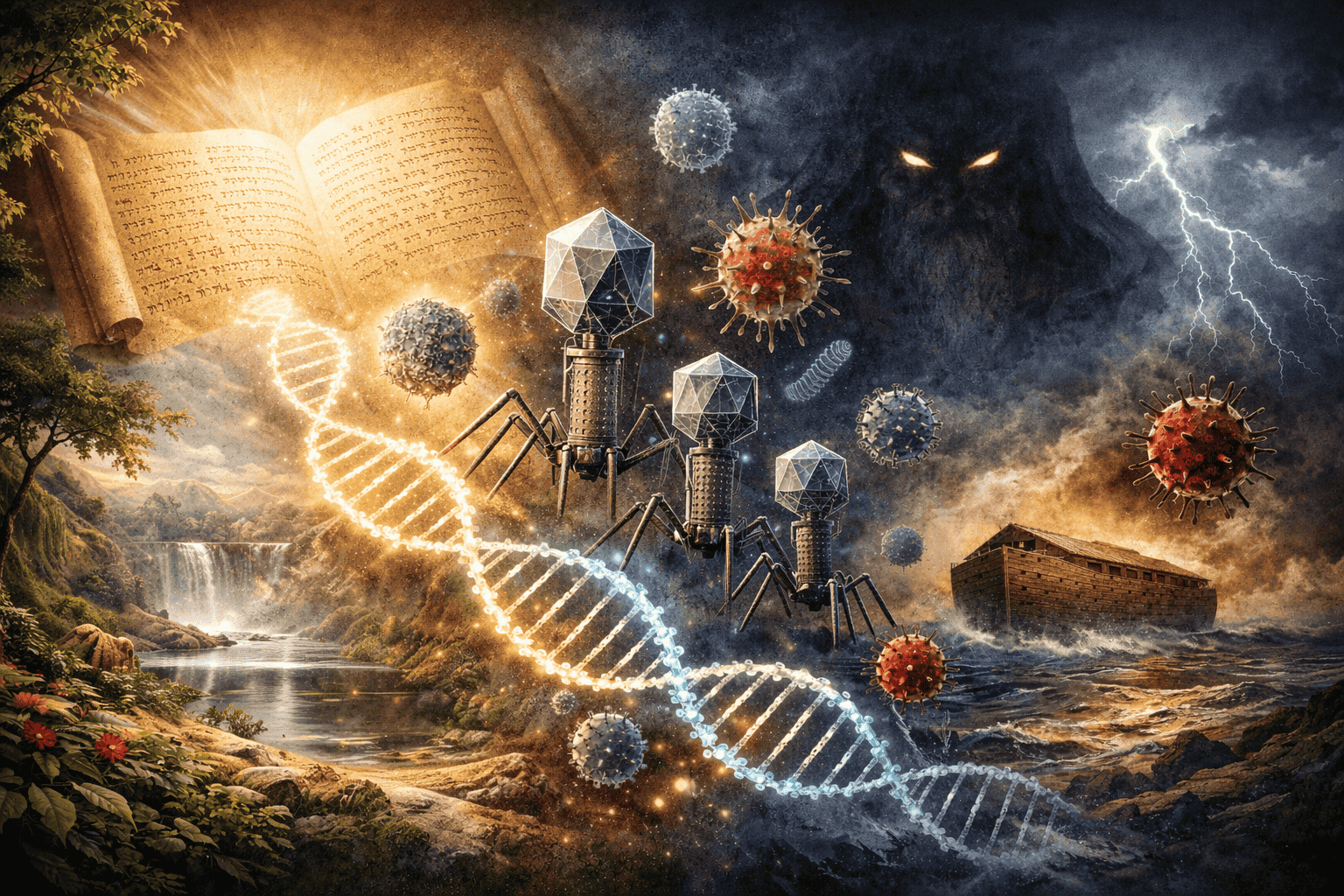
    Most explanations describe viruses as accidents of nature or meaningless byproducts of evolution. However, deeper biological research complicates that picture. Many viruses, especially bacteriophages, display structures that resemble engineered systems rather than random organic forms. Their geometry, efficiency, and precision stand out.

    Such features invite a speculative but serious question. What if viruses did not begin as purposeless entities? What if they did not originally oppose life?

    This question does not assert historical fact. It offers an interpretive lens.

    Instruction, Logos, and Living Code
    The Gospel of John opens with the claim that in the beginning was the Word. The term Logos points toward reason, order, and intelligible structure. Within the biblical imagination, creation unfolds through meaning.

    DNA reflects this idea at the biological level. It operates as coded instruction rather than random material. That code directs how life forms, repairs itself, and persists across generations.

    Viruses interact directly with this system. Rather than attacking tissue alone, they enter the language of life itself and modify instruction.

    If creation rests on ordered information, then mechanisms that deliver information into living systems do not automatically contradict that order.

    Beneficial Viruses and Hidden Functions
    Scientific research increasingly shows that many viruses play constructive roles. Some regulate bacterial populations and help stabilize ecosystems, including the human microbiome. Others exist within human DNA and contribute to ordinary biological processes such as reproduction. In some cases, viral presence even strengthens immune responses.

    These observations challenge the assumption that viruses exist only to cause harm. Instead, they often function as regulators and modifiers within life.

    From a biblical perspective, this allows for the possibility that viruses once operated in alignment with life, supporting resilience or adaptation rather than destruction.

    The World Before the Flood
    Genesis describes a pre-Flood world that differs radically from the present one. Human lifespans extended for centuries, and generations overlapped in ways unknown today. Such conditions would have allowed knowledge to accumulate over unusually long timescales.

    At the same time, Scripture states that corruption reached “all flesh.” While readers often interpret this phrase morally, the language also allows for a broader reading—one that includes the condition of life itself.

    If a civilization developed advanced understanding of life, genetics would offer the most direct point of intervention. To change the body at its foundation would require a mechanism capable of entering cells and altering instruction.

    Such a mechanism would closely resemble a virus.

    Tools, Corruption, and Misuse
    Biblical theology consistently presents evil as corruptive rather than creative. It twists what already exists instead of producing something entirely new.

    Within this framework, tools designed to serve life can become destructive when corruption distorts their use. A mechanism that supports healing may trigger uncontrolled growth. A system that strengthens defense may cause collapse. Adaptation may give way to degeneration.

    This process does not require intention in the present. Persistence alone is enough when guidance disappears.

    The Flood and the Survival of Mechanisms
    The Flood represents a decisive interruption. Whatever knowledge, balance, or governance characterized the pre-Flood world vanished. Cities, texts, and institutions did not survive.

    Microscopic systems, however, require no preservation. A biological mechanism designed to operate inside cells can endure without oversight.

    Such a system continues to function, though no longer wisely.

    Modern Echoes and Artificial Viruses
    In the modern world, humanity again uses viruses as instruments. Scientists engineer them as carriers for genetic therapies and medical treatments. At the same time, history records the development of artificial and weaponized viruses.

    Biblical narratives repeatedly warn that knowledge without wisdom leads to collapse. The story of the Flood marks a boundary that humanity once crossed.

    Seen through this lens, viruses resemble remnants of a deeper history—powerful mechanisms that outlived their original context and now move through life without alignment to their first purpose.

    A Question Rather Than a Claim
    This reflection does not argue for lost civilizations as historical fact. Instead, it traces a pattern found in Scripture: creation ordered through instruction, corruption of that order, and the survival of mechanisms beyond their intended bounds.

    Within that pattern, viruses appear not merely as biological threats, but as reminders of how deeply life depends on information—and how dangerous information becomes when separated from wisdom.